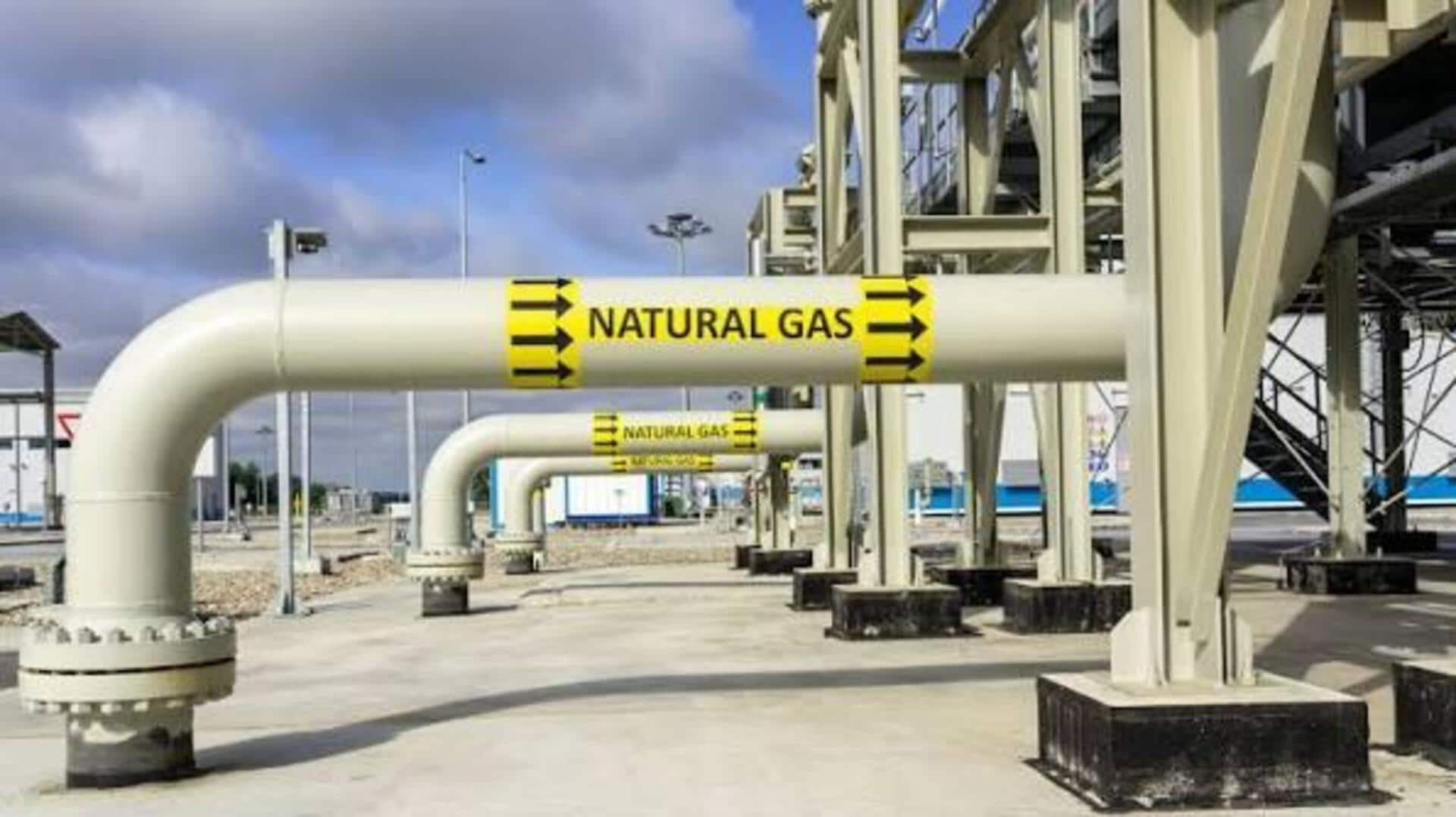
Natural gas prices facing downward trend: Is recovery possible?
What's the story
Natural gas prices have been on a downward trend in recent months, despite heightened geopolitical tensions in the Middle East. The decline comes after a sharp rally at the end of January, which was fueled by colder weather and supply concerns. Currently, NYMEX natural gas is trading at around $2.68 per MMBtu while MCX natural gas has fallen below ₹260 per MMBtu.
Market dynamics
Supply-demand fundamentals driving natural gas prices
The current market dynamics show that natural gas prices are being influenced more by supply-demand fundamentals than geopolitical developments.
This is different from crude oil, which is usually impacted by such tensions.
The US continues to produce natural gas at near-record levels from major shale basins, while new LNG export projects in the US, Qatar, and other producing countries have increased global availability significantly.
Inventory impact
Diversified supply sources and healthy storage inventories
Storage inventories in key consuming regions remain healthy, which has reduced fears of supply disruptions and limited speculative buying.
Traders are now focusing more on production and storage data than geopolitical developments.
The natural gas market has also become increasingly diversified with LNG supplies from multiple regions, including the US, Qatar, Australia, and emerging exporters.
This diversification reduces dependence on any single source.
Future prospects
Weather's role in natural gas pricing
Weather continues to be the most important short-term factor affecting natural gas prices.
The rally seen in late January was largely triggered by severe winter conditions in North America, which boosted heating demand and accelerated withdrawals from storage.
However, recent weather patterns have been less supportive than expected, with mild winters and moderate summer temperatures reducing both heating and cooling demand.
Transition fuel
Transition fuel for decarbonization efforts
Despite current weakness, the long-term outlook for natural gas remains relatively strong.
Many nations view it as a transition fuel because it emits less carbon dioxide than coal while providing reliable power generation.
Countries continue to replace coal-fired power plants with gas-based facilities as part of their decarbonization efforts.
Natural gas also complements renewable energy sources by providing backup power when renewable generation fluctuates.
Market balance
Global demand for natural gas
The US continues to witness robust gas demand from power generation and LNG exports. Expanding export terminals are creating new demand channels, helping absorb a portion of the country's growing production.
Europe remains heavily dependent on LNG imports following the decline in Russian pipeline supplies.
China is also a key growth center for global natural gas demand, with rising industrial activity and policies aimed at reducing coal consumption expected to support higher LNG imports in coming years.