Nifty, Sensex suffer worst start to year in a decade
What's the story
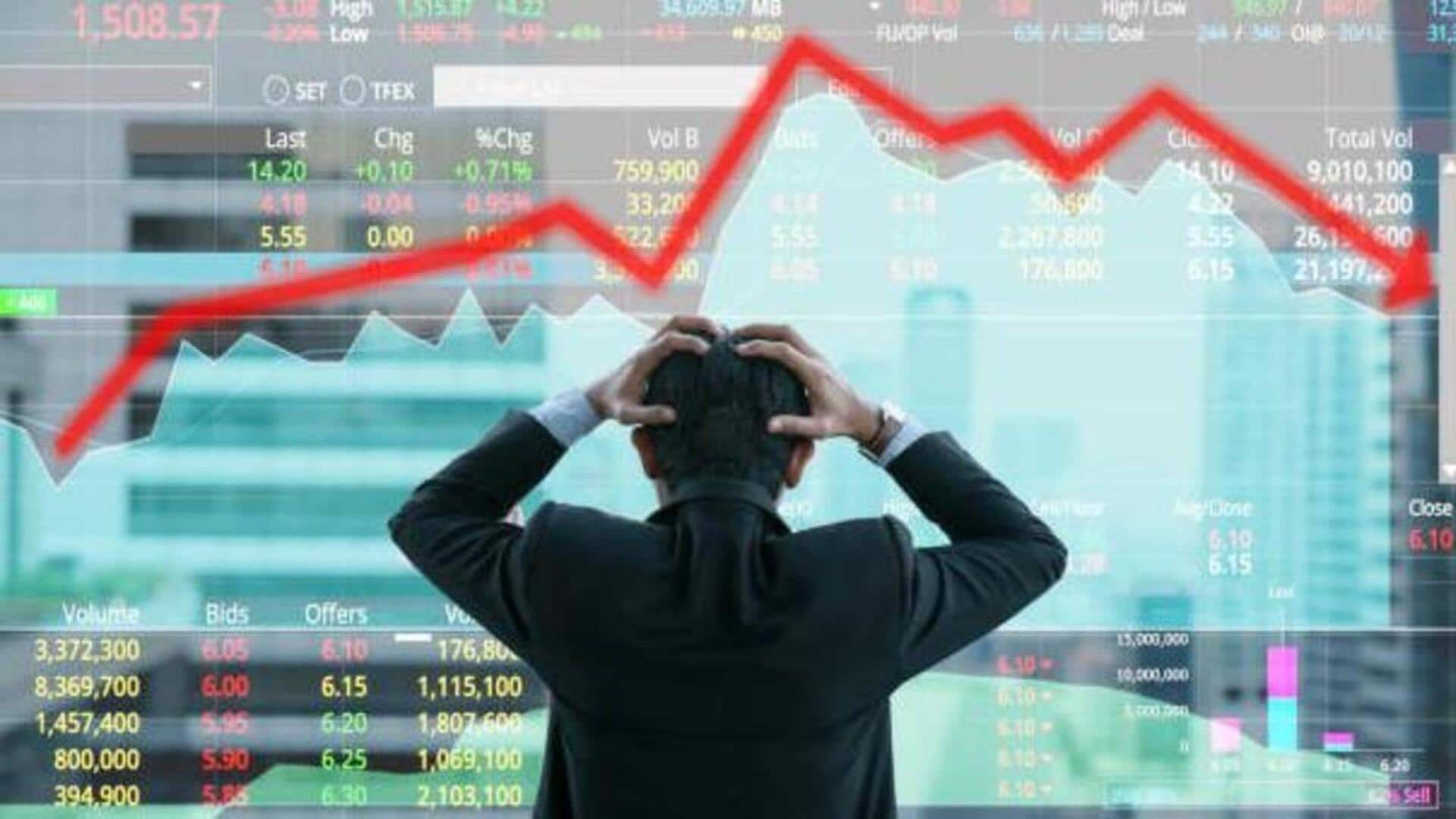
India's equity markets have witnessed a major sell-off, with the Nifty 50 index witnessing its worst start to the new year in a decade. The index has fallen by 2.5% in the first eight sessions of 2026. The BSE-listed companies have lost nearly ₹20 lakh crore in market capitalization since January 2.
Market downturn
ITC leads Nifty 50 constituents' losses
Out of the 50 stocks on the Nifty 50 index, 30 have delivered negative returns so far this year.
ITC has emerged as the biggest loser among these constituents, with a 15% drop taking its stock to multi-year lows.
Other major losers include Reliance Industries and Trent whose shares have declined by 6% and HDFC Bank whose shares have dropped by over ₹1 lakh crore in market cap.
Index performance
Sensex's performance mirrors Nifty 50's downturn
The BSE Sensex has also mirrored the Nifty 50 index's downturn, falling by 1.93% in the first 10 days of January.
This marks its worst opening stretch to a calendar year in a decade.
The last time markets witnessed such a fall was in 2016 when the Sensex had declined by 4.53% amid global growth fears and China-led volatility.
Market factors
Geopolitical tensions and trade deal uncertainties impact markets
Geopolitical tensions, trade deal uncertainties, and sustained foreign institutional investor (FII) selling have contributed to a broad-based sell-off in India's equity markets.
The pressure was mainly from a mix of global shocks and domestic caution.
Rising geopolitical uncertainty after the US approved a Russian sanctions bill that could impose whopping 500% tariffs on countries buying Russian energy has also weighed on market sentiment.
Investor behavior
FII selling and domestic institutional investors' buying
Despite strong domestic institutional investors (DII) buying of nearly ₹17,900 crore in January so far, the Nifty 50 index still fell over 600 points in the week. This shows how weak sentiment has become.
The sell-off was broad-based but sharper in cyclical and policy-sensitive sectors such as oil and gas, energy infrastructure stocks which fell between 4.7% to 5.8% during the week due to trade fears and global commodity uncertainty.