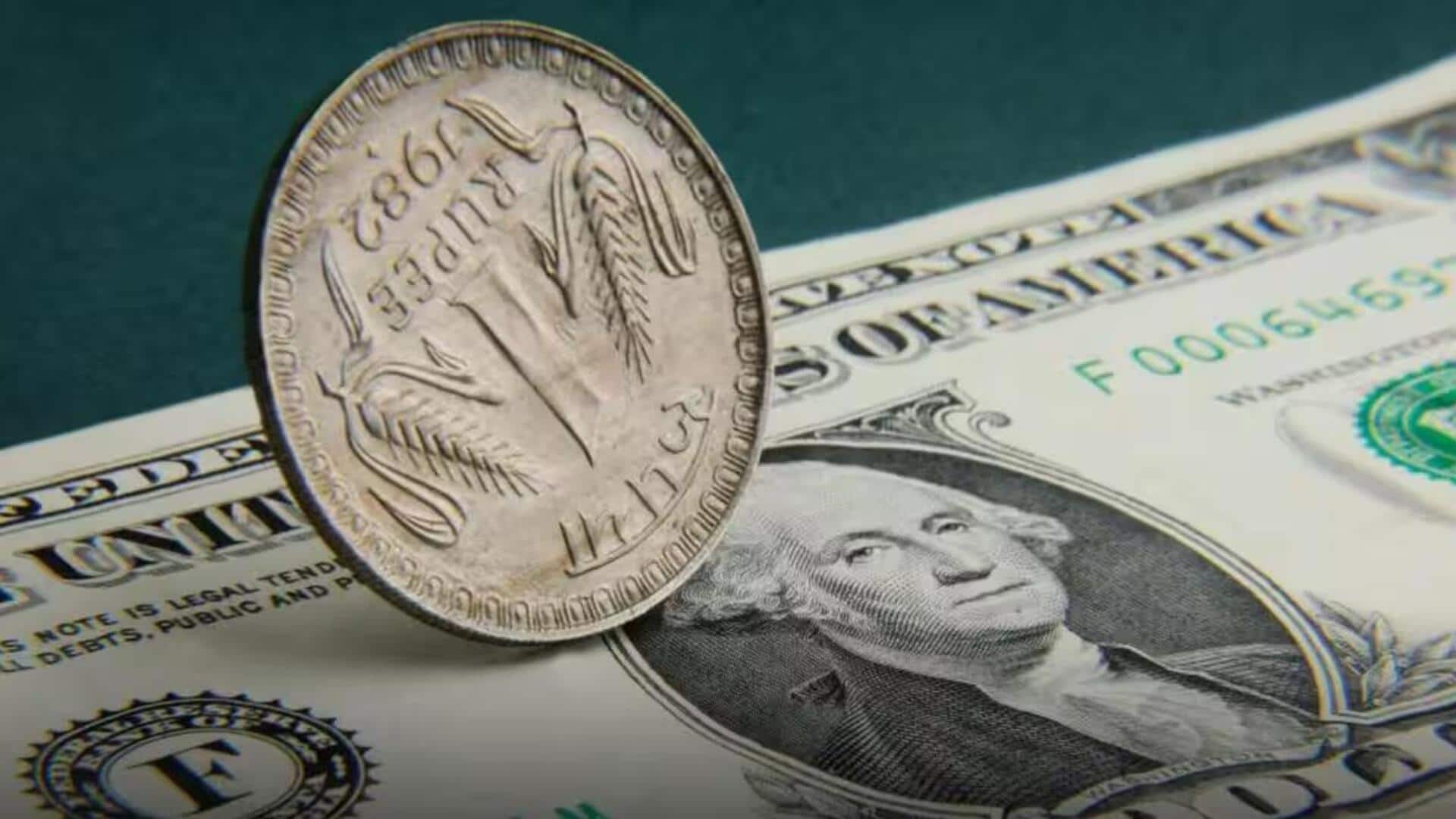
Rupee could hit 100 against US dollar soon, says UBS
What's the story
The Indian rupee may weaken to triple digits against the US dollar within the next 12-18 months, Bhanu Baweja, Chief Strategist at UBS Investment Bank, has warned. The prediction comes as higher US interest rates and rising oil prices are expected to put further pressure on an already uncompetitive currency. "I think we should expect further depreciation of the rupee," Baweja told Moneycontrol.
Market dynamics
Higher US yields to reduce appeal of Indian assets
Baweja explained that higher US yields would reduce the carry from Indian assets, making them less appealing to foreign investors.
This would leave the rupee more vulnerable to depreciation.
Despite RBI's efforts in managing its movements within a range through reserves and interventions, Baweja believes these measures don't make it competitive enough.
Trade imbalance
India's export growth still weak compared to Northeast Asia
Baweja pointed out that India's export growth is still weak compared to Northeast Asian economies, which adds to the case for further depreciation of the rupee.
He clarified, "This is not a BOP crisis, but fundamentally Rupee is not a competitive currency."
The strategist also warned that risks building up in China and Northeast Asia will reach India through different channels.
Economic outlook
Earnings outlook not as strong as other countries
Baweja noted that while India's earnings outlook is good, it isn't as strong as that of other countries.
He said, "Indian earnings growth is good. It's nothing to scoff at, but you're talking about 15% CAGR."
This difference in growth momentum could mean India may face the effects of a global adjustment without the same earnings momentum.
Inflation impact
Rising oil prices could worsen rupee's situation
Baweja warned that a scenario where oil prices hit $130-140 per barrel would further pressure the rupee, especially if US interest rates are also rising. He expects RBI to let some depreciation happen if needed while using its reserves mainly to prevent excessive volatility.