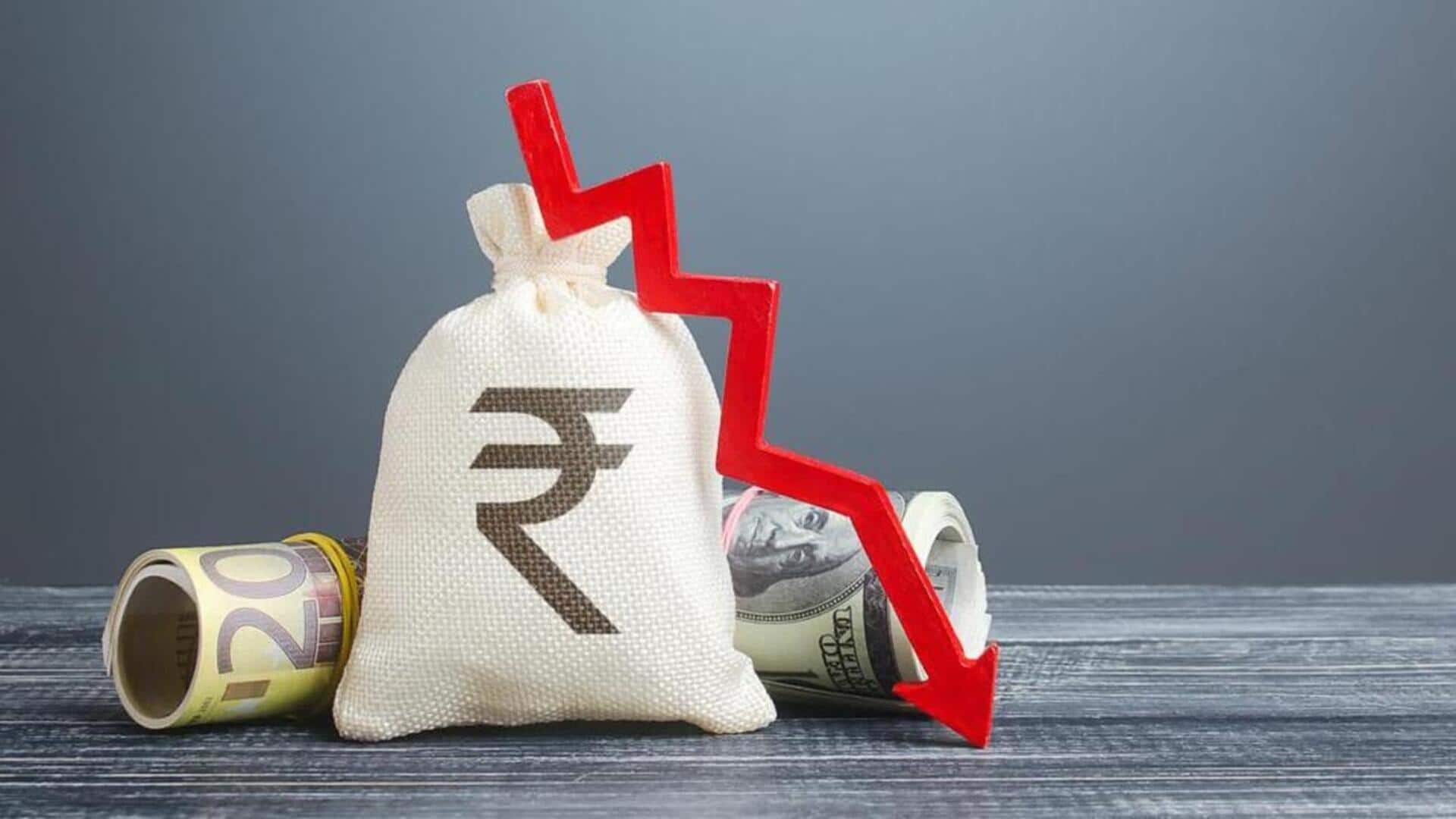
Indian rupee at record low: How it affects your wallet
What's the story
The Indian rupee has depreciated by over 5% this year, driven by a higher trade deficit, portfolio outflows, and uncertainty over the US trade deal. The fall in currency value is likely to affect the prices of various imported goods and services. This includes essential commodities such as crude oil, electronics like mobile phones and televisions, white goods like air conditioners, EVs (electric vehicles), overseas education costs, and even India's fertilizer subsidy bill.
Oil impact
Crude oil prices and transportation costs may rise
India imports 80-85% of its crude oil requirements. The depreciation of the rupee could increase the import bill, affecting companies that use oil and its derivatives as raw materials.
Oil marketing companies (OMCs) may also face margin pressure if pump prices remain unchanged while the cost of purchasing crude increases.
Electronics effect
Electronics and white goods prices may increase
The depreciation of the rupee could also lead to an increase in the cost of electronic items such as mobile phones and televisions.
These products are made up of imported parts, which means that a fall in the rupee's value would automatically raise their input costs.
White goods like air conditioners could also see a price hike due to this economic shift.
EV impact
EVs and overseas education costs may rise
Electric vehicles, which rely on imported battery packs, chargers, and other components, could also face price hikes.
However, this may not be an immediate concern as they are protected by import insurance and long-term contracts.
Overseas education costs could also increase as the rupee crosses the ₹90-a-dollar mark, leading to higher EMIs for parents planning to send their children abroad for studies.
Subsidy impact
India's fertilizer subsidy bill could increase
The rupee's continued weakness could also increase India's fertilizer subsidy bill, as the country largely depends on imports to meet domestic demand.
However, India's Chief Economic Advisor V Anantha Nageswaran has downplayed concerns over the rupee's depreciation.
He said it isn't hurting exports or inflation and that now is probably the right time for depreciation if it has to happen at all.