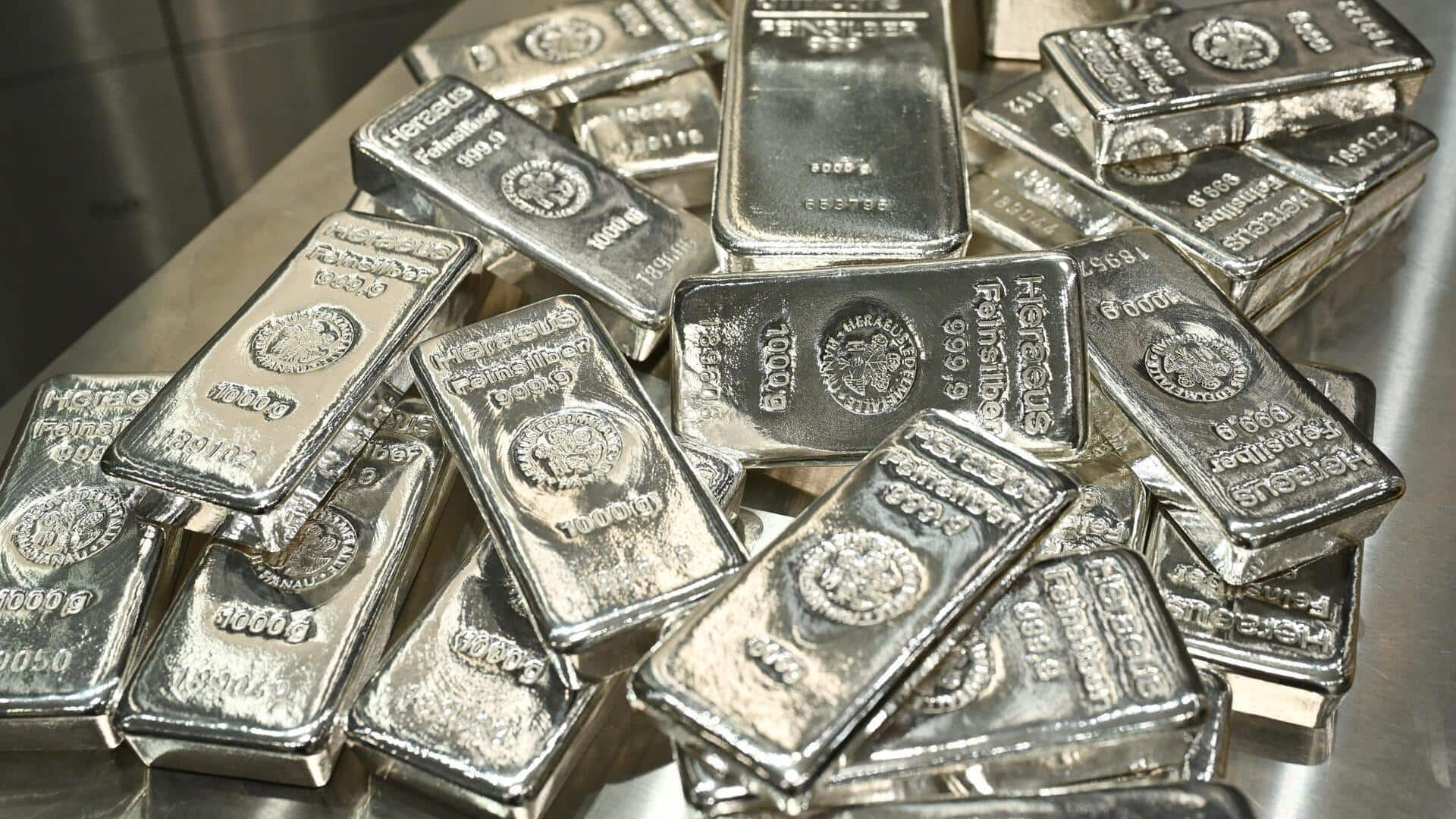
Silver down 50% from all-time high: Should you invest?
What's the story
Silver prices have witnessed a dramatic fall, correcting nearly 50% from their all-time high of $121 per ounce and ₹4.28 lakh per kg in January. The price has now dropped to below $64 per ounce (around ₹2.39 lakh) last week. The sharp correction has raised questions among investors about the sustainability of silver's market performance and its future prospects as an investment option.
Market dynamics
What triggered the sharp fall in silver prices?
The sharp fall in silver prices can be attributed to a combination of speculative unwinding and changing market fundamentals.
Earlier this year, prices surged on the back of heavy speculation, driven by expectations of aggressive monetary easing, geopolitical tensions, and strong industrial demand from green energy sectors.
However, as global central banks became cautious about rate cuts and speculative long positions started unwinding rapidly, it triggered a wave of selling pressure that intensified the decline.
Market balance
What about the supply-demand picture?
Despite the price drop, the underlying supply-demand picture for silver remains stable.
Global mine supply has remained steady with only marginal increases in output, while recycling supply has also been consistent.
On the demand side, industrial demand from solar panels, electric vehicles (EVs), and electronics remains structurally strong but has seen a near-term moderation due to slower global manufacturing activity.
Geopolitical tensions usually boost safe-haven assets like gold and silver but rising fears of economic slowdown have impacted industrial demand expectations for silver.
Demand trends
What does the price correction mean for investors?
Investment demand for silver has weakened in recent months with ETFs witnessing outflows and speculative interest declining after the price correction.
However, industrial demand remains a long-term positive as silver plays a key role in renewable energy, particularly photovoltaic (solar) cells, EVs, and electronics.
In India, high gold prices usually lead to substitution demand for silver among retail and rural investors. This effect could support domestic silver demand during festive seasons despite its higher volatility compared to gold.
Currency effects
How does INR depreciation impact silver prices?
A weakening Indian rupee usually supports domestic bullion prices, including silver.
However, despite INR depreciation, domestic silver has not shown strong resilience due to the sharp fall in global prices dominating the trend.
The upcoming festive and wedding season in India could revive physical demand which, combined with a weak currency, could lend some support to domestic prices in the near term.
Influences
What factors should investors watch out for?
Easing geopolitical tensions could stabilize global markets and improve industrial demand expectations, thereby supporting silver prices.
However, a strong US dollar has been a major headwind for silver. The metal is inversely correlated with the dollar, meaning that a strong dollar makes it more expensive for non-dollar buyers, reducing demand.
In India, while a weak INR should ideally cushion price falls, the magnitude of the global decline has overshadowed this effect.