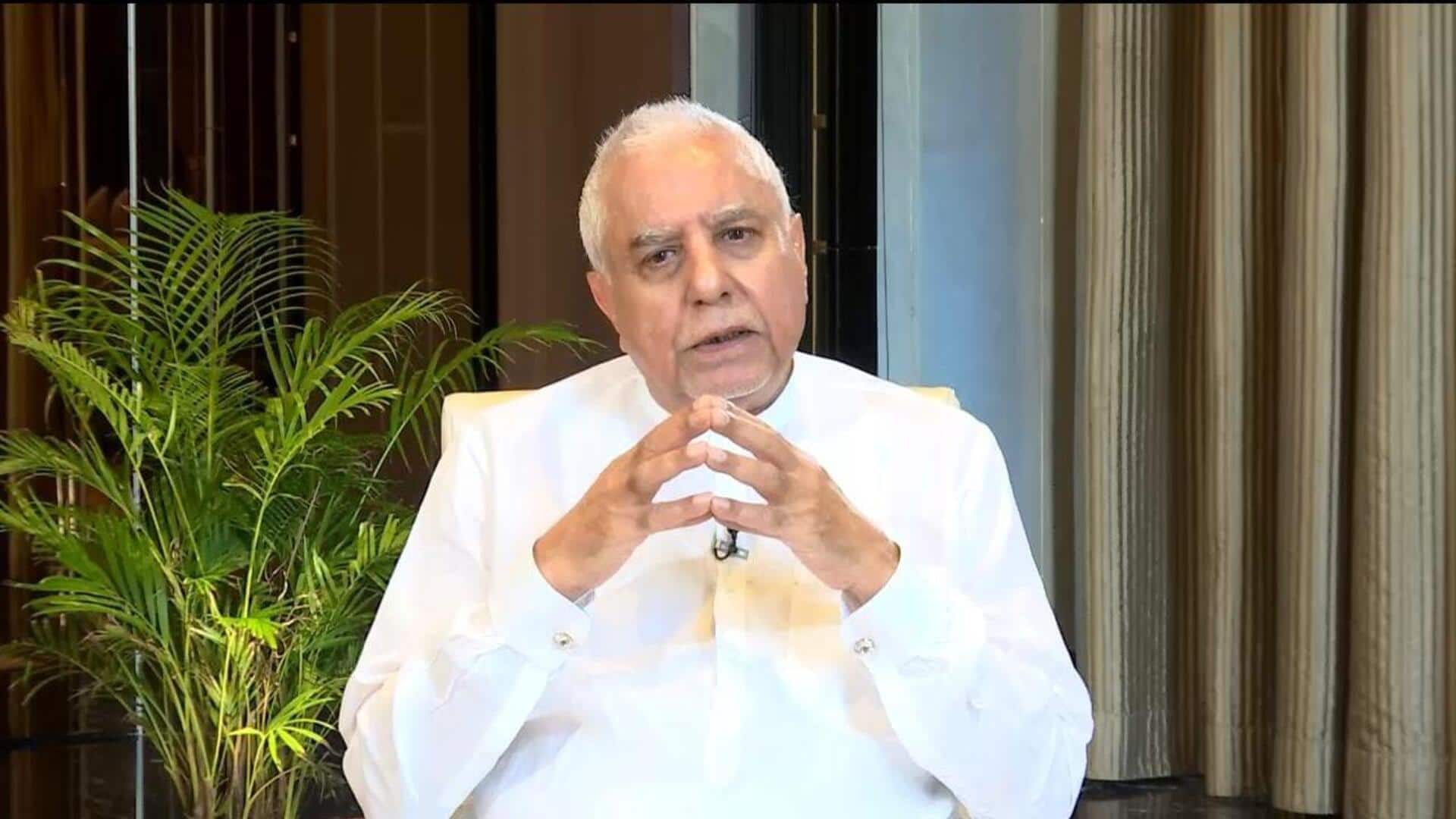
Insolvency case: Subhash Chandra moves NCLAT against asset freeze order
What's the story
Zee Group founder Subhash Chandra has challenged an order by the National Company Law Tribunal (NCLT) that barred him from selling or transferring his assets. The challenge was filed in relation to a personal insolvency case initiated by Indiabulls Housing Finance Limited under Section 95 of the Insolvency and Bankruptcy Code (IBC). A three-member bench of the National Company Law Appellate Tribunal (NCLAT) has posted the matter for hearing on September 29.
Proposal
Chandra proposed ₹6.25cr payout to creditors
Chandra had suggested a ₹6.25 crore payout to creditors against admitted claims of ₹22,006.57 crore.
He also set aside an additional ₹25 lakh for the costs involved in the insolvency process.
However, the proposal was met with mixed reactions from an NCLT bench comprising Judicial Member Ashok Kumar Bhardwaj and Technical Member Reena Sinha Puri.
Tribunal opinions
NCLT bench had differing views on repayment plan
The NCLT bench had differing views on Chandra's repayment plan.
While Bhardwaj favored the approval of the plan only for supporting creditors, Puri rejected it altogether due to serious defects in the process followed by the resolution professional.
The matter was later referred to a third member, Judicial Member Nilesh Sharma, under Section 419(5) of the Companies Act, 2013.
Third member's decision
'Approved plan binding on all creditors'
On August 25, Sharma ruled in favor of approving the repayment plan.
However, he excluded claims filed through advocate Anil Kumar for 960 individuals and Sunil Jain for 300 individuals.
The amounts set aside for these claims were to be redistributed among the remaining eligible creditors.
He also ruled that the approved plan would be binding on all creditors, including those who opposed it under Section 115 of IBC.
Further proceedings
Matter referred to NCLT president for further hearing
After Sharma's order, the original two-member bench held on August 31 that there was no majority view.
The Technical Member had rejected the plan, while the Judicial Member proposed limiting it to supporting creditors.
With all three judgments taking different positions, the matter was referred again to NCLT president, who constituted a five-member bench for further hearing.
Step
What did the bigger bench do?
The bigger bench subsequently barred Chandra from selling or transferring any of his assets. It also stayed the order which upheld his proposal to pay ₹6.25 crore to the creditors, against admitted claims of ₹22,006.57 crore. Chandra is now challenging this order before NCLAT.