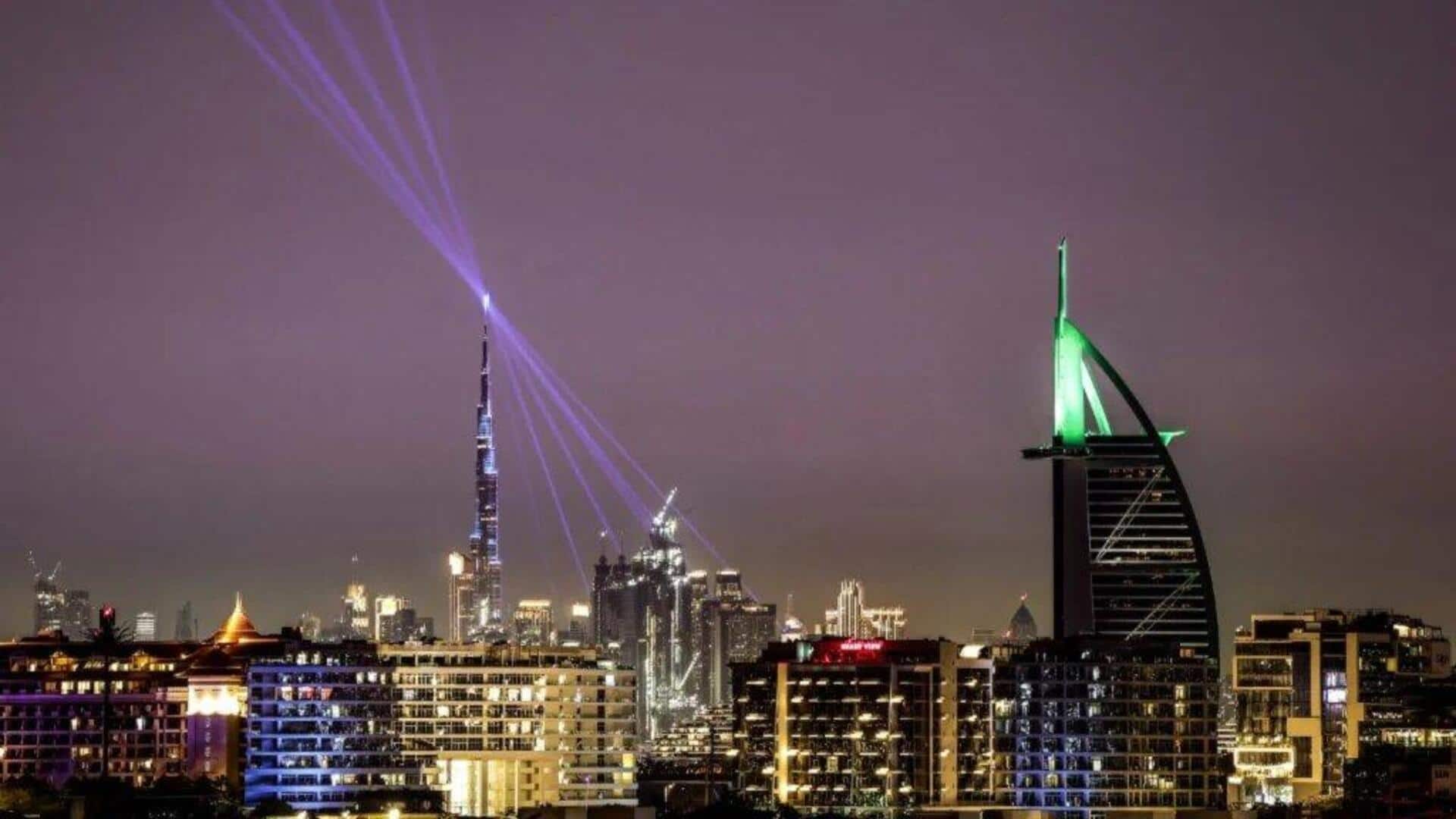
Tourists face jail in Dubai for filming Iranian missile strike
What's the story
A British man has been indicted under cybercrime laws in the United Arab Emirates (UAE) for filming and sharing content of Iranian attacks on the country. The 60-year-old tourist, who was visiting Dubai at the time, faces charges under a law that forbids sharing material that could disrupt public security. The case was brought to light by Detained in Dubai, an organization offering legal support to those facing legal issues in the UAE.
Legal implications
Tourist charged along with 20 others
The case has drawn attention due to the UAE's reputation as a hotspot for influencers who rely on constant filming and posting.
Despite these regulations, footage of recent Iranian attacks has gone viral on social media.
Radha Stirling, head of Detained in Dubai, said the unnamed Londoner was charged along with 20 others after police discovered a video of an Iranian missile strike in Dubai on his phone.
Charges explained
Accused charged under UAE cybercrime laws
The official case summary states that the accused have been charged with using an information network or technology tool to spread false news, rumors, or provocative propaganda that could incite public opinion or disturb public security.
Stirling clarified that under UAE cybercrime laws, both original posters of content and those who reshape/repost/comment on it can be charged.
This means one video could lead to dozens facing criminal charges.
Punishments
Penalties can include deportation
Penalties in such cases can include up to two years in prison, fines ranging from AED 20,000 (£4,000) to AED 200,000 or both. Foreign nationals may also face deportation.
Stirling warned that multiple counts can be applied in such cases.
This means a person who reposts several clips/articles could theoretically face cumulative charges and multiple sentences even if their actions were entirely innocent.
Risks
Risks of sharing widely circulated content
Stirling also highlighted the risks of sharing widely circulated content.
She said people assume if something is already widely shared or published by media outlets, it must be okay to comment on or repost it. However, in the UAE this assumption can be extremely dangerous.
Journalists have traveled to Dubai specifically to film missile interceptions and send footage to editors abroad who then publish it from outside the country.
Publication bans
Case comes amid strict new rules on journalists, public
The case comes amid strict new rules on journalists and the public, including foreign visitors, amid heightened tensions in the Middle East.
Iran has particularly strict restrictions while Gulf monarchies have also imposed tighter controls after being targeted by unprecedented drone and missile attacks from Iran.
Israel has banned publication of content considered a direct security threat such as live broadcasts showing city skylines during missile strikes or information on military plans and air defenses.