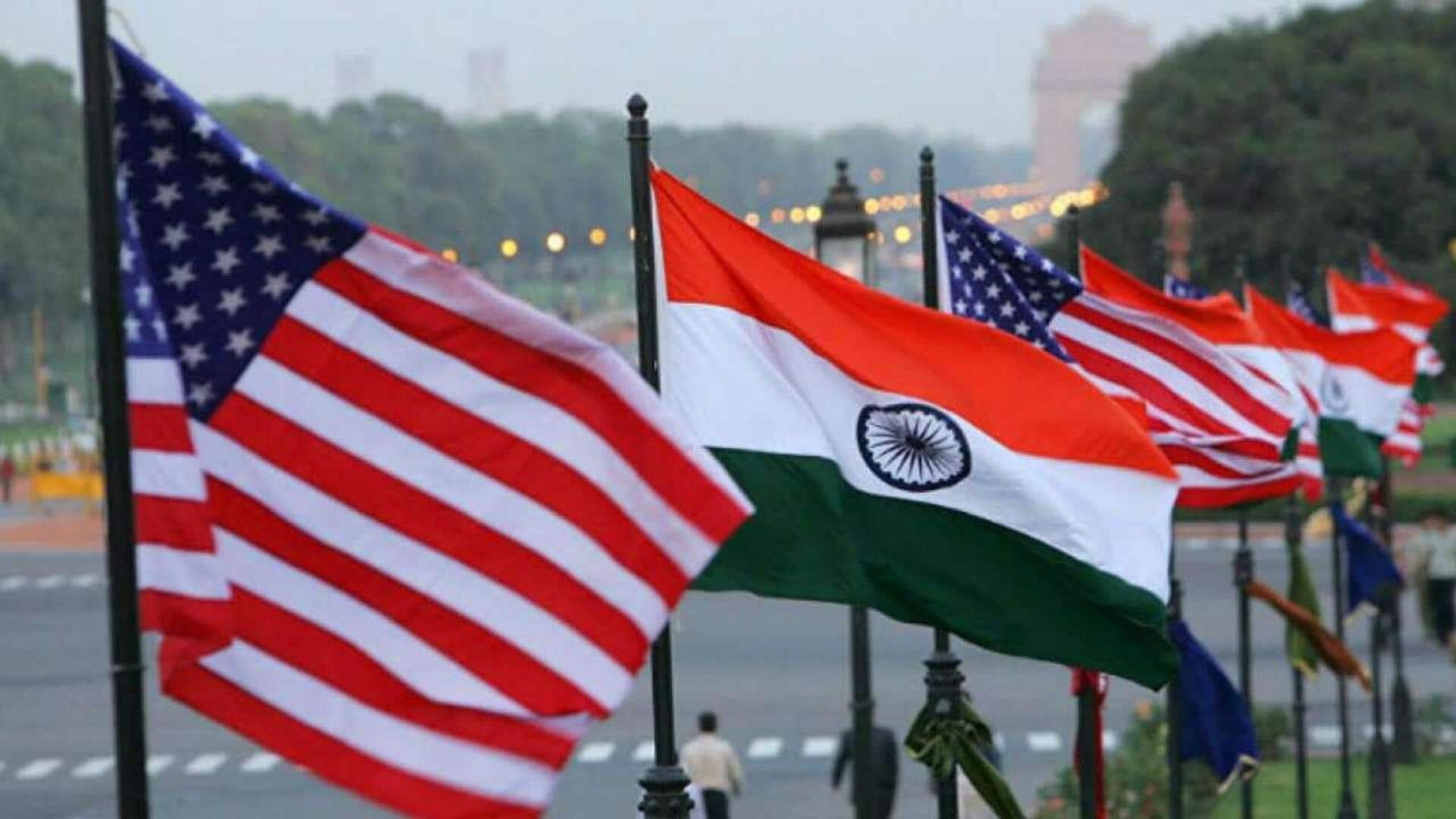
US-India trade deal shields pharma exports from reciprocal tariffs
What's the story
India and the United States have reached an interim trade agreement that will provisionally shield Indian pharmaceutical exports from US tariffs. The reciprocal tariffs on broader Indian exports have been reduced from 50% to 18%. The interim trade deal also includes a commitment from India to reduce non-tariff barriers on medical device exports from the US.
Trade facilitation
Expanding market access for medical technology
The joint statement issued by both nations highlights a roadmap for reciprocal trade, with a major focus on securing pharmaceutical supply chains and expanding market access for medical technology. This agreement is seen as a major step toward de-escalating trade tensions between the two nations.
Sector impact
Implications for the pharmaceutical sector
The interim trade deal has major implications for the pharmaceutical and healthcare sectors.
The joint statement clarifies that the provisional exclusion of Indian pharmaceutical exports, including generic drugs like antibiotics, vaccines, bulk drugs and intermediates from reciprocal tariffs is contingent upon the successful conclusion of this interim agreement.
This provision suggests that Indian manufacturers could be granted special status, possibly exempting them from broader national security-related trade restrictions.
Tariff reduction
Strengthening India's position as a global manufacturing hub
Under the new framework, the US will impose an 18% reciprocal tariff on a range of Indian goods, down from 50%.
This move is expected to strengthen India's position as a global pharma manufacturing hub.
The US wants to keep this sector free from barriers in order to guarantee a steady supply of essential medicines.
Indian drugmakers export nearly $10 billion worth of pharmaceutical products to the US every year.
Market access
Addressing regulatory hurdles
While India wins in drug exports, the US has secured the removal of long-standing barriers for its medical technology industry. American manufacturers have had to deal with complex regulatory hurdles in the Indian market for years. India has now committed to address these barriers.
Economic security
Broader economic security alignment
Beyond the immediate market access, both nations have committed to strengthening economic security alignment to enhance supply chain resilience and innovation via complementary actions.
This includes addressing the non-market policies of third parties, a step intended to stabilize the global flow of medicines and healthcare components.
The framework also hints at a $500 billion purchase plan by India over the next five years, including technology products that will likely power future data-driven healthcare and digital health platforms.