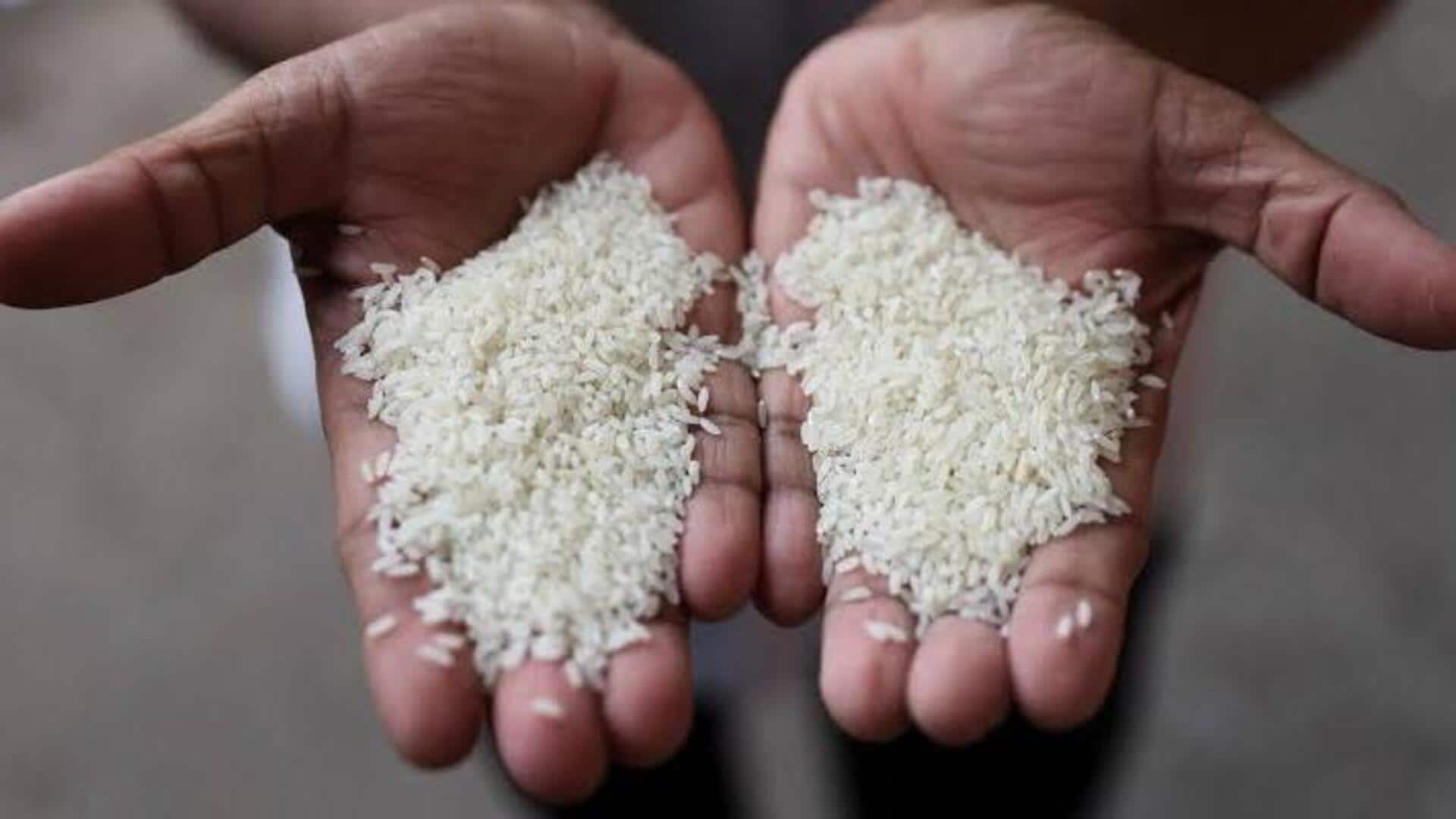
Rice is becoming costlier in India. Reason? US-Iran war
What's the story
Rice, a staple food in India, is becoming more expensive due to the ongoing US-Iran war. The conflict has triggered a global scramble for food supplies, increasing international demand for rice. According to Suraj Agarwal, CEO of RiceVilla group, countries are aggressively securing their food supply with rice being one of the major staples. This has led to a significant increase in basmati and non-basmati rice prices by 15-20% and 20-25%, respectively.
Price surge
How much has the price increased?
The price of basmati rice, a staple in biryani, has jumped to around ₹100 per kg in Q1 FY27 from ₹85 per kg last year.
Non-basmati varieties have also seen a similar trend. Sona Masoori rice, for instance, has gone up from ₹51-52 per kg last year to ₹63-64 per kg now.
The spike is putting pressure on household budgets across the country.
Market dynamics
High demand and low fresh supplies
Agarwal further noted that the market is currently caught in a tug of war between high demand and low fresh supplies, making it unlikely for prices to come down anytime soon.
The export market continues to support basmati prices with India exporting a record 6.52 million tons in FY26 to 154 countries.
Saudi Arabia is the largest buyer, while West Asia continues to show high demand.
Local factors
Government procurement and uneven rainfall
The domestic rice market is also under pressure from government procurement and uneven rainfall.
BV Krishna Rao, President of the Rice Exporters Association, said government buying for public distribution has contributed to the price rise.
He cited Telangana's distribution of non-basmati rice through PDS as an example. Lesser rains in Andhra Pradesh, Karnataka, and Telangana have also kept prices firm.