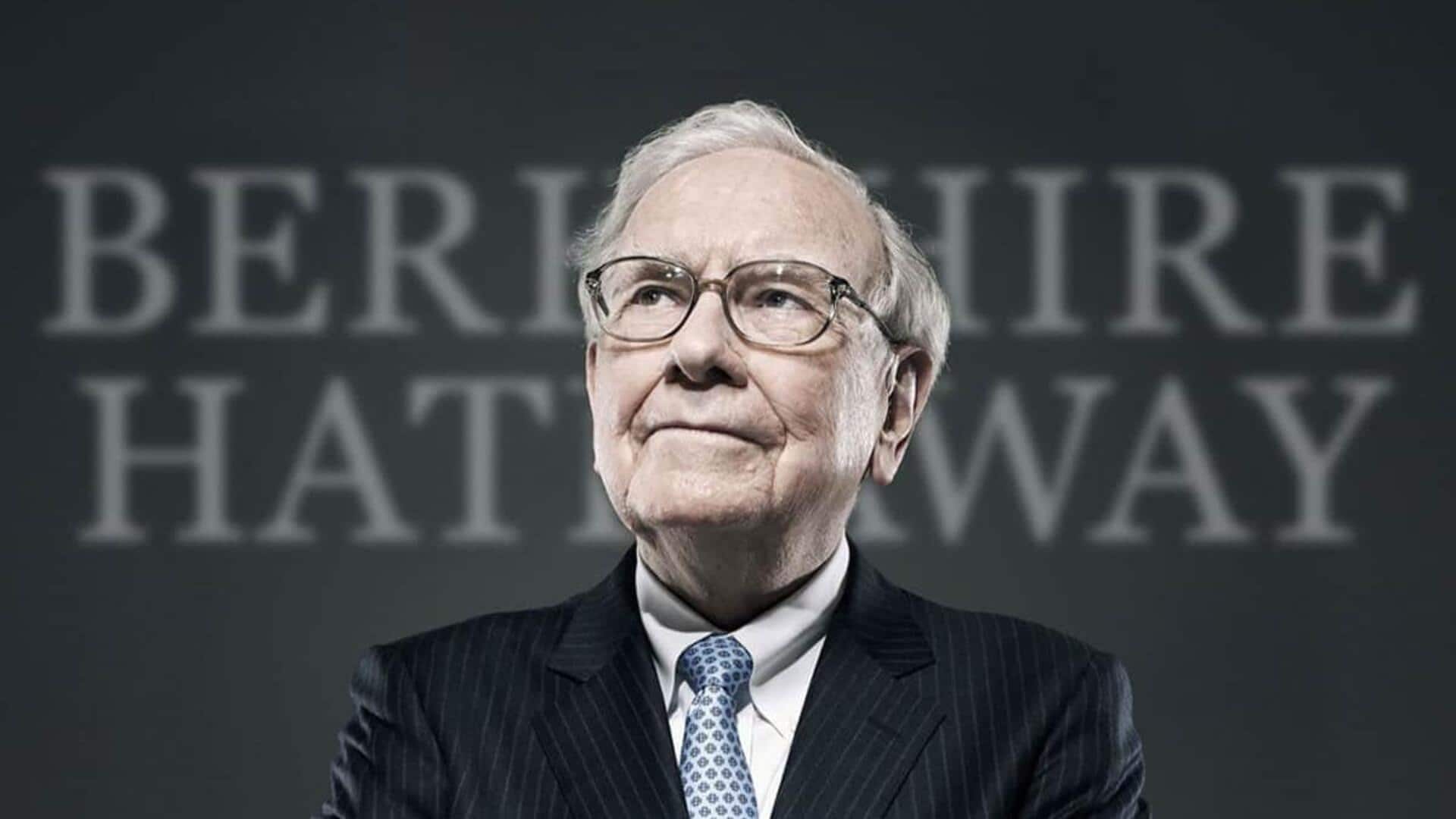
Warren Buffett turns 96: Here are his top investing lessons
What's the story
Warren Buffett, the legendary investor and former CEO of Berkshire Hathaway, turns 96 today. This is his first birthday after stepping down as CEO after leading the company for over six decades. Even though he is no longer at the helm, Buffett still chairs the board and remains actively involved in investment decisions. In recent quarters, he has made major investments including a $36.6 billion stake in Google's parent company Alphabet.
Transformation tale
From textile to $1T behemoth
Buffett took over a struggling textile company in 1965 and turned it into Berkshire Hathaway, a more than $1 trillion giant with annual after-tax operating earnings of nearly $45 billion.
Despite his financial success, Buffett has lived a simple life, sticking to Cherry Coke and burgers.
He still works from Omaha, Nebraska instead of Wall Street.
On January 1, 2026, he handed over the CEO role to his long-time deputy Greg Abel and promised to donate most of his wealth.
Investment strategy
Buffett's valuation rules
Buffett's investment philosophy revolves around buying quality businesses at attractive prices.
He rarely buys at more than 15 times forward earnings, even for high-profile companies like Apple and Coca-Cola.
This approach prioritizes downside protection over potential upside.
By closely analyzing businesses and focusing on predictable cash flows and clean balance sheets, investors can minimize the risk of permanent losses during market downturns.
Market wisdom
Staying calm during market downturns
Buffett has always stressed the importance of staying calm during financial crises and market downturns.
He famously said, "Check your emotions at the door when you invest."
This principle guided him after the 1987 US market crash when he invested nearly $1 billion in Coca-Cola over two years.
By 2025, Coca-Cola's share price had surged nearly 2,800% from his initial purchase price.
Wealth journey
Investing journey and wealth creation
Buffett started investing at 12, buying Cities Service preferred stock in 1942.
His wealth grew slowly over the years. By 21, Buffett's net worth was $20,000.
It took him over 13 years to become a millionaire and more than 33 years to become a billionaire at age 55.
His career highlights the importance of patience and compounding in long-term investing strategies.
Investment approach
Concentrated investments and subsidiary management
Buffett has not always been a proponent of diversification.
At the end of Q2 2025, five stocks, American Express, Apple, Bank of America, Coca-Cola and Chevron, made up nearly 70% of Berkshire's roughly $300 billion equity portfolio.
He himself holds over 99% of his net worth in Berkshire shares worth around $150 billion.
His management style involves giving significant autonomy to the heads of subsidiaries, while protecting shareholders from unnecessary dilution by avoiding stock issuance for acquisitions or stock-based compensation.