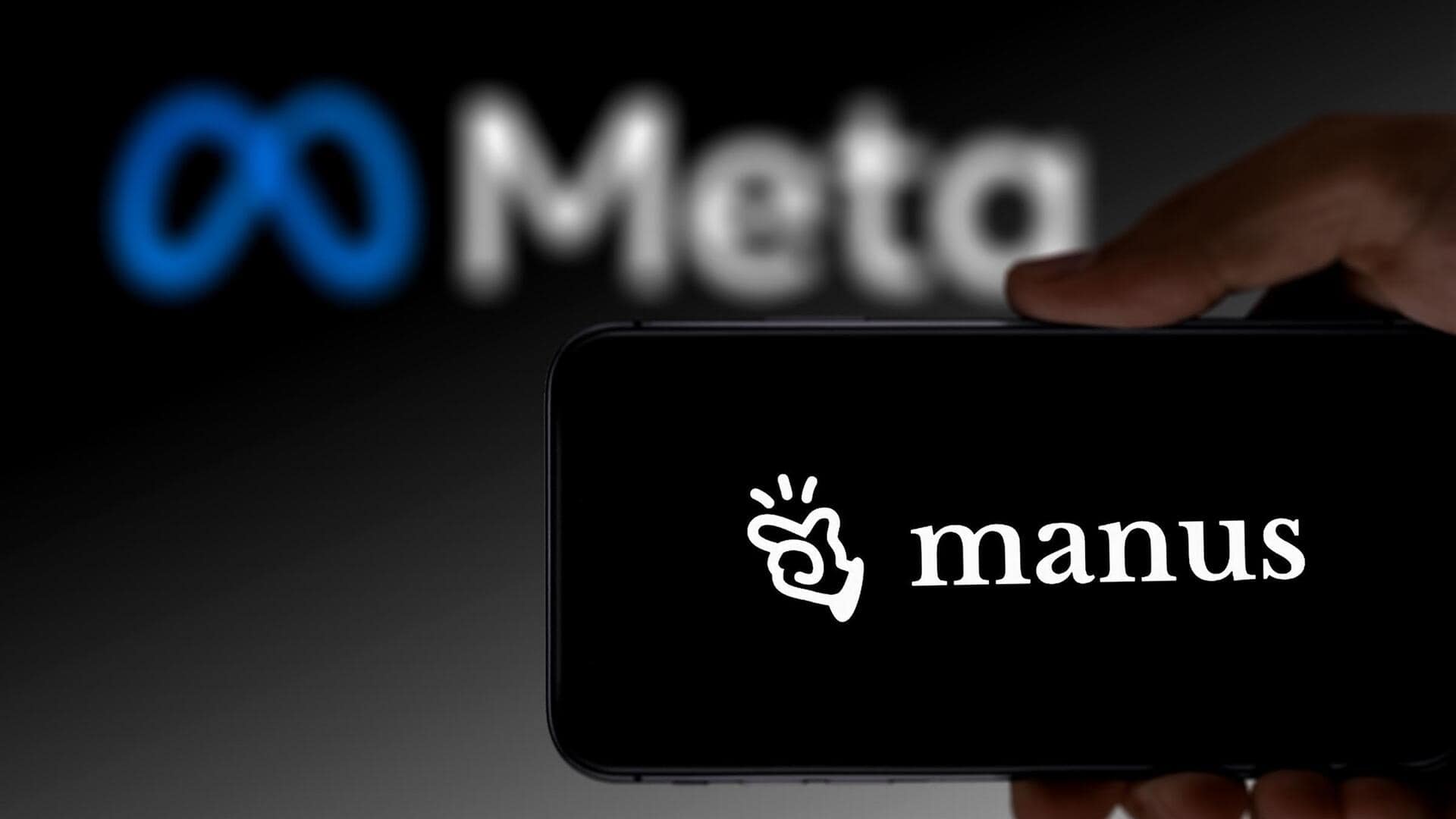
Why China is reviewing Meta's $2B Manus AI deal
What's the story
Chinese authorities are considering intervening in Meta's acquisition of Manus, an AI agent developer with Chinese roots. The move comes amid fears that the deal could violate technology export controls and prompt more start-ups to move offshore. The Ministry of Commerce is reviewing the transaction, which could lead to potential action against it.
Relocation scrutiny
Concerns over Manus's relocation and deal implications
The relocation of Manus from China to Singapore last summer, widely seen as a move to facilitate the transaction, has sparked debate among academics and lawyers in Beijing.
They are questioning whether this move violated China's technology export control regime.
The deal, which is valued around $2 billion, has given some Chinese investors and entrepreneurs a rare cash exit opportunity but also raised concerns in Beijing.
Company evolution
Manus's journey and Meta's acquisition plans
Manus gained prominence in March last year with its claim of launching the world's first general AI agent, software that can perform tasks on behalf of users.
The company started out in Beijing and Wuhan but moved to Singapore by mid-June 2025, laying off some employees based in China.
This complicates the regulatory question: if the technology was developed in China, authorities may still argue that it falls under export control rules, even if the company now operates abroad.
Regulatory review
Beijing's scrutiny of Manus's staff and technology departure
Chinese authorities are looking into whether Manus's employees, software, and intellectual property left China legally before the company was sold to Meta.
This review is still in its early stages and may not lead to a formal investigation.
However, if regulators find that an export license was needed but not obtained, it could give Beijing considerable leverage over the transaction.
Tech implications
Export controls and potential impact on tech ecosystem
China has previously used export control mechanisms to influence Washington's efforts to force the sale of TikTok during Donald Trump's presidency.
The Manus case is being closely monitored as it could encourage other Chinese AI start-ups to move abroad to escape domestic regulatory oversight.
In recent years, many Chinese tech firms have opened offices or second headquarters in Singapore, a practice sometimes called "Singapore washing," which reduces geopolitical scrutiny while preserving Chinese engineering roots.