Modi wants 50 Indian firms in Fortune 500 by 2036
What's the story
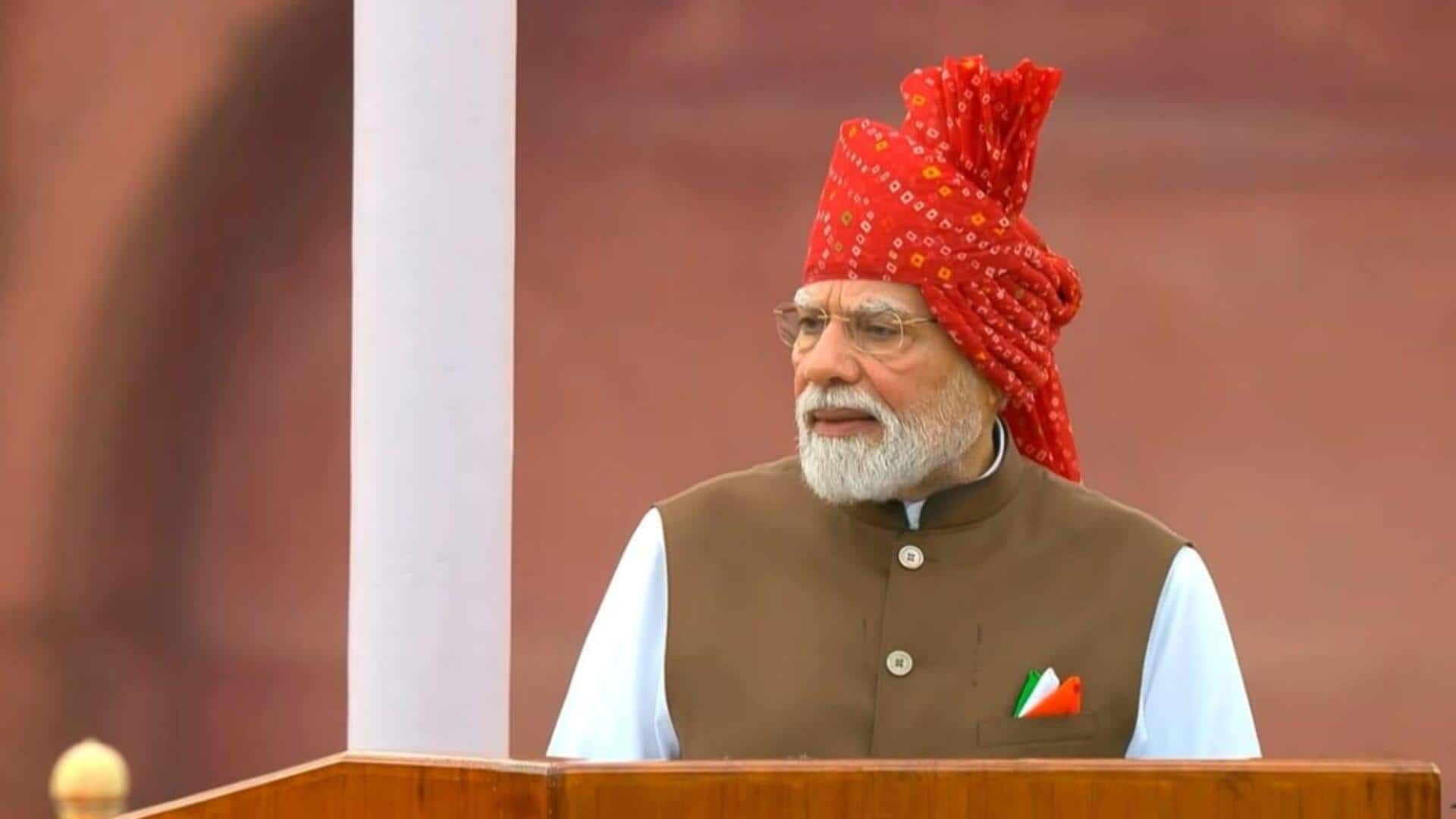
On Independence Day, Prime Minister Narendra Modi challenged Indian businesses to aim for global leadership in sectors like banking, pharmaceuticals, consulting, and technology. He asked why there shouldn't be 50 Indian companies in the Fortune 500 list over the next decade. "We often hear about the Fortune 500. Why shouldn't 50 of those Fortune 500 companies be from India in the coming decade? Why shouldn't this be our goal?" Modi said while addressing the nation from Red Fort.
Sector focus
Global leadership in banking, pharmaceuticals
PM Modi highlighted the growth of the banking sector, urging an Indian bank to be among the world's top five.
He also stressed that India has made significant progress in pharmaceuticals but now needs to establish global leadership.
"One of India's pharmaceutical companies should be among the world's five largest," he said, adding that India must establish its place there.
Global aspirations
Consulting, law, and technology sectors
The Prime Minister's vision extended to other sectors as well. He called for Indian law firms, rating agencies, consulting companies, and accounting firms to aim for global leadership.
"One of our consulting firms or accounting firms should be among the top firms in the world," Modi said.
He also urged Indian tech companies to become world leaders and build brands that could represent India globally.
National project
Developed India by 2047
Modi linked his challenge to the larger vision of making India a developed nation by 2047.
He said achieving this would require faster reforms and closer cooperation between the Centre, states, local governments, and industry.
"We have to accelerate the pace of our reforms. We have to develop our systems in line with the goal of 2047," he said, stressing that India can't be governed by "the policies and regulations of the past."