Why Tesla's battery business is suddenly slowing down
What's the story
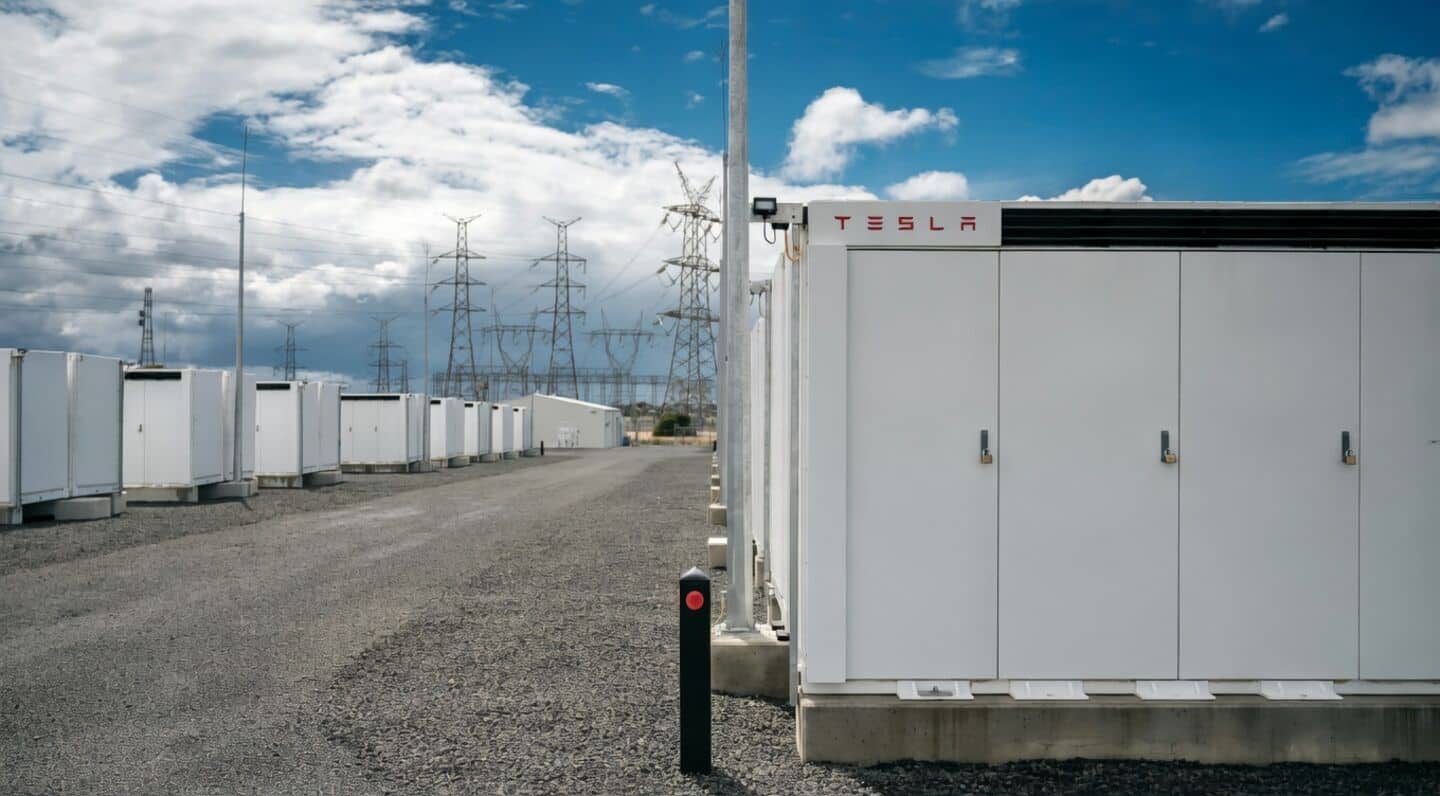
Tesla's battery business, a key revenue driver for the electric vehicle (EV) maker, has hit a rough patch. The company's revenue from batteries and solar equipment surged by 358% between 2021 and 2025, reaching $12.8 billion last year. This was largely due to the global deployment of its Megapacks - large batteries that power factories, data centers or even the entire electric grid.
Deployment growth
Battery business growth helps offset decline in core EV business
Tesla's annual energy storage deployments doubled in 2024 and grew another 49% in 2025, reaching 46.7 gigawatt-hours last year.
This growth has helped the company offset some of the weaknesses in its core electric car business, which saw a decline from $82.4 billion in revenue in 2023 to $69.5 billion last year amid rising competition and policy challenges.
Deployment dip
Concerns arise over potential issues within Tesla's battery business
However, the company's first-quarter battery deployments this year fell by 15% year-on-year, defying analyst expectations of growth.
The unexpected dip has raised questions about potential issues within Tesla's battery business.
"While surprising, I am not ready to call it a trend yet," said Seth Goldstein, an analyst with the Morningstar market research firm.
The company is yet to explain the reason behind this sudden decline.
Product prospects
Optimism remains for long-term growth and market share expansion
Despite the recent dip, analysts are looking at future products to drive long-term growth.
This new facility will produce a "Megablock," which combines four Megapacks for larger-scale energy storage.
Tesla has also established a stronghold in North America with nearly 40% market share, according to Wood Mackenzie Ltd.
Market preference
Megapacks gaining popularity despite potential industry challenges
Project developers are increasingly favoring Tesla's Megapacks for their integrated design, which includes the battery, inverter, control software and energy-management tools.
This makes them easier to deploy and operate than those from often-cheaper Chinese competitors.
Despite a slowdown in renewables posing a potential challenge for the industry within the US, data center developers are rapidly turning to batteries for their new projects.