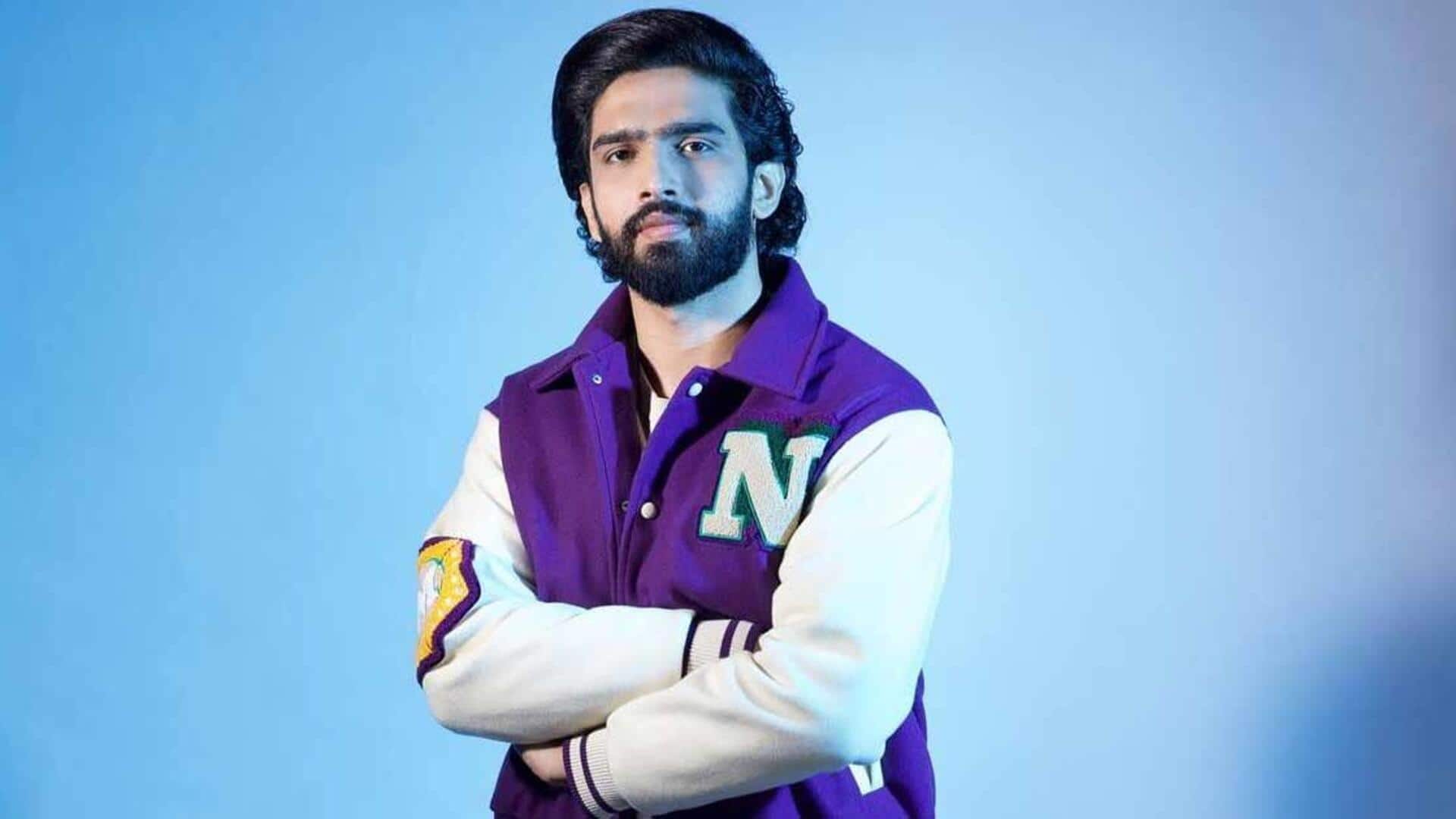
Music labels influence decisions, groupism persists: Amaal on Rahman's comments
What's the story
Singer-composer Amaal Mallik has reacted to AR Rahman's recent comments on "communal bias" in Bollywood. Speaking to journalist Faridoon Shahryar, he said he disagrees with the communal angle but agrees with Rahman's larger point. "From an industry perspective, what he has said is largely correct...today, every label is comfortable working with its own set of artistes," Mallik said.
Industry dynamics
Labels promote their own artists: Mallik
Mallik further explained that labels promote their own artists because they generate revenue.
"This is the era of management and agencies. There is groupism, both in good and bad ways," he said.
"In today's time, labels have become the real decision-makers."
He cited examples of directors Mani Ratnam and Anurag Basu, who frequently work with Rahman and Pritam, respectively, as evidence of these creative synergies.
System change
Top composers are not immune to these limitations, says singer
The music director also spoke about the changing landscape of the music industry, where even top composers are not immune to these limitations.
"Over the last 15 years, a new system has come into place where labels prefer to stick to their own artistes and won't wait for anyone to say yes - not even me or AR Rahman," he said.
Clarification
Focus on making good music: Mallik
Mallik also clarified that Rahman's statement shouldn't be seen as his "insecurity."
"The only way forward is to focus on making good music. I don't run behind doing 15 films at a time," he said.
"He is only showing the tip of the iceberg. He is pointing out that even someone of his stature can be sidelined."
"The bigger players today have a bigger say and are overpowering the system."
Rahman's comments
What did Rahman say?
Rahman recently spoke about a "power shift" in the industry, saying that non-creative people now hold decision-making power.
"People who are not creative have the power now to decide things, and this might have been a communal thing also," he shared.
After facing backlash, he released a video, clarifying that he never intended to hurt sentiments.
He said, "I understand that intentions can sometimes be misunderstood, but my purpose has always been to uplift, honor, and serve through music."