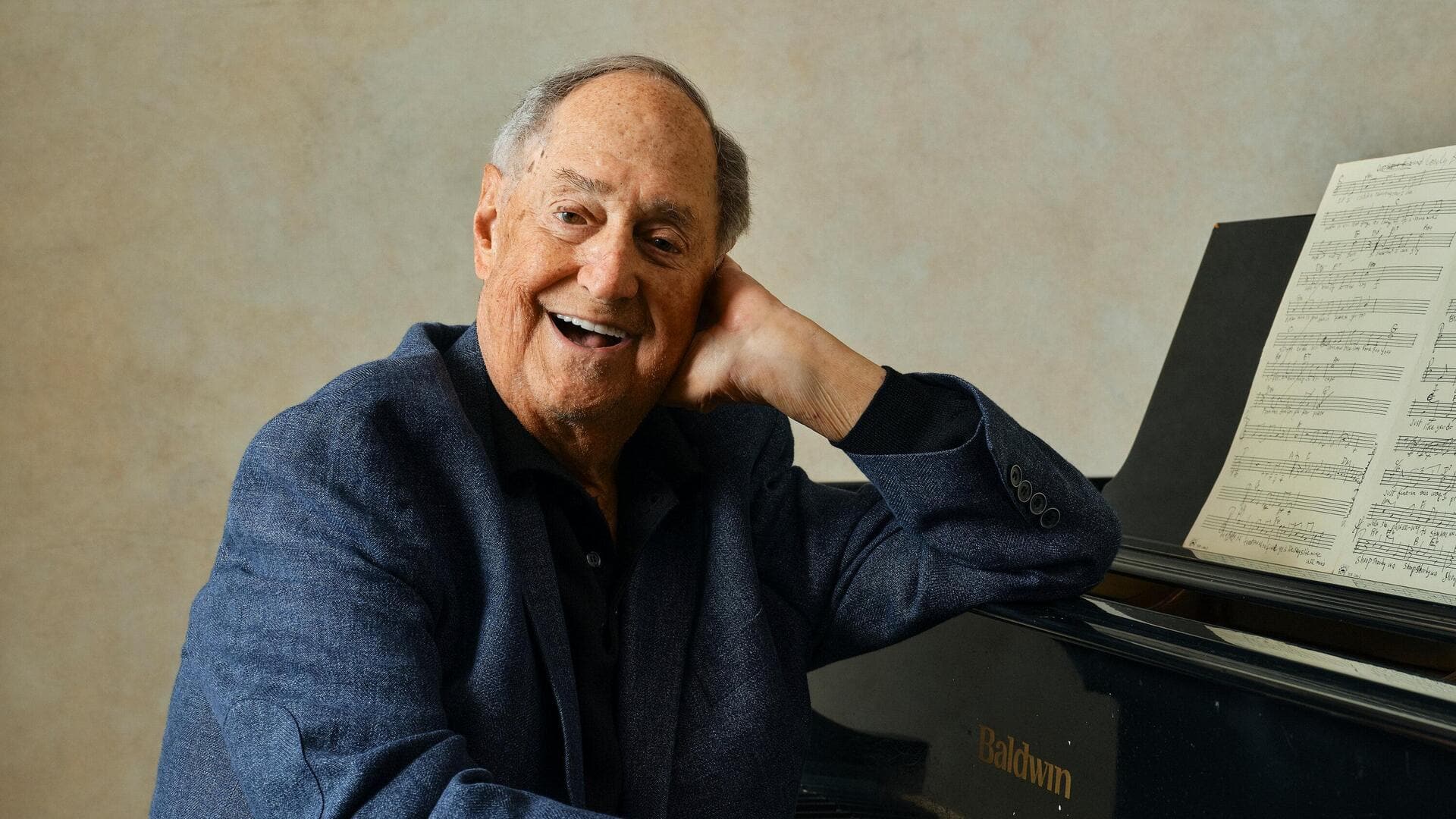
Neil Sedaka, the voice behind 'Oh! Carol,' dies at 86
What's the story
Iconic American singer-songwriter Neil Sedaka, known for his hits in the 1950s and 60s such as Oh! Carol, Breaking Up Is Hard To Do, and Calendar Girl, has died at the age of 86. His family confirmed his death on Saturday. "Our family is devastated by the sudden passing of our beloved husband, father, and grandfather," they said in a statement.
Beginnings
Sedaka's early life and how he got into music
Born in Brooklyn in 1939, Sedaka grew up in Brighton Beach.
He learned piano after a music teacher noticed his talent and urged his parents to buy a piano.
He told People in 1975, "[I was] not accepted socially in Brooklyn. I was very little, wore braces and glasses, and did not play baseball."
"I thought that the way to get invited to parties would be to write and sing pop music."
Career highlights
His early career and later success
Sedaka attended the Juilliard School's preparatory program and co-founded the doo-wop group The Tokens in the late 1950s.
He returned to prominence in 1975 when the song he wrote, Love Will Keep Us Together, became a hit for the duo Captain & Tennille.
His family did not reveal his cause of death or where he died.
Sedaka is survived by his wife, Leba Strassberg, whom he married in 1962, and their two children, Dara and Marc.
Songwriting success
His 1st hits in the late 1950s
At 13, Sedaka met lyricist Howard Greenfield, marking the start of their songwriting partnership.
After high school, he formed a band called the Linc-Tones but later left the group.
As a teenager, he co-wrote his first hit, Stupid Cupid, which was recorded by Connie Francis in 1958. That same year, Sedaka released his debut solo single, The Diary.
Career resurgence
Sedaka's final chart-toppers
Sedaka's career was revived in the 1970s when he signed with Elton John's label Rocket Record Company.
They released Sedaka's Back in 1974, featuring songs from his UK-only albums.
He hit No.1 on the Billboard Hot 100 again with Laughter in the Rain in 1974.
The following year, his song Bad Blood climbed to the top of the charts, and he also returned to the Top 10 with a slower, reimagined version of Breaking Up Is Hard to Do.