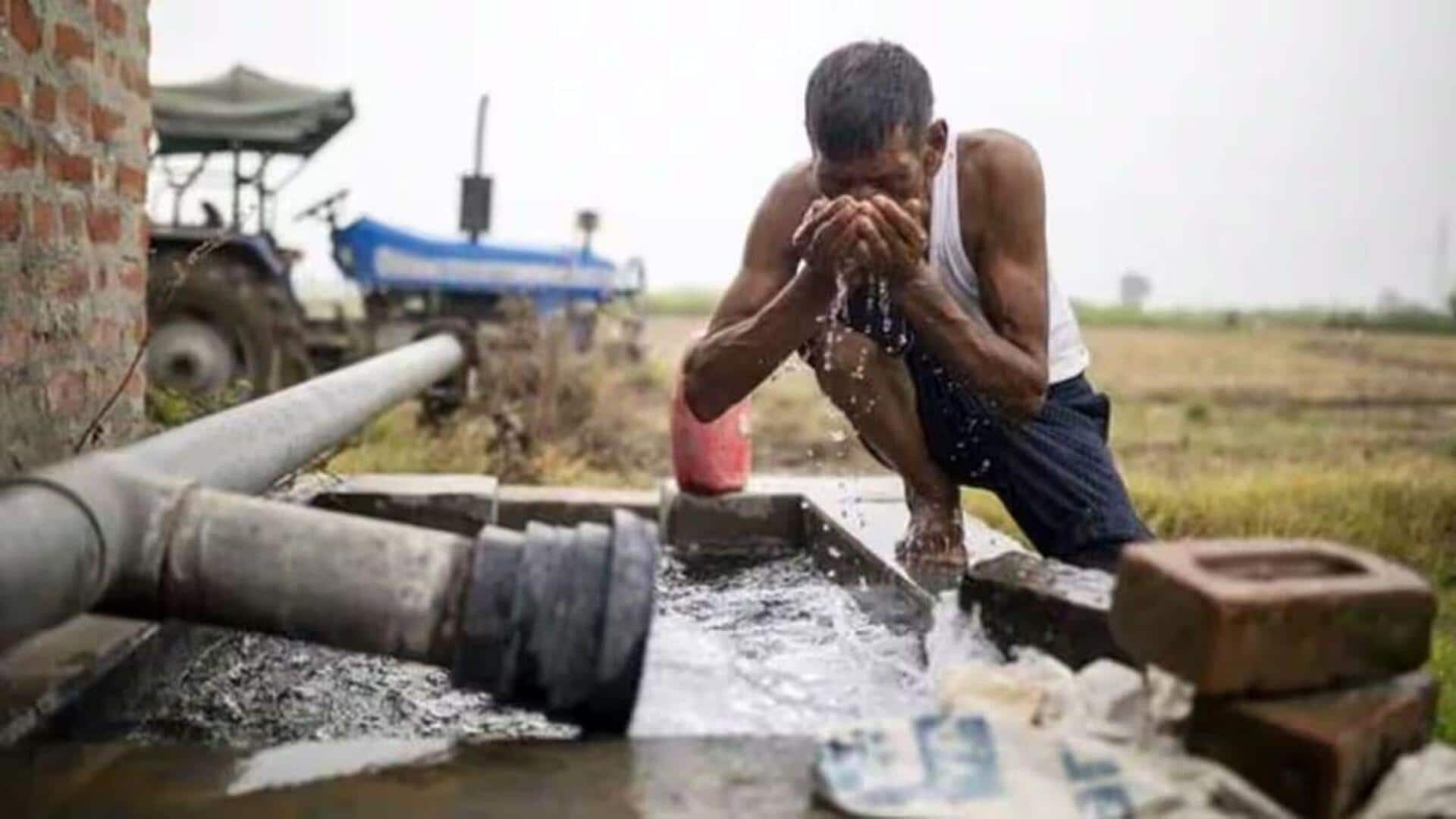
44% Delhi water samples fail safety test; some even unbathable
What's the story
A seven-day water sampling exercise by Hindustan Times at 18 locations in Delhi has revealed alarming levels of contamination. The study, conducted with the Shri Ram Institute for Industrial Research, found that nearly 44% of the samples failed to meet basic microbiological safety standards. Eight samples tested positive for total coliform or E. coli, which are indicators of fecal contamination.
Health risks
Contamination mostly found in domestic tap connections
The contamination was mostly found in domestic tap connections, especially in neighborhood pipelines.
Rajouri Garden in West Delhi had the highest levels of contamination, followed by Chilla village and DDA flats in Mayur Vihar Phase 3.
Three of the residential samples failed to reach even the "bathing water" standard, HT reported.
No microbial contamination was found at publicly accessible sources like water vending machines or DJB tankers. Several pockets in south and central Delhi also tested clean.
Infrastructure issues
Experts call for urgent infrastructure overhauls
Experts say that while Delhi's broader water distribution system is mostly reliable, the findings indicate deeper structural issues.
They say the city's aging and corroding network of sewer and water pipelines may be allowing localized intermixing.
The results point to a need for urgent infrastructure overhauls to prevent isolated failures from developing into larger public health crises.
Public response
Residents rely on bottled water for cooking
The exercise was conducted in areas where long-standing complaints of dirty water were shared with the DJB.
In Rajouri Garden, residents reported brown and sewage-smelling water, prompting them to rely on bottled water for cooking.
"DJB is not doing anything...when we complain...water quality improves for a few days before worsening again," Rajesh Mahajan, an RWA member, told HT.
Residents in Budhela, where total coliform was 24 and E. coli 6 cfu, stated data do not accurately reflect the lived experience.
Aging pipelines
Over 5,200km of pipelines are over 30 years old
Delhi's water supply network is over 15,400km long, with many pipelines aging.
Over 5,200km of pipelines are more than 30 years old, increasing risks of leakage and cross-contamination.
Instances of sewage mixing with tap water have been reported in several colonies over the past decade.
The exercise was conducted after a drinking water contamination outbreak in Indore's Bhagirathpura claimed the lives of 15 people and left over 200 hospitalized.