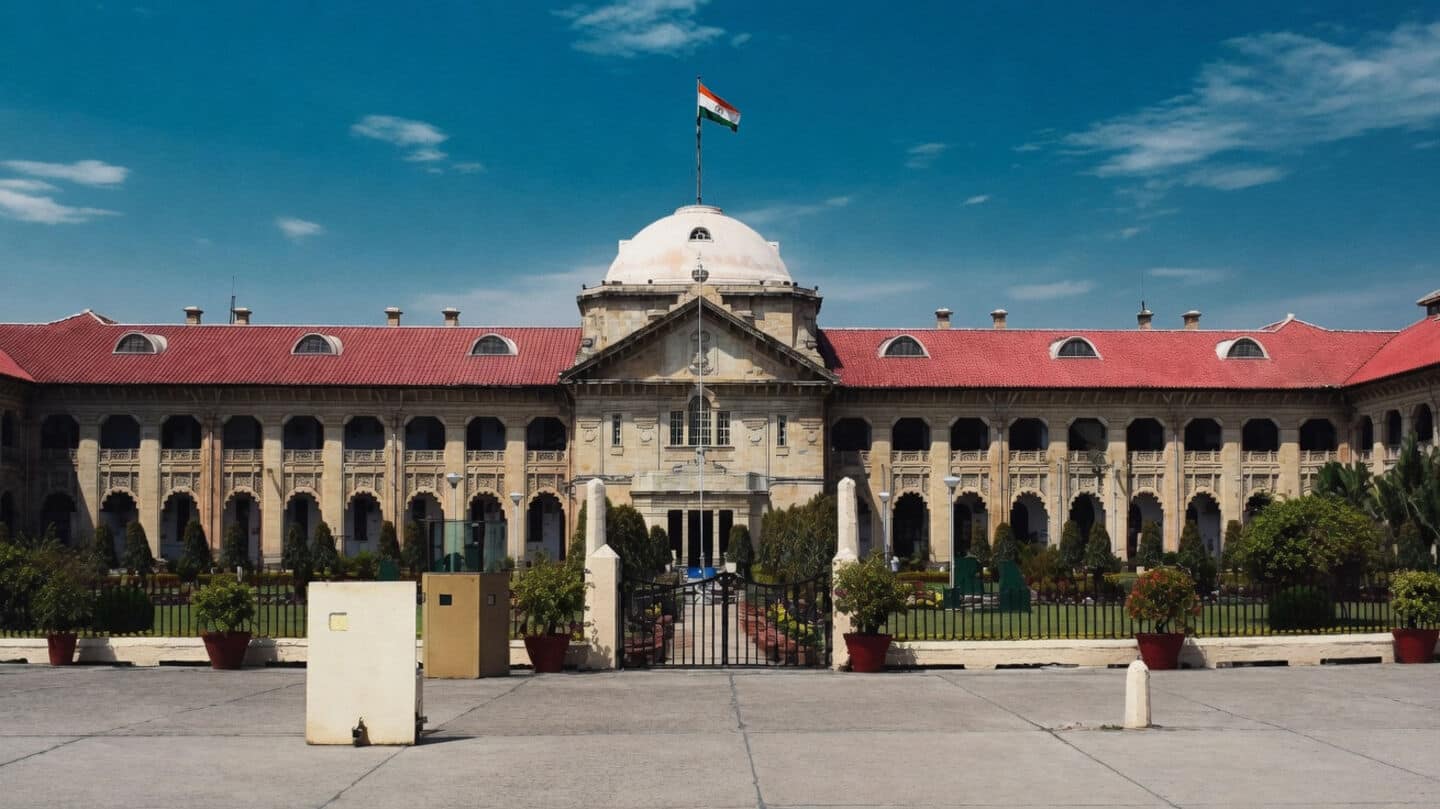
Allahabad HC upholds state's right to acquire religious sites
What's the story
The Allahabad High Court has upheld the state's right to acquire religious sites for public projects. The court's ruling came while dismissing a writ petition against a road widening and beautification project at Varanasi's Daalmandi market. The petitioners, six shop tenants in the market, had sought protection from forcible eviction and requested an alternative route instead of widening the road along its current alignment.
Legal ruling
Petitioners didn't approach competent authorities: HC
The Division Bench of Justice JJ Munir and Justice Arun Kumar dismissed the petitioners' concerns, saying they had mixed tenancy disputes with a sensitive issue of protecting religious sites.
The court said the petitioners didn't approach competent authorities before seeking a writ from it.
It also interpreted the Places of Worship (Special Provisions) Act, 1991, concluding that while it stops conversion between denominations, it doesn't stop state land acquisition for public purposes.
Equal status
All religious sites equal under India's secular constitution
The court also referred to the Supreme Court ruling in Dr. M Ismail Faruqui versus Union of India, which said no religious site is exempt from acquisition.
It stressed that under India's secular constitution, all religious sites have equal status and can be acquired for public utility or development projects.
The state government was found to be acting within the law with this project undertaken in the public interest.
Safeguards
HC's clarification on Waqf Board, mutawallis rights
The court also noted that the Right to Fair Compensation and Transparency in Land Acquisition, Rehabilitation and Resettlement Act, 2013, provides sufficient safeguards for compensation and rehabilitation of affected families. This made the petitioners' concerns unfounded.
The writ petition was dismissed with a clarification that the judgment doesn't affect the rights of the Waqf Board or Mutawallis if they seek legal recourse later.