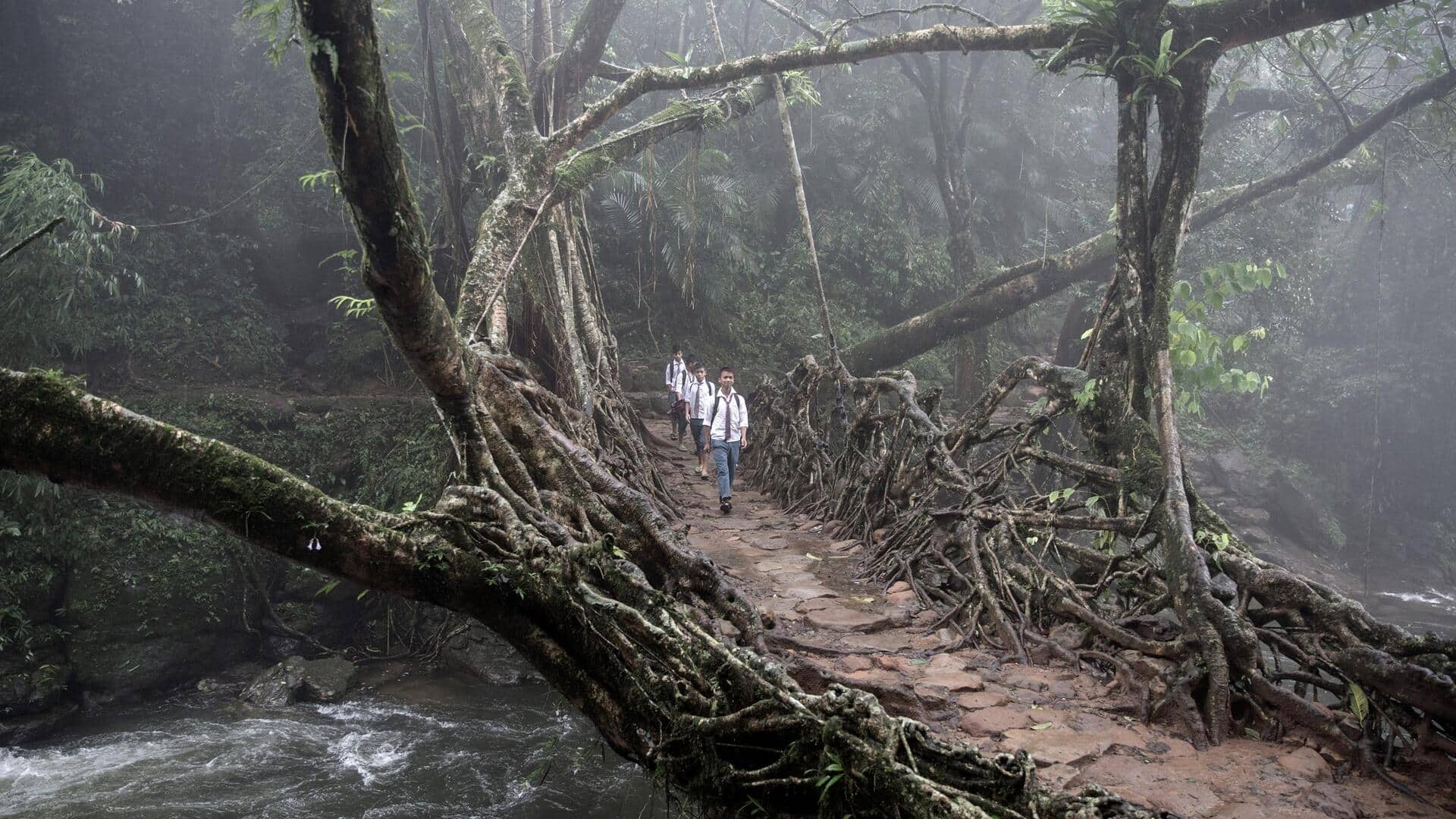
India nominates Meghalaya's living root bridges for UNESCO heritage status
What's the story
India has officially nominated the living root bridges of Meghalaya for UNESCO World Heritage status. The nomination, titled "Jingkieng Jri/Lyu Chrai Cultural Landscape," was submitted to UNESCO's World Heritage Centre by India's Ambassador and Permanent Representative to UNESCO, Vishal V. Sharma. The submission highlights a unique cultural landscape shaped by the indigenous Khasi and Jaintia communities over centuries.
Official statement
Meghalaya CM hopeful of early UNESCO recognition
Meghalaya Chief Minister Conrad K Sangma has expressed hope that the living root bridges will be recognized this year. "We are hopeful that the Living Root Bridges will be inscribed this year, ensuring that the indigenous communities... receive the global recognition they so richly deserve," he said in a post on X. The nomination aims to give global recognition and ensure long-term conservation efforts for these unique structures.
Cultural significance
Indigenous philosophy and sustainable practices
The living root bridges are not built but grown by training the aerial roots of rubber fig trees. They take decades to mature and can last for centuries with proper maintenance. This tradition reflects an indigenous philosophy of coexistence with nature and reverence for Mei Ramew, or Mother Earth. The bridges symbolize sustainable land use, community governance, and ecological stewardship passed down through generations.
Conservation efforts
Recognition of indigenous knowledge systems
The nomination also highlights India's commitment to recognizing and preserving living cultural traditions and indigenous knowledge systems. Ambassador Sharma thanked Prime Minister Narendra Modi, Union Culture Minister Gajendra Singh Shekhawat, and Meghalaya CM Sangma for their support in the nomination process. He also acknowledged the role of local communities in safeguarding these structures.
Tourism boost
Boost to sustainable tourism in Meghalaya
If inscribed, the living root bridges would join India's growing list of UNESCO World Heritage Sites. This would put Meghalaya on the global cultural and sustainable tourism map. Officials say that while international recognition is sought, it also aims to strengthen long-term conservation efforts so that tourism growth does not dilute cultural and ecological values that make these bridges unique.