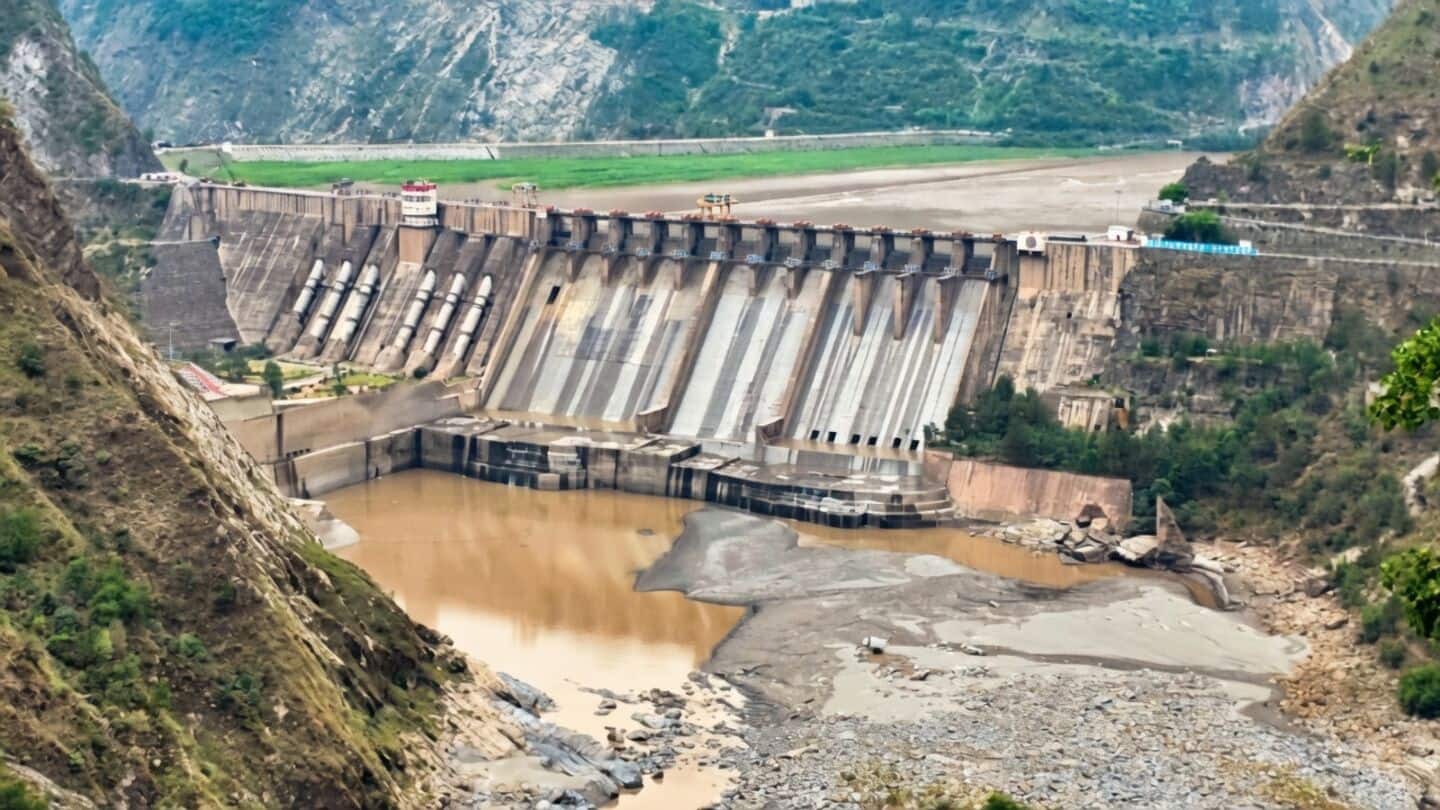
Indus Waters Treaty won't work in current form: Government sources
What's the story
The Indus Waters Treaty (IWT) will not function again in its current form, government sources told PTI on Monday. They stressed that any future water-sharing arrangement would require Pakistan to end cross-border terrorism against India. The treaty, which has been in place for over 65 years, would need to be renegotiated under a new framework.
Treaty suspension
India suspended IWT after Pahalgam attack
India had suspended the IWT after the April 2025 Pahalgam terror attack, which killed 26 civilians. The move was part of a series of diplomatic and economic measures taken against Pakistan in response to the attack.
India has accused The Resistance Front (TRF), a proxy of Pakistan-based Lashkar-e-Taiba (LeT), of carrying out the attack.
Operation Sindoor
Operation Sindoor and the IWT exit
In May, India launched "Operation Sindoor," targeting what it termed as terrorist infrastructure in Pakistan.
However, government sources were also quoted as clarifying that India is not actively looking to exit the IWT for now.
They stressed that as a sovereign nation, India has the right to exit any international agreement if it goes against its interests.
Water management
India rejects Pakistan's claims of water shortages
India has dismissed Pakistan's claims that keeping the treaty in abeyance has caused water shortages.
They argued that Pakistan loses a significant amount of water due to poor storage infrastructure and unresolved disputes among its provinces.
The Indian government also said there is no evidence that Pakistan has taken credible steps to curb terrorism, despite India's concerns.
Project delays
Pakistan's misuse of treaty's dispute-resolution mechanisms
Government sources have accused Pakistan of using the treaty's dispute-resolution mechanisms to delay India's legitimate hydroelectric projects on western rivers.
They said nearly every Indian project has faced objections from Pakistan, including small ones like a 200-kilowatt hydropower project for a remote tribal region.
The sources alleged that Pakistan escalated routine technical issues to third-party forums and prolonged bilateral discussions while pursuing proceedings before both the Neutral Expert and the Court of Arbitration.