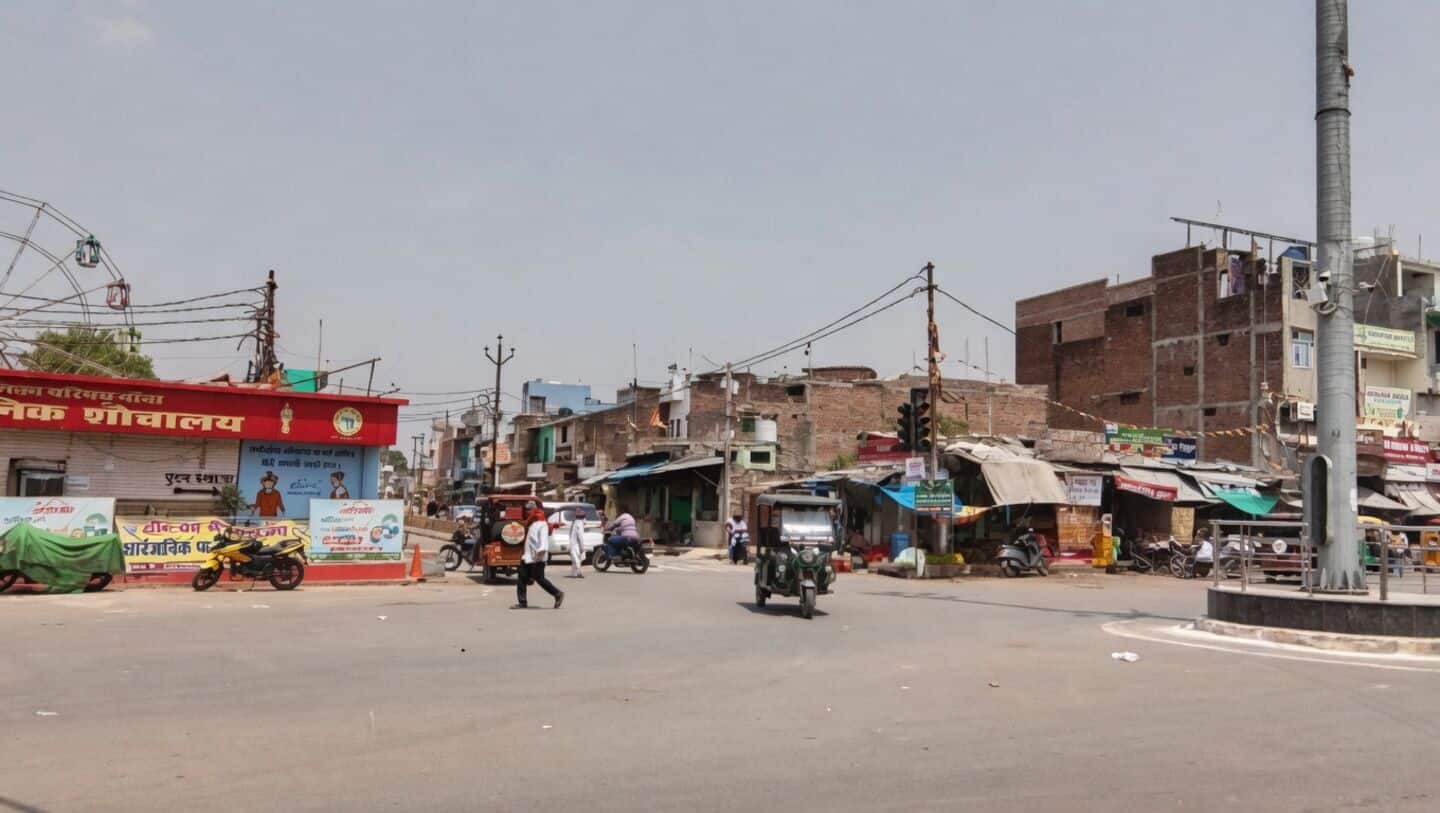
Too hot for daily activities, hottest district shuts at 10:00am
What's the story
Banda, a district in Uttar Pradesh, is facing extreme heat conditions with temperatures soaring to 48.2°C. The heat has become so unbearable that by 10:00am every day, the district comes to a standstill, HT reported. Local businesses are affected as customers only start coming out in the evening. Lakhan Gupta, a jeweler in Attara town, said he leaves home at 6:00am to finish work before it gets too hot and added, "Since April, I have sold almost nothing."
Record heat
Farmers now work at night under LED floodlights
On April 27, Banda recorded a scorching 47.6°C, the highest temperature in India that day and the hottest since 1951. The record was broken again on Tuesday with a temperature of 48.2°C.
The extreme heat has changed how people work in Banda.
Farmers now work at night under LED floodlights as daytime labor becomes unbearable and contractors say workers are losing up to 40% of their wages by refusing to work between 10:00am and 5:00pm due to the heat.
Environmental impact
Extreme heat a result of local ecological destruction
The extreme heat in Banda is not just a result of rising temperatures but also years of local ecological destruction.
A study co-authored by Arjun P Varma from Banda Agriculture University found that the district lost nearly a sixth of its dense forest cover between 1991-92 and 2021-22.
Deforestation has weakened moisture retention, while mining activities have dried up rivers and reduced groundwater recharge.
Water depletion
Excessive sand extraction from Ken river
Excessive sand extraction from the Ken River has also reached industrial scale, with heavy excavators operating inside the riverbed.
Activist Ramlal Jayan estimates around 55,000 tons of red sand are extracted daily from the Ken alone.
This mining activity has also spread to smaller rivers like Ranj and Bagai, where villagers report sharp declines in water levels.
Social activist Uma Shankar Pandey said excessive extraction strips away natural river sand that helps retain water and recharge groundwater.
Future risk
Parts of Banda could become barren within 2 decades
A 2025 study by academics from four universities, published earlier this year on ResearchGate, found that Banda's entire forest cover decreased from around 120 square kilometers in 2005 to approximately 95 square kilometers, a 15.54% drop.
Dense woodland cover declined by 17.55%. The researchers warned that this vicious cycle of heat could make parts of the district barren within two decades.