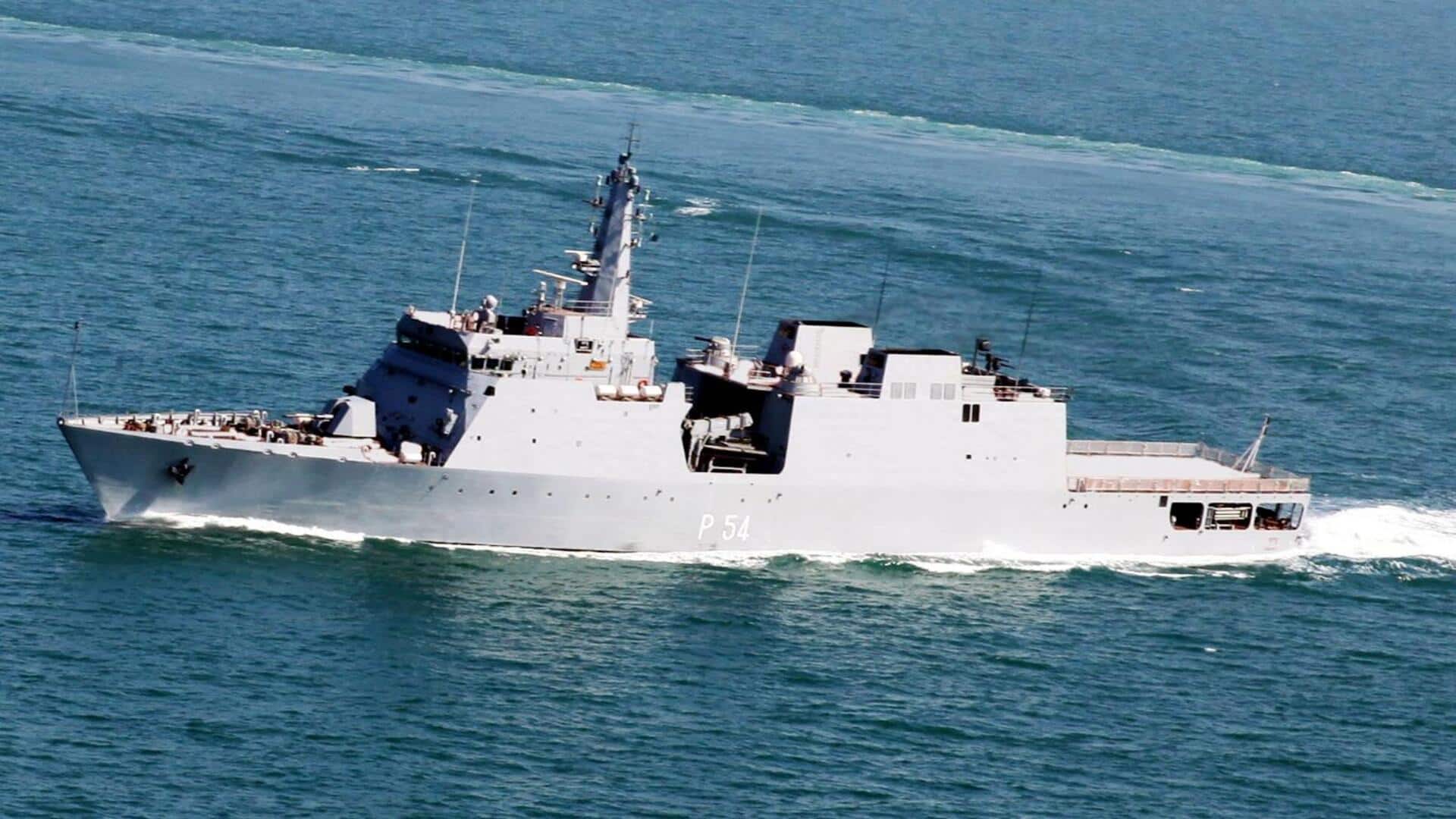
Indian Navy identifies Hormuz as 'primary' area of interest
What's the story
The Indian Navy has identified the Strait of Hormuz as a "primary area" of strategic interest in its maritime security strategy. The strategy, released by Navy Chief Admiral D K Tripathi, comes amid an ongoing blockade at the Strait that has pushed up crude oil prices. The document highlights key maritime choke points in the Indian Ocean Region (IOR), including the Cape of Good Hope, the Mozambique Channel, Bab-el-Mandeb, the Suez Canal, and the Straits of Malacca and Singapore.
Strategic nodes
Malacca, Singapore straits crucial for India's energy security
The Malacca and Singapore Straits are particularly important as they provide the shortest sea route between the Persian Gulf and East Asia/West Pacific through the South China Sea and Pacific Ocean.
The Sunda Strait is another important alternative route, albeit less preferred by large ships due to navigational hazards.
Other key straits mentioned in the strategy include Lombok Strait, the Ombai Strait, and the Wetar Strait.
Strategic expansion
Areas beyond primary choke points designated as 'secondary' areas
The document also highlights that as India's economic and strategic engagements across oceans expand, so will the external influences impacting its national interests. This necessitates a broader operational footprint for the Indian Navy.
Consequently, areas beyond these primary choke points have been designated as "secondary" areas of maritime interest. These include India's coastal areas, the Arabian Sea, the Bay of Bengal, the Andaman Sea, and the Laccadive Sea, among others.
Economic lifeline
Importance of maritime trade routes for India
The maritime domain is also a key link for imports critical to India's food security, public health, and industrial capacity.
Despite meeting 73% of its fertilizer requirements through domestic production in 2025, India remains dependent on imports for certain fertilizers.
The country also imports about 16 million tons of edible oil annually by sea.
This highlights how vital maritime trade routes are for India's economic growth and prosperity.