
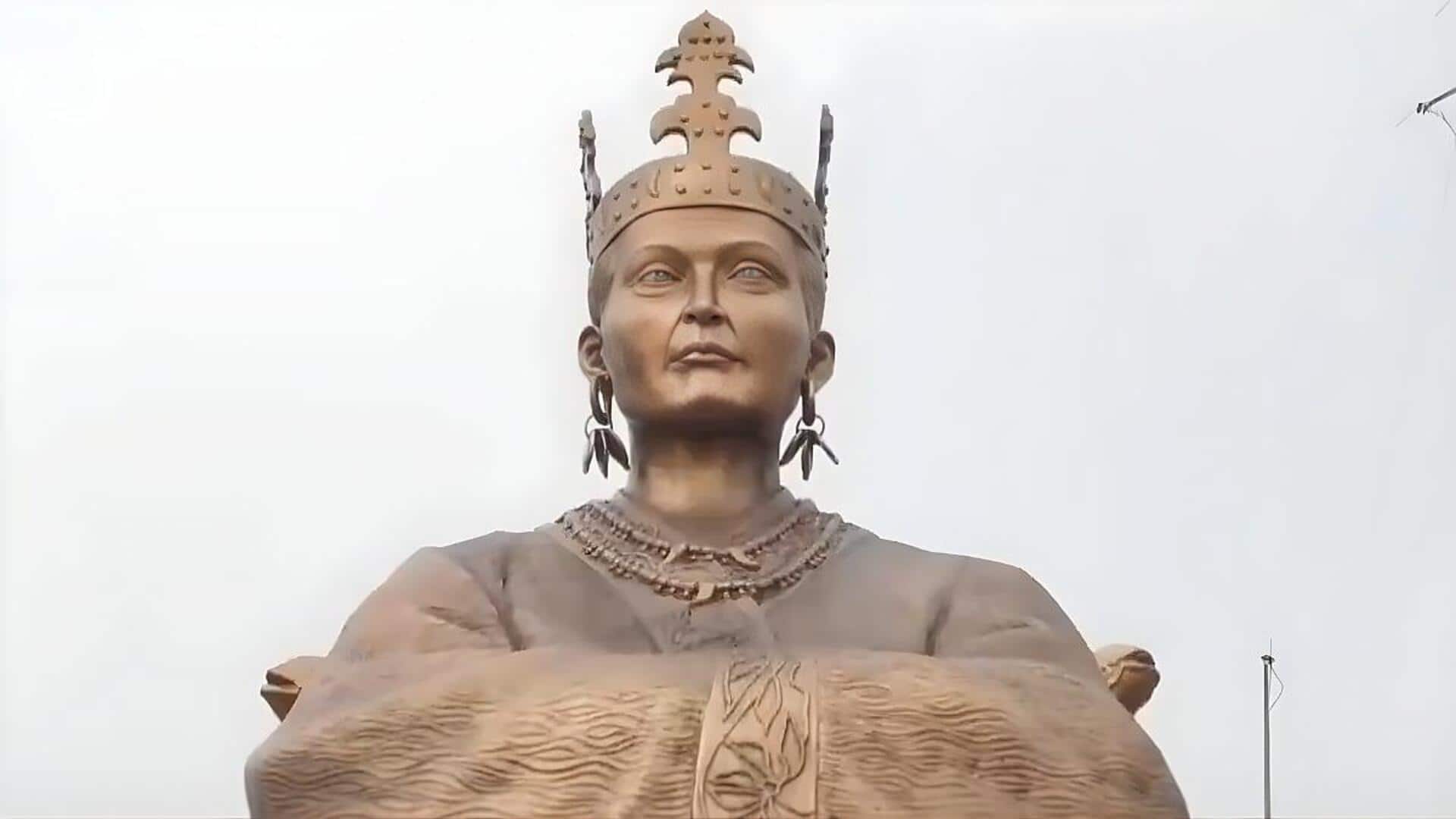
Ayodhya unveils Korean Queen Heo Hwang-ok's statue: Her India connection
What's the story
A bronze statue of legendary Korean Queen Heo Hwang-ok, believed to be of Indian origin, has been unveiled in Ayodhya, Uttar Pradesh. Notably, the temple town is said to be the birthplace of the queen, commonly known as Princess Suriratna. According to Korean folklore, she sailed from Ayodhya to Korea in 48 AD and married King Kim Suro, the founder of the ancient Gaya kingdom. Heo is also credited with bringing Indian culture and Buddhist values to present-day South Korea.
Cultural link
More on Ayodhya's connection to Korean Queen Heo
According to some Chinese-language records, the then-king of Ayodhya had a dream in which Sange Je (Heavenly Lord) told him that his daughter must marry King Suro, following which he sent Heo on a sea voyage. She is believed to have arrived in Korea from a distant kingdom called "Ayuta" when she was 16. Moreover, anthropologist Kim Byung-mo speculates that "Ayuta" could actually refer to Ayodhya, though historians have not found conclusive evidence for the princess's existence.
Memorial
Previous tributes to Queen Heo
The recently unveiled bronze statue is not the first tribute to Queen Heo in Ayodhya. A memorial stone dedicated to her, built through a collaboration between Uttar Pradesh and Korea's Gimhae City, was inaugurated in 2001. This memorial was redeveloped in 2015, further cementing the cultural connection between India and South Korea through their shared history with the queen.