BRICS meet: Iran, UAE tensions over West Asia mar discussions
What's the story
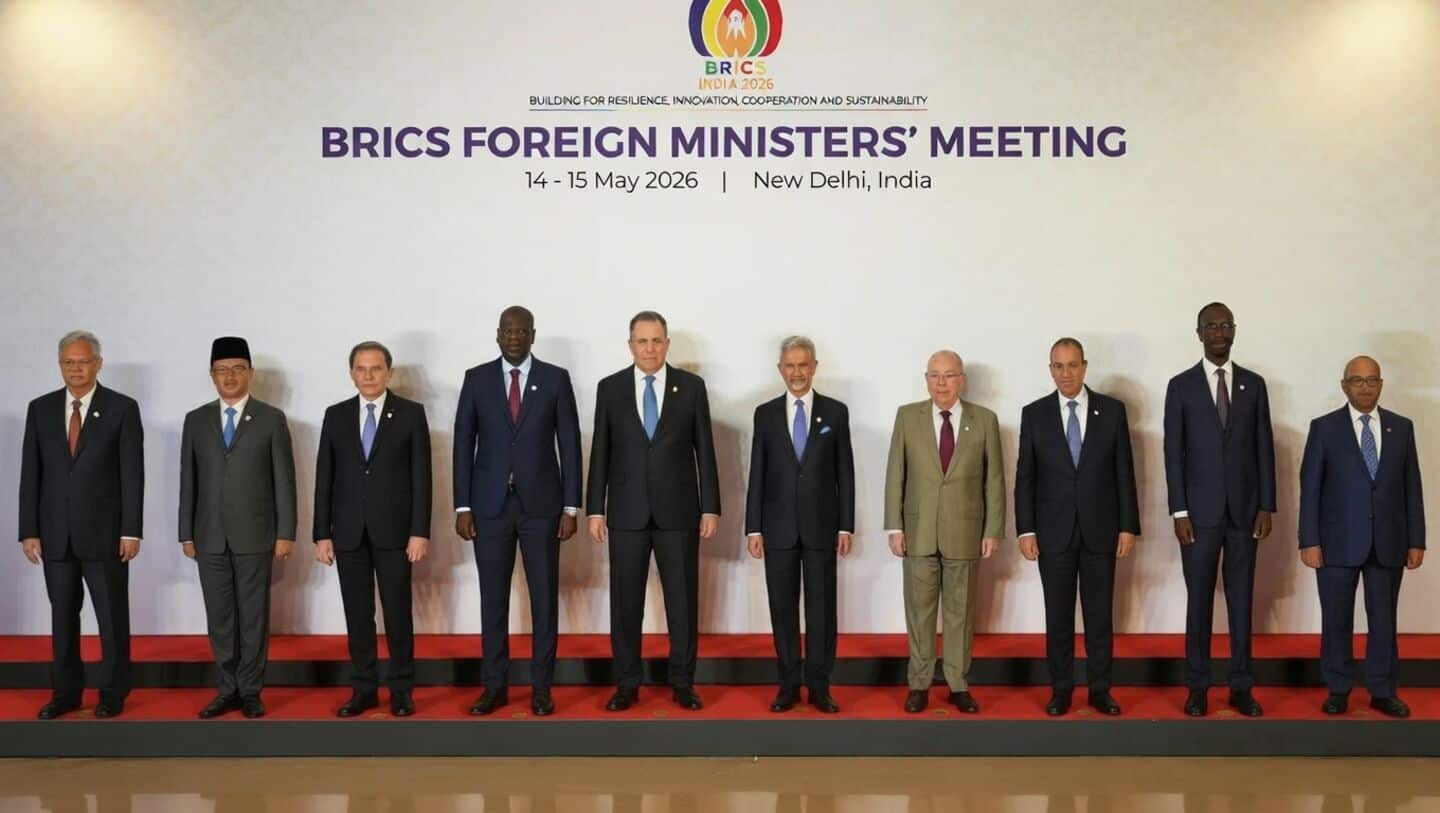
The BRICS foreign ministers' meeting in New Delhi has been marred by tensions between Iran and the United Arab Emirates (UAE) over the situation in West Asia. Iranian Foreign Minister Seyed Abbas Araghchi accused the UAE of complicity in aggression against Iran, while the UAE seeks to condemn Iran's actions. The meeting, which is being chaired by External Affairs Minister S Jaishankar, is expected to conclude with a final session on Friday morning.
Accusations
Iranian deputy foreign minister accuses UAE of stalling consensus
Araghchi accused the UAE of directly participating in aggression against Iran by providing military bases and support to the United States and Israel.
He called on BRICS member states to explicitly condemn violations of international law by the United States and Israel, including their illegal aggression against Iran.
The Iranian Deputy Foreign Minister Kazem Gharibabadi later blamed the UAE for stalling the BRICS consensus on this issue, while expressing openness to Indian peace initiatives.
Expansion impact
BRICS meeting aims to discuss shaping a just global order
The BRICS group, which includes Brazil, Russia, India, China, South Africa, Egypt, Ethiopia, Iran, and the UAE since 2024 and Indonesia from 2025, represents nearly half of the world's population and a large chunk of its economy.
The meeting aims to discuss how BRICS can shape a more just global order.
However, sharp differences over West Asia have stalled consensus-building efforts in previous meetings.
Maritime cooperation
Iran welcomes Indian peace initiatives, says Gharibabadi
Gharibabadi also announced that Iran and Oman are working on a new framework for merchant vessels in the Strait of Hormuz.
He said India has shown "impartiality" as BRICS chair and welcomed any peace initiatives from New Delhi.
The deputy foreign minister also spoke about Pakistan's role as a facilitator in diplomatic efforts between Iran and the United States and stated that Tehran would welcome all such diplomatic efforts.
Sanctions impact
Chabahar port project commitment
Gharibabadi reiterated Iran's commitment to the Chabahar port project despite US sanctions.
He said if the US lifts its blockade, ends the war, and releases Tehran's frozen assets, Iran would open the Strait of Hormuz with transparency and no discrepancies.
The deputy foreign minister claimed that global oil prices have surged after Iran blocked this key shipping lane.