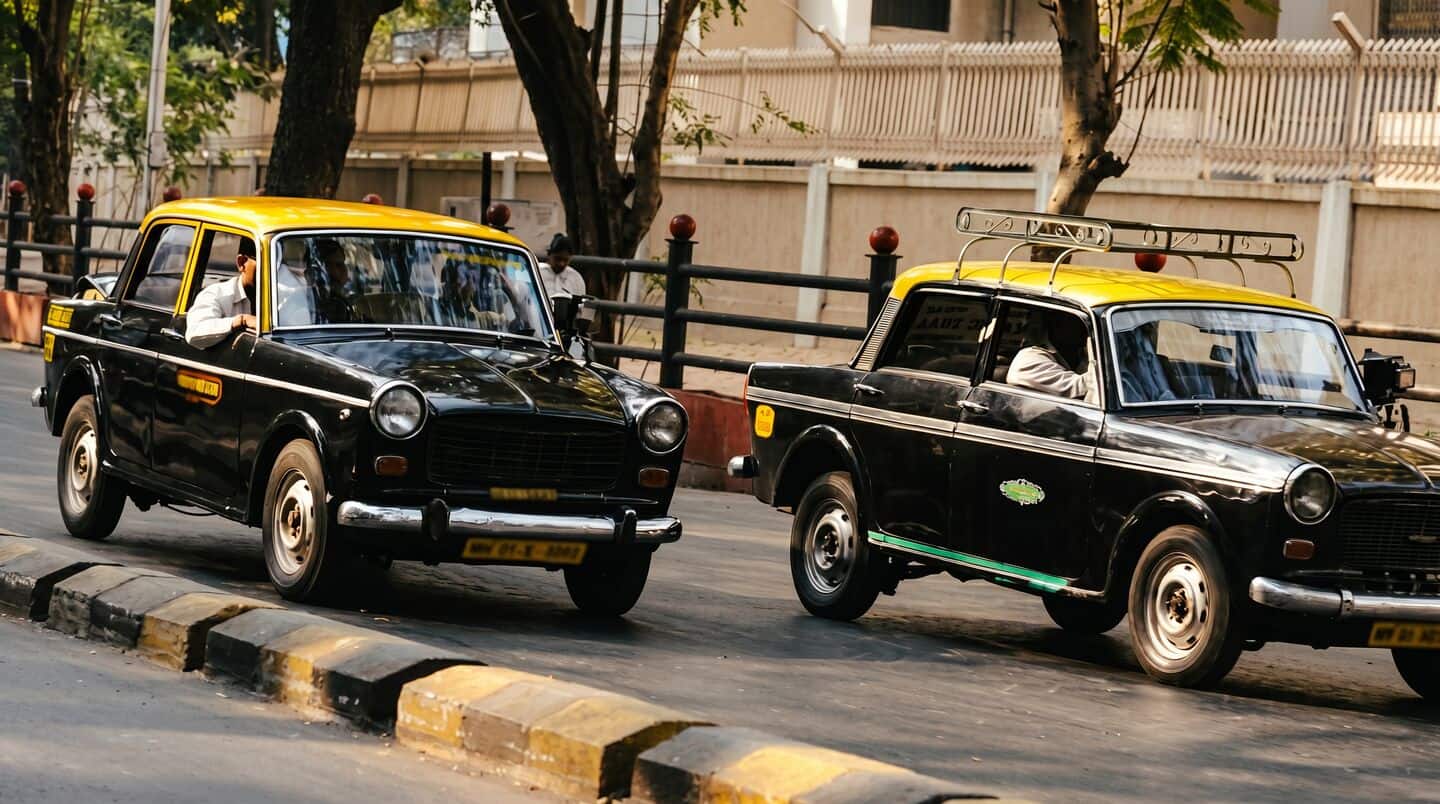
Maharashtra defers 'Marathi must' rule for taxi, auto drivers
What's the story
The Maharashtra government has postponed its decision to make knowledge of the Marathi language compulsory for taxi and auto-rickshaw drivers. Announced on April 14, the rule was to come into effect from May 1. State Transport Minister Pratap Sarnaik had earlier warned that licenses would be canceled if drivers failed a Marathi proficiency test. However, after a meeting with driver representatives, this decision has been deferred.
Inspection campaign
RTO inspection campaign to begin from May 1
The government has now instructed a special inspection campaign across all Regional Transport Offices (RTOs) from Friday. This drive will continue till August 15.
The campaign aims to check compliance with existing rules and illegal transportation activities.
"However, licenses will not be canceled solely on the grounds that the driver does not know Marathi," the government said, adding that "action will be taken only in accordance with other legal provisions."
Learning initiative
Training facilities for drivers to learn Marathi
A report on the drive will be submitted on August 16 for further policy decisions.
The government has also announced facilities at RTOs for drivers willing to learn Marathi.
Training will be provided by Konkan Marathi Sahitya Parishad and Mumbai Marathi Sahitya Sangh.
Booklets and e-material will be made available to assist in language learning.
Drivers completing this training will receive state-issued certificates, mandatory for license renewal.
Political response
Shiv Sena (UBT) leader Raut reacts to delay
Following the announcement, non-Marathi drivers' unions have decided to withdraw their call for a strike on May 4, The Hindu reported.
During a meeting with Sarnaik, the union leaders clarified that while they do not oppose the idea of drivers knowing the local language, they argued that the May 1 deadline was unrealistic, HT reported.
They proposed a timeline spanning from one to one-and-a-half years to allow drivers, mostly from non-Marathi-speaking backgrounds, to reach a functional level of proficiency.