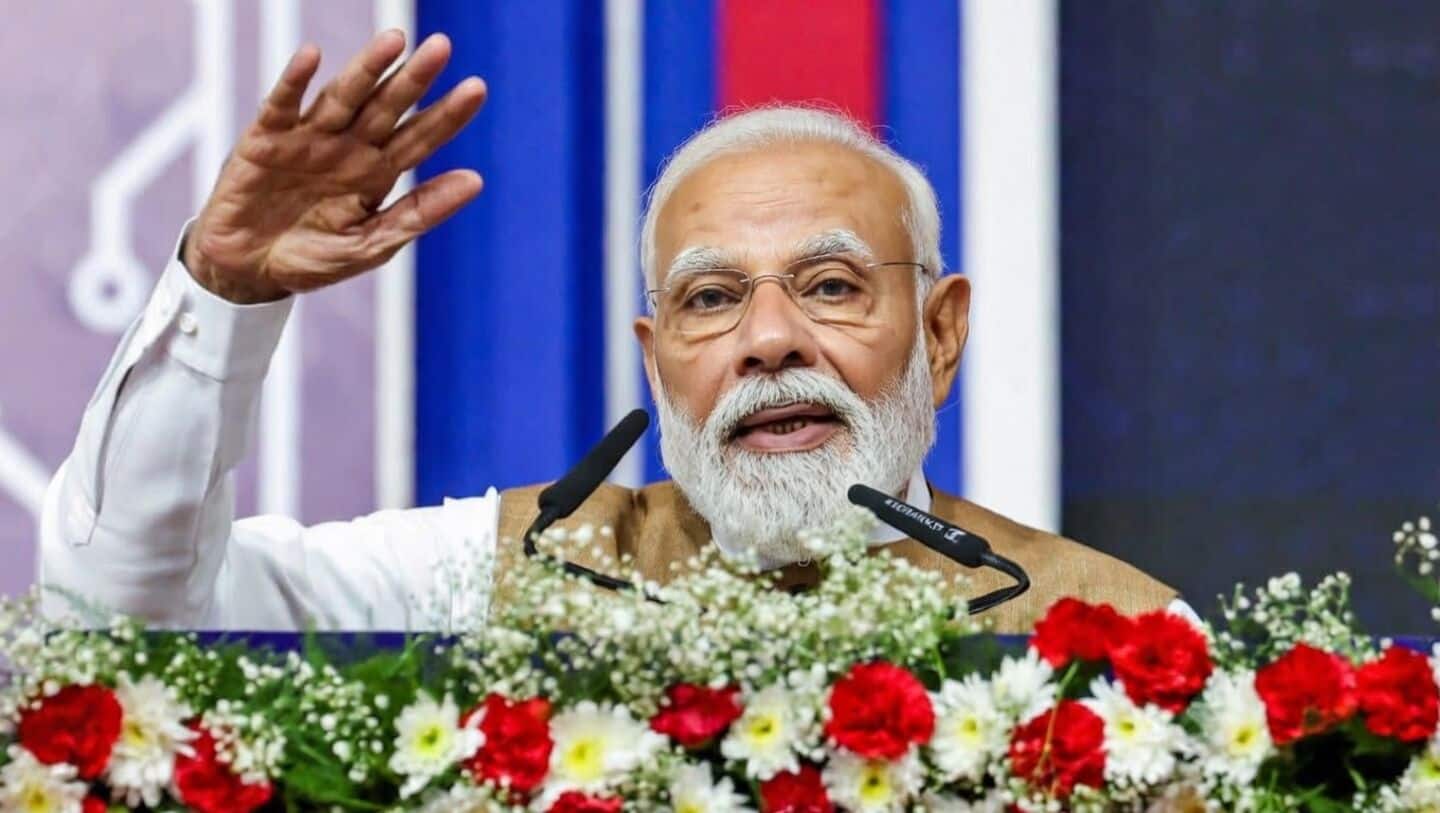
PM to chair security meet today over West Asia crisis
What's the story
Prime Minister Narendra Modi will preside over a meeting of the Cabinet Committee on Security (CCS) at 7:00pm on Wednesday. The meeting will focus on the deteriorating situation in West Asia and its impact on India's energy security, supply chains, and macro-economic stability. This comes after a previous CCS review held on March 22, which assessed essential commodities and sectors affected by the West Asia conflict.
Ministerial presence
Who will attend the meeting
The CCS, India's top decision-making body on national security and strategic issues, is headed by the Prime Minister.
It also includes Defence Minister Rajnath Singh, Home Minister Amit Shah, Finance Minister Nirmala Sitharaman, and External Affairs Minister S Jaishankar.
Senior ministers handling key economic and infrastructure portfolios are likely to attend the meeting.
Past discussions
Previous meeting on March 22
The March 22 CCS meeting reviewed the availability of critical needs such as food, fertilizers, fuel, and power.
Prime Minister Modi had directed a coordinated approach to tackle the effects of the West Asia conflict.
The meeting assessed the impact on sectors like agriculture, petroleum, power, and trade while ensuring stable supply chains.
Public address
PM Modi's remarks on global energy challenges
On March 31, PM Modi addressed the global energy challenges due to the West Asia conflict.
He said India has kept the situation under control through effective foreign policy and unity among citizens.
The Prime Minister also accused the opposition Congress party of spreading fear about the economic impacts of the conflict.
Economic warning
Opposition warns of financial earthquake
Leader of the Opposition Rahul Gandhi had warned of a possible financial earthquake due to rising fuel prices and inflation.
The West Asia conflict intensified after the United States and Israel struck Iranian territory on February 28, leading to Tehran's retaliatory action.
The crisis has impacted global energy markets, especially with disruptions in the Strait of Hormuz, a crucial shipping route for oil supplies.