Meet Sarnath, 45th UNESCO World Heritage Site in India
What's the story
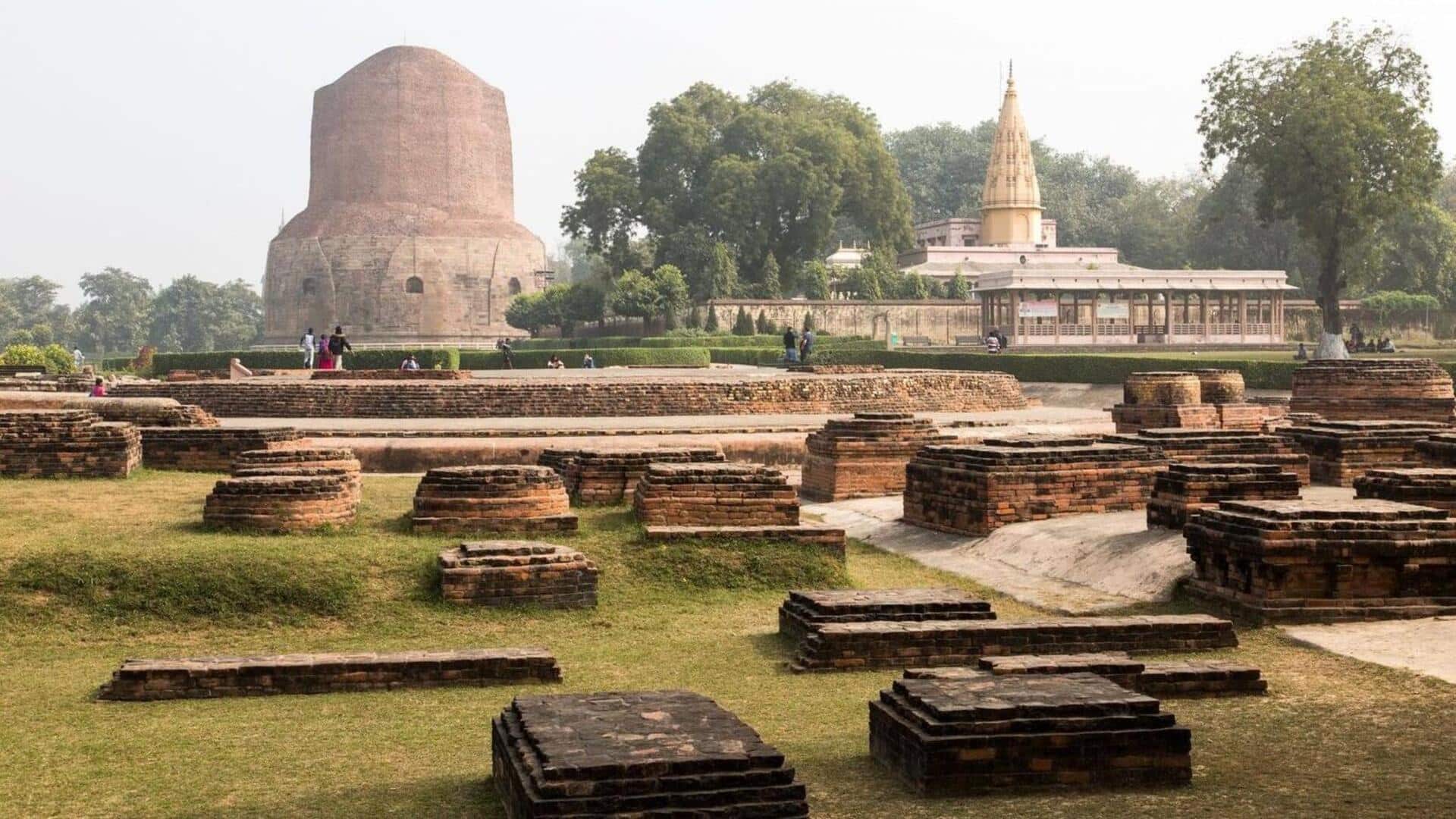
India's ancient Buddhist site of Sarnath in Uttar Pradesh has been inscribed on the UNESCO World Heritage List. The decision was made during the ongoing 48th session of the World Heritage Committee in Busan, South Korea. With this recognition, India now boasts a total of 45 UNESCO World Heritage properties, 37 cultural sites, seven natural ones, and one mixed site.
Cultural importance
Historic significance of Sarnath
Sarnath holds a special place in world history as the site where Lord Buddha delivered his first sermon after attaining Enlightenment, thus setting the Wheel of Dharma in motion and establishing the Buddhist Sangha.
The Lion Capital of Ashoka, found at Sarnath and adopted as India's National Emblem, adds to its historic significance.
Global impact
India, UNESCO working together to build peace: Sharma
India's Ambassador to UNESCO, Vishal V. Sharma, expressed gratitude toward the World Heritage Centre and other stakeholders for Sarnath's inscription.
He stressed that Sarnath is a place of reflection for over 500 million Buddhists around the world.
"Sarnath inspires youth to seek truth, embrace non-violence," he said, adding it resonates with India and UNESCO's mission of building peace.
Archeological significance
Archeological remains date back to 3rd century BC
Located about 10km from Varanasi, Sarnath is one of the four most important pilgrimage sites associated with Buddha's life.
The archeological remains at this site date back to the 3rd century BC and include stupas, monasteries, temples, and the Ashokan pillar.
Some of its most famous monuments are the Dhamekh Stupa and Dharmarajika Stupa.
Dynastic influence
Center of Buddhist religious activity
Over the centuries, Sarnath has been patronized by the Maurya, Kushana, as well as the Gupta dynasties. It grew into a major center of Buddhist religious activity during these times.
The site's sculptures, especially those from the Gupta period, are considered some of the finest examples of Indian Buddhist art.