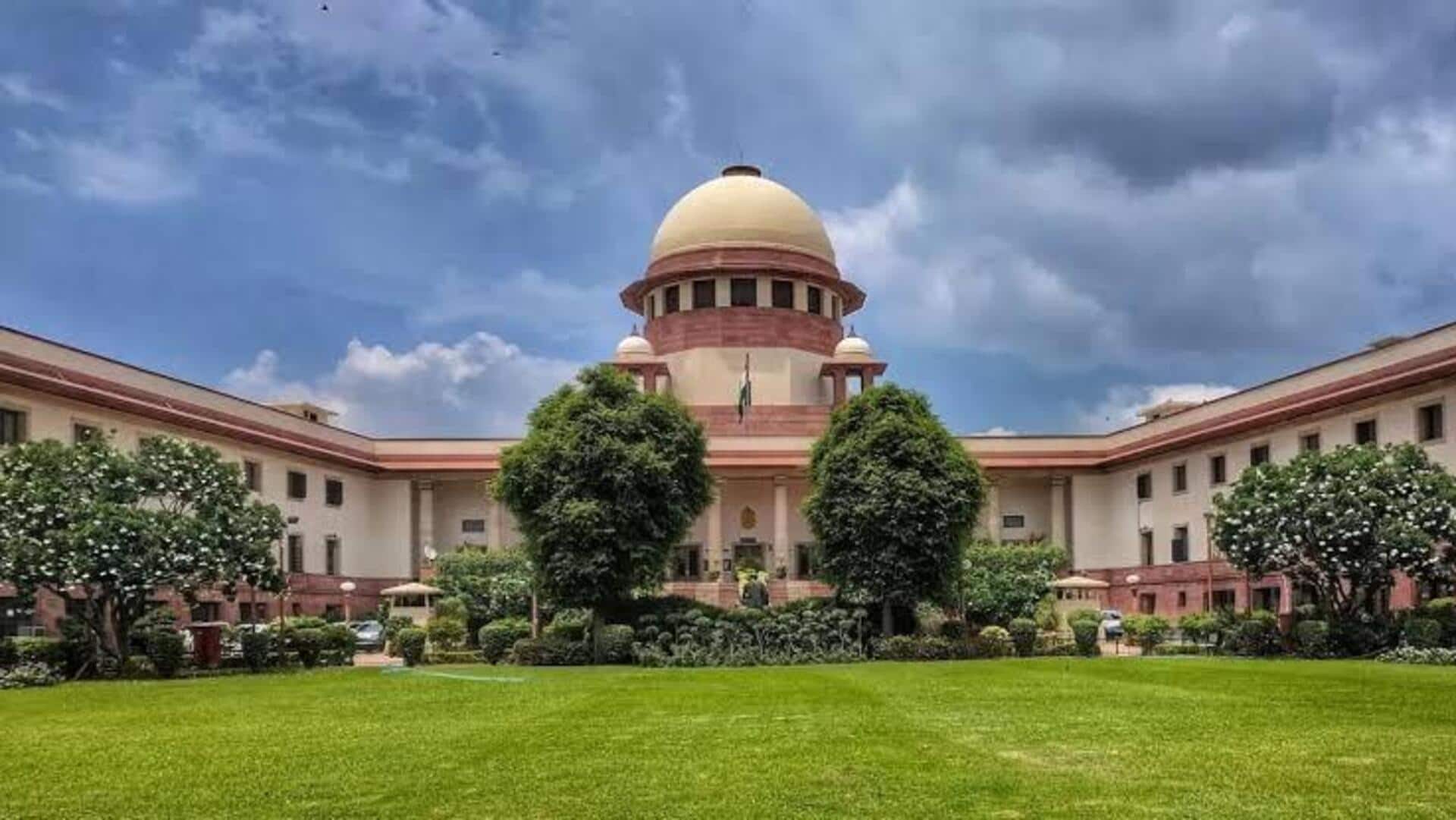
SC bans uploading, sharing of audio, video recordings of hearings
What's the story
The Supreme Court has issued an interim order barring the extraction, editing, dissemination, reposting, uploading, or monetization of audio and video recordings of court proceedings on social media and other digital platforms without prior permission. The order was passed by a bench headed by Chief Justice Surya Kant during the hearing of a public interest litigation filed by journalist Harshita Grover.
Legal concerns
Petition seeks guidelines for clipping, editing of court proceedings
The petition filed by Grover sought guidelines to regulate the clipping, editing, dissemination, and monetization of audiovisual recordings of court proceedings on digital platforms.
It argued that selective and decontextualized circulation of courtroom exchanges is undermining the dignity of courts and eroding public confidence in the justice delivery system.
The bench also impleaded all High Courts in this matter and directed them to submit reports on adopting the Supreme Court's livestreaming guidelines.
Legal backing
Artificial intelligence could be used to manipulate courtroom videos
Furthermore, it instructed the Union government to present to the court a proposal identifying the nodal ministries that would implement the reliefs sought in the plea.
Solicitor General Tushar Mehta supported the petitioner's request for interim protection.
He warned that AI could be used to manipulate courtroom videos, changing judges' and lawyers' words while keeping their lip movements intact.
CJI Kant agreed that misinformation from distorted reporting was a growing concern, citing his own experience with distorted media reports.
Regulatory framework
Misuse for sensationalism and commercial gain
The petitioner argues that while livestreaming was introduced to promote transparency and open justice, the lack of safeguards has led to misuse for sensationalism and commercial gain.
The plea cited instances where courtroom exchanges were circulated without context or misleading captions, exposing judges and lawyers to trolling and vilification.
The plea also makes it clear that it does not intend to limit the principle of open justice or fair reporting of court proceedings.
Misuse examples
'Judicial material being commercially exploited'
Instead, it wants "reasonable safeguards" to prevent illegal clipping, editing, transmission, and commercial exploitation of judicial recordings, ensuring transparency while preventing court proceedings from being distorted.
The plea cited several instances of alleged misuse of judicial recordings, including edited clips involving judges and advocates.
The appeal drew attention to the United Kingdom Supreme Court's copyright terms and conditions regulating audiovisual recordings, arguing that similar safeguards should be implemented in India to avoid distortion and commercial exploitation while maintaining open justice.