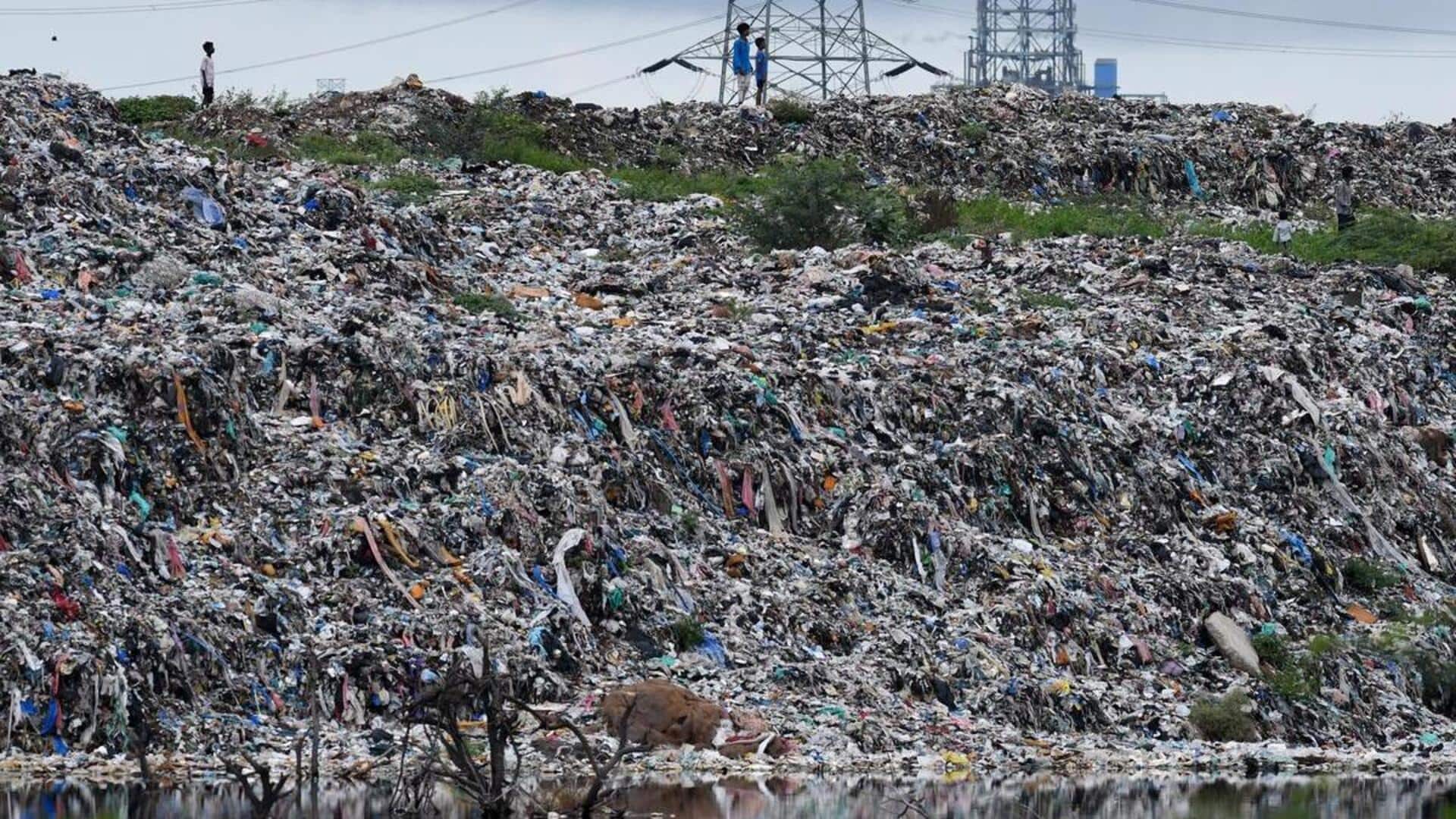
Malls, hospitals could lose power, water if this rule disobeyed
What's the story
The Supreme Court has issued nationwide directions for the strict implementation of the Solid Waste Management (SWM) Rules, 2026, expressing concerns over the huge amount of solid waste generated and the lack of civic sense in its management and disposal. A bench comprising Justices SVN Bhatti and NV Anjaria said that infrastructure for solid waste management needs to be completely audited and upgraded as per SWM Rules, 2026.
Societal apathy
Bench's observations on civic sense
The bench lamented the widespread attitude in society: "I am entitled to generate, but not to cooperate and control the impact of solid waste management at the threshold."
It observed that the volume and nature of waste, including biodegradable, non-biodegradable, and hazardous, had outstripped what any single class of workers could be expected to handle.
It ordered that bulk garbage generators be identified within six weeks and their electricity and water lines be terminated if SWM rules are not followed.
Nationwide issue
Appeals from NGT orders
The court was hearing appeals from orders of the National Green Tribunal on environmental compliance by municipal corporations under SWM rules.
The Bhopal Municipal Corporation had challenged proceedings related to its obligations in handling municipal solid waste.
Given the magnitude of the problem, the Supreme Court later expanded the scope of this matter nationwide, flagging the lack of compliance with the SWM Rules among individuals and institutions, including schools and colleges, students, educated and illiterate people, employed and unemployed people
Enforcement needed
Centre commended for setting up statutory committees
The Supreme Court also commended the Centre for setting up statutory committees to implement and enforce SWM Rules, effective from April 1.
However, it stressed that merely having committees and enforcement agencies would not solve the larger hazards of non-compliance.
The court directed district collectors to identify bulk waste generators (BWGs) within six weeks with local bodies' help.
Legal empowerment
Empower district collectors under Environment (Protection) Act, 1986: Court
The court also directed the Union Environment Ministry to empower district collectors under the Environment (Protection) Act, 1986.
This will enable collectors to take punitive action against violations of waste management rules.
The SCMC has been directed to inform BWGs about consequences of non-compliance with SWM Rules, 2026.
These include temporary disconnection of power or water supply until compliance is achieved.
Enforcement cells
Special cells in every district mandated
The court has also mandated the formation of special cells in every district with regional officers of pollution control boards as members.
These cells can disconnect electricity and water connections of BWGs, violating rules on waste processing and segregation.
BWGs include institutions generating over 100kg/day waste or having built-up areas over 20,000 square meters. They include large hotels, malls, hospitals, etc. consuming more than 40,000-liter/day water.