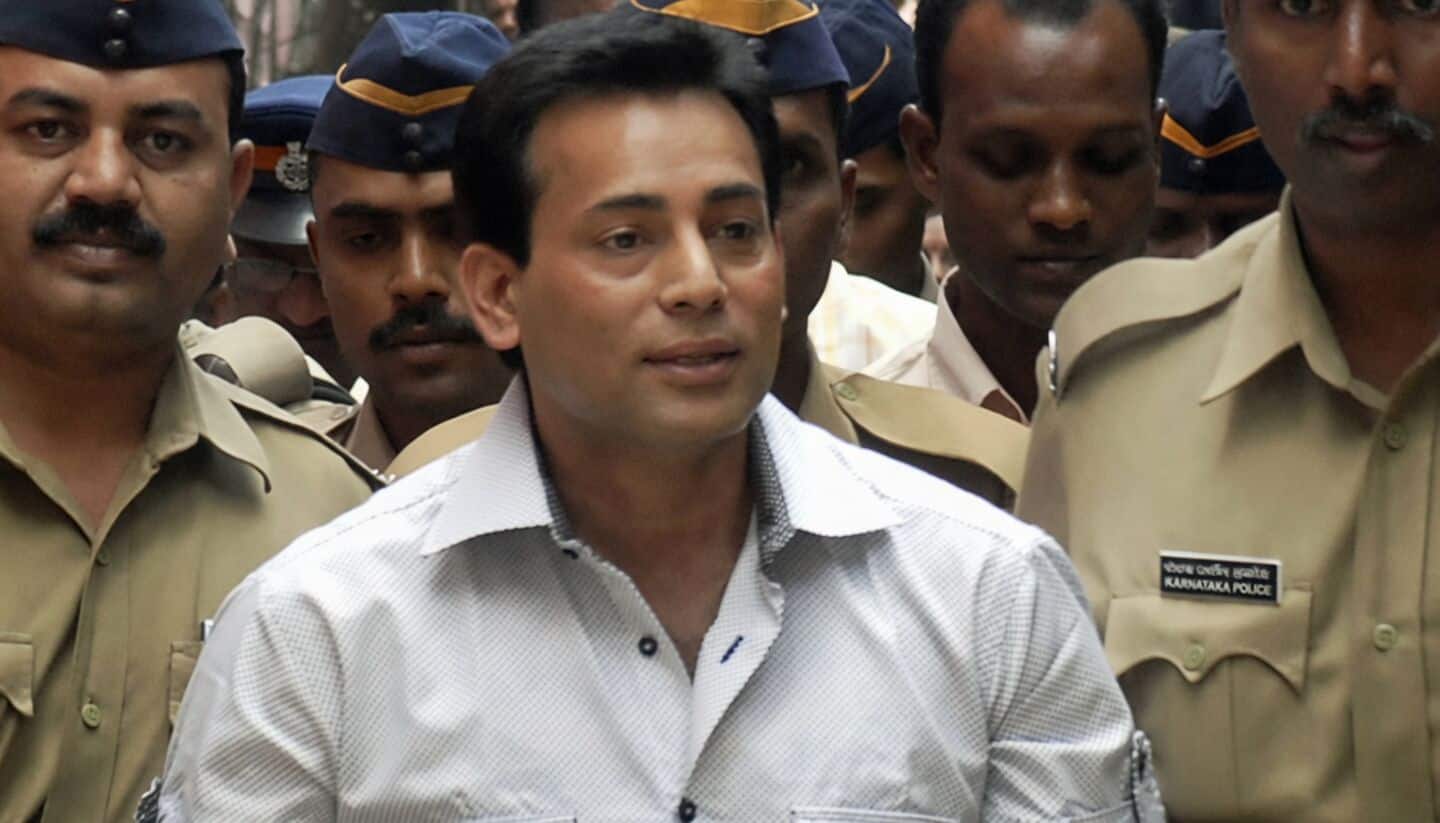
SC reserves judgment on Abu Salem's premature release plea
What's the story
The Supreme Court has reserved its judgment on gangster Abu Salem's plea for premature release, Live Law has reported. Salem is serving a life sentence for his role in the 1993 Mumbai serial blasts. The court was hearing arguments on whether his earned prison remission and undertrial custody should be counted toward the 25-year imprisonment limit promised by India to Portugal during his extradition.
Legal arguments
Salem's lawyer argues for undertrial set-off
Salem's lawyer, Senior Advocate Rishi Malhotra, argued that the TADA Court had directed jail authorities to grant him a set-off for his undertrial period. However, this benefit was not extended.
Justice Sandeep Mehta asked about the "mathematical calculation of the actual period of custody," to which Malhotra responded by saying that both undertrial set-off and earned remission should be counted as part of actual imprisonment.
Remission debate
Malhotra clarifies statutory remission not sought
Malhotra cited a constitutional judgment stating that jail-earned remission must be counted in actual imprisonment.
He clarified that he was not seeking statutory remission under Section 432 of the Code of Criminal Procedure (CrPC), but only earned remission for good conduct.
According to him, this type of remission should be treated as part of actual imprisonment based on judicial precedents.
Previous rejection
Bombay HC rejected Salem's plea in April 2025
In April 2025, the Bombay High Court had rejected Salem's plea for premature release.
The court held that the 25-year period stipulated in the extradition assurance would only end in November 2030.
The High Court also observed that allowing ordinary prison remissions to further reduce this period would undermine India's international obligations under the extradition treaty with Portugal.
Verdict reserved
SC bench reserves order, allows written submissions
The Supreme Court bench, led by Justice Vikram Nath and Justice Mehta, has reserved its order after hearing arguments from both sides.
The court has allowed parties to submit written submissions and supporting judgments within a week.
This development comes as Salem continues to serve his life sentence for the 1993 Mumbai serial blasts.