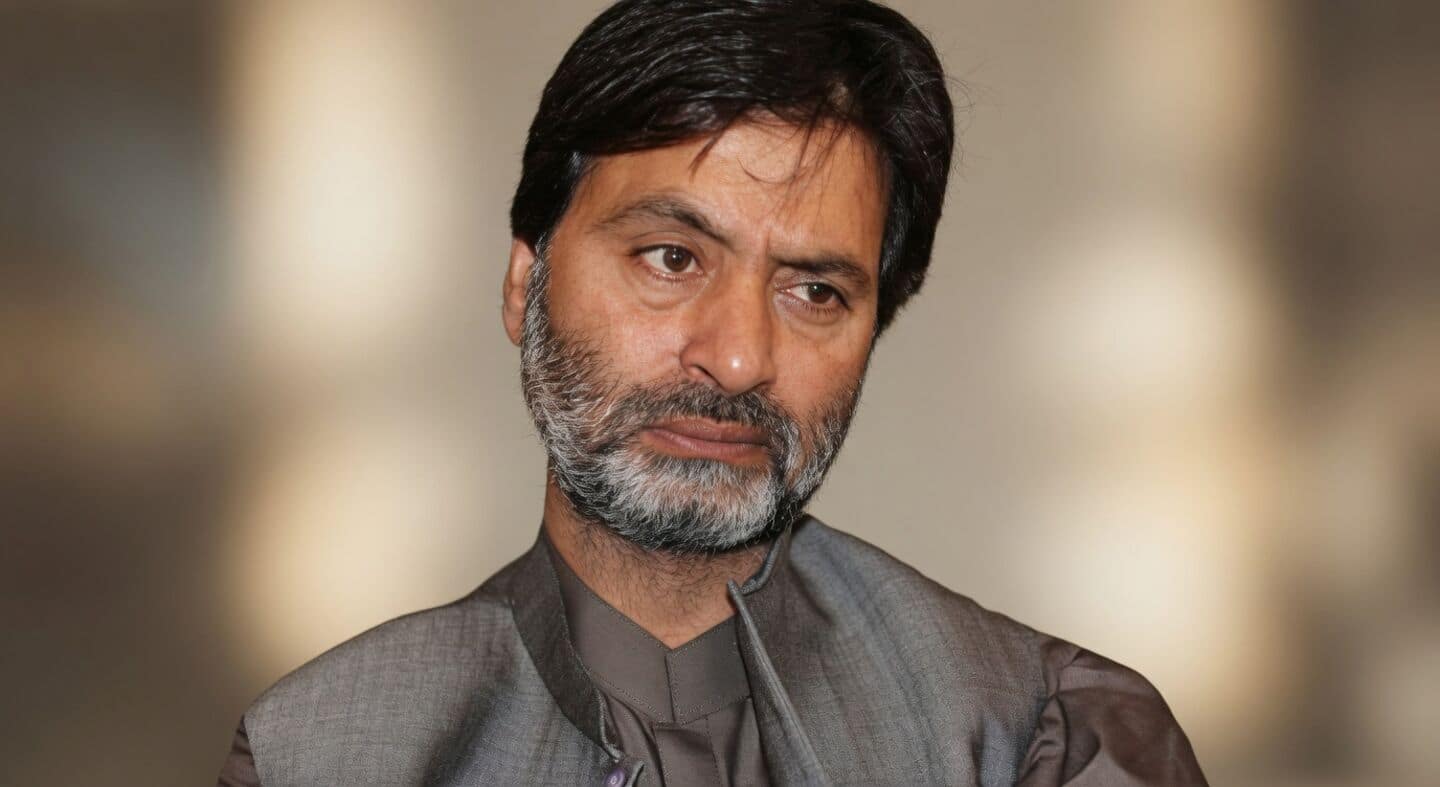
Yasin Malik denies 1990 murder involvement; still seeks capital punishment
What's the story
Yasin Malik, the chief of the Jammu Kashmir Liberation Front (JKLF), has filed an affidavit in a Jammu and Kashmir court denying his involvement in the 1990 murder of Kashmiri Pandit nurse Sarla Bhat, Bar and Bench reported. The prosecution alleges that Malik was one of the masterminds behind Bhat's abduction and killing, but he claims to have been "falsely implicated." He has opted not to contest trial proceedings and instead seeks capital punishment for himself.
Affidavit details
Malik calls prosecution narrative 'fictional story'
In his 25-page affidavit, Malik claimed the prosecution's narrative was more like a "fictional story" than a real criminal investigation.
He said he learned about Bhat's murder while in judicial custody on February 21, 1991.
The case was transferred to the Jammu & Kashmir State Investigation Agency (SIA) in March 2024 for reinvestigation, and a chargesheet was filed on June 29, 2026.
Character defense
Theory of revenge contradicts his character and conduct: Malik
Malik contended that the prosecution's theory of revenge contradicts his character and conduct.
He cited an incident from 1996-97 when a journalist's visit to him led to a damaging news report, but he did not authorize any harm against her.
This is proof that he never resorts to violence, making it implausible for him to order Bhat's killing over mere suspicion, Malik argued.
Health defense
Malik was unconscious during the time of murder
Malik further argued that the allegation of him ordering Bhat's killing "out of revenge is, therefore, wholly false, unsupported by evidence, and contrary to both my conduct and the objective facts."
He pointed out that he was critically injured, unconscious, and undergoing medical treatment in April 1990.
The case is scheduled for hearing on September 19.
Personal disclosures
Addressed my family in affidavit, says Malik
In his affidavit, Malik also addressed his family. He expressed concern for his wife Mushaal Malik and daughter Razia Sultana.
He wrote that he doesn't want Mushaal to live under these circumstances or like a widow. He advised Razia to stay connected with her grandmother during this difficult time.
Malik characterized the affidavit not as a petition for mercy or an appeal for sympathy, but rather as what he views as the ultimate expression of his conscience.