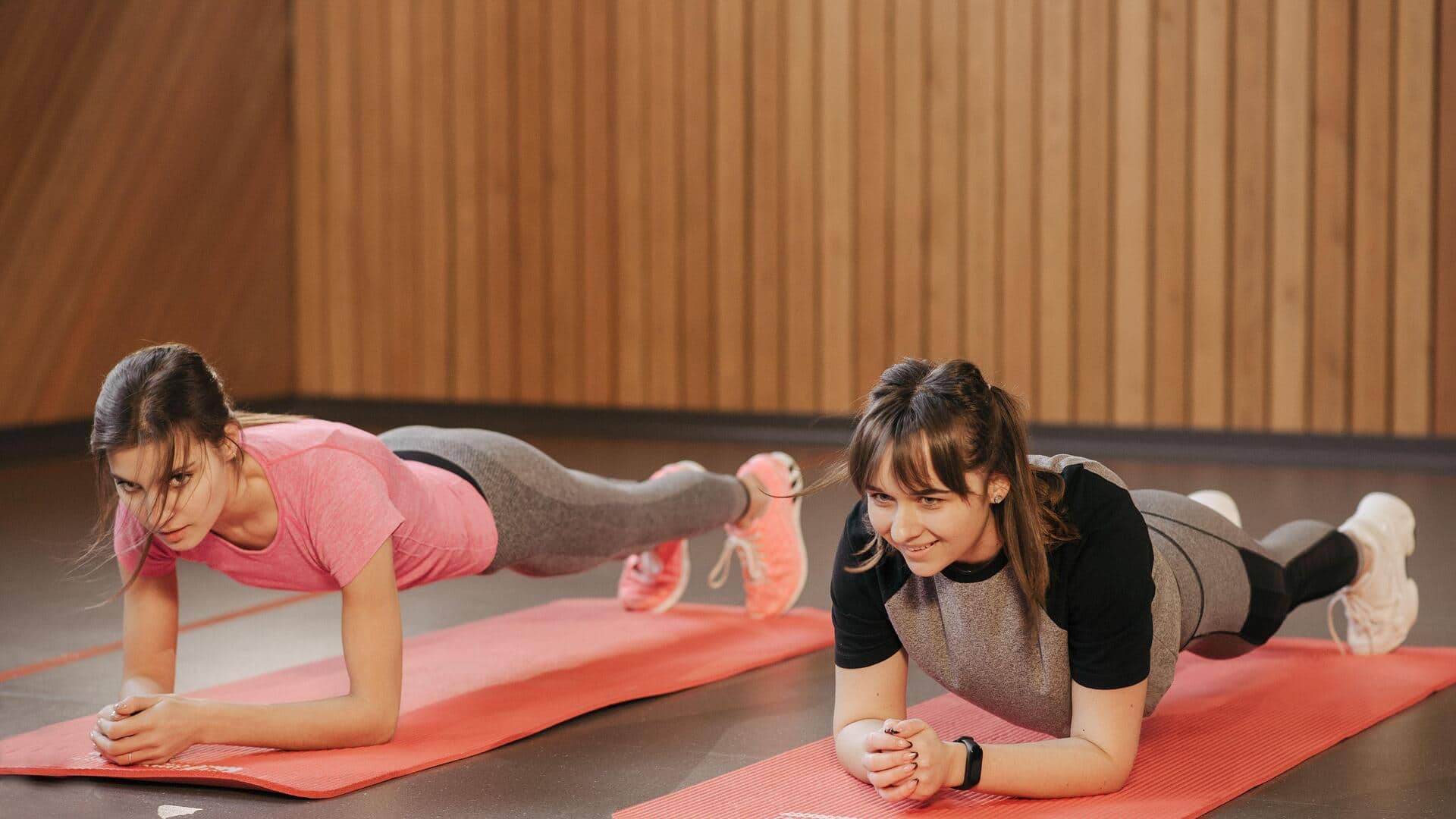
5 reasons planks should be part of your routine
What's the story
Planking is one of the simplest exercises that requires no equipment and can be done anywhere. It is an isometric exercise that strengthens your core muscles and improves your posture. The exercise has gained popularity due to its effectiveness and versatility. Adding planking to your routine can offer several health benefits, making it a must-have for anyone looking to improve their fitness.
Core Power
Strengthens core muscles
Planking is famous for its ability to strengthen core muscles.
By holding the plank position, you engage multiple muscle groups, including the abdominals, back, and shoulders.
This engagement helps build a strong foundation for overall body strength and stability.
A strong core is essential for maintaining good posture and preventing injuries during other physical activities.
Posture boost
Improves posture
Regular planking can also improve your posture by strengthening the muscles that support your spine.
A strong core ensures that your body is aligned properly when standing or sitting, reducing the risk of developing back pain or other posture-related issues.
Improved posture not only enhances your appearance but also contributes to better overall health.
Flexibility gain
Increases flexibility
Planking also increases flexibility by stretching out the posterior muscle groups, like the hamstrings, arches of your feet, and toes.
This stretching improves your range of motion and reduces muscle tension.
With regular practice, you will notice improved flexibility, which contributes to better performance in other exercises and daily activities.
Metabolism boost
Boosts metabolism
Plank exercises can also boost metabolism by activating several muscle groups at once.
When you engage more muscles, your body burns more calories even when resting.
This metabolic boost can help with weight management efforts by increasing calorie expenditure throughout the day.
Mental focus
Enhances mental focus
Holding a plank position requires mental discipline and focus, as it challenges both physical endurance and mental resilience.
This enhanced mental focus translates into other areas of life where concentration is needed, be it work-related tasks or personal projects requiring sustained attention over time, without getting distracted easily.