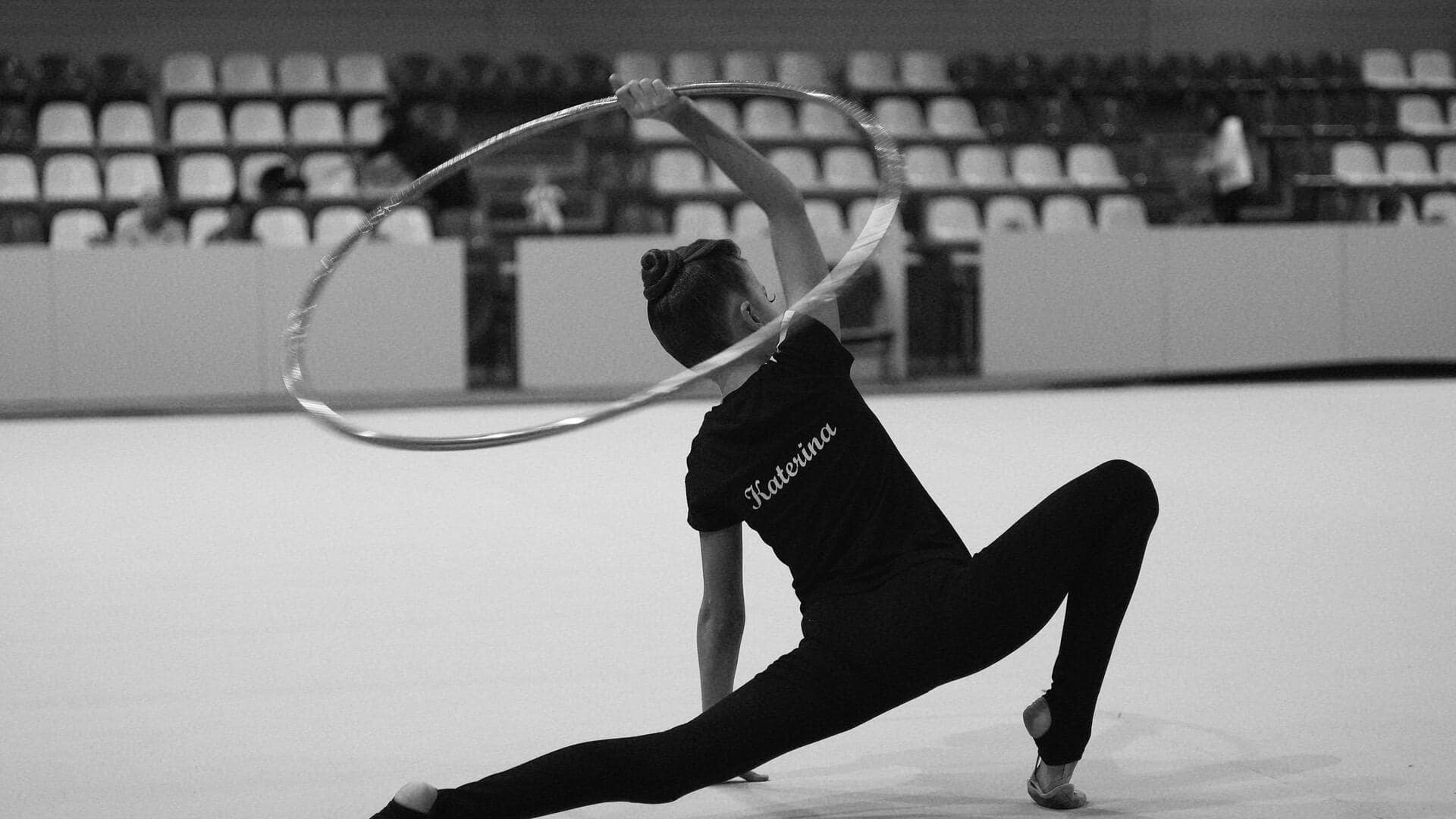
Rhythmic gymnastics: 5 reasons to give this sport a try
What's the story
Rhythmic gymnastics is a unique sport that combines elements of ballet, gymnastics, dance, and apparatus manipulation. It not only requires flexibility and coordination, but also offers several mental benefits. Practicing rhythmic gymnastics can significantly enhance cognitive functions, emotional well-being, and overall mental health. Here are five surprising ways rhythmic gymnastics can boost your mental well-being.
Focus boost
Enhances concentration skills
Engaging in rhythmic gymnastics requires intense concentration, as athletes must coordinate their movements with music and handle various apparatuses.
This practice helps sharpen focus by training the brain to pay attention to multiple tasks simultaneously.
Over time, this enhanced concentration skill can translate into improved performance in daily activities that require sustained attention.
Stress relief
Reduces stress levels
The rhythmic movements and music in rhythmic gymnastics have a calming effect on the mind.
This combination of physical activity and auditory stimulation helps reduce stress levels by promoting relaxation.
Regular participation in this sport can lead to lower cortisol levels, which is the hormone associated with stress.
Memory enhancement
Improves memory retention
Rhythmic gymnastics routines often involve learning complex sequences of movements that require memorization.
This process stimulates the brain's memory centers, leading to improved retention capabilities over time.
Practicing these routines regularly can enhance both short-term and long-term memory functions.
Confidence building
Boosts self-esteem
Mastering new skills in rhythmic gymnastics provides a sense of accomplishment that boosts self-esteem.
As participants progress through different levels of difficulty, they gain confidence in their abilities.
This newfound self-assurance extends beyond the gymnasium into other areas of life, where individuals feel more capable and resilient.
Emotional regulation
Promotes emotional balance
The discipline involved in rhythmic gymnastics fosters emotional regulation by teaching individuals how to manage their feelings during performances or competitions.
The sport encourages patience, perseverance, and resilience when faced with challenges or setbacks.
These qualities contribute significantly toward achieving emotional balance over time.