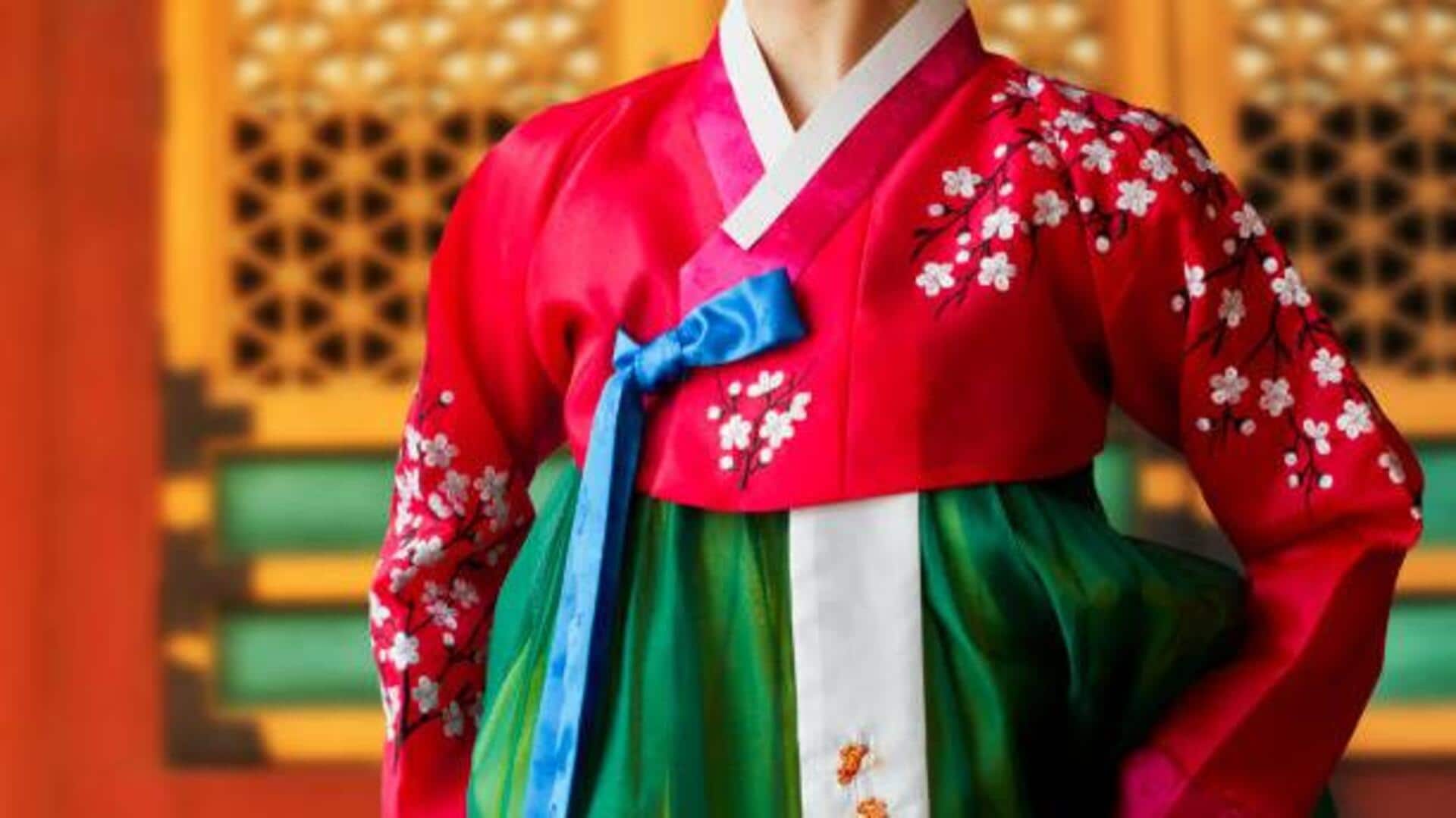
Hanbok: All about this Korean wedding attire
What's the story
The Korean wedding hanbok is a traditional attire that holds immense cultural significance. This vibrant garment is not just a symbol of beauty but also a representation of the rich heritage and customs of Korea. Worn during ceremonies, the hanbok is characterized by its simple lines and bright colors. Here are five fascinating facts about this iconic wedding attire that highlight its importance and uniqueness.
#1
Symbolism of colors
In Korean culture, colors hold significant meaning. The colors of the hanbok are chosen carefully to convey specific meanings.
Red symbolizes good fortune and happiness, while blue represents purity and harmony. Yellow is often associated with prosperity, and green signifies new beginnings.
These colors are not just aesthetically pleasing but also carry deep cultural messages that enhance the ceremony's meaning.
#2
Historical roots
The hanbok has been a part of Korean history for centuries, dating back to the Three Kingdoms period (57 BC-668 AD).
Over the years, its design has evolved, but its core elements have remained intact.
Traditionally, the hanbok consists of two main parts: jeogori (jacket) and chima (skirt) for women.
This historical continuity makes it an integral part of Korea's cultural identity.
#3
Modern adaptations
While traditional hanboks are still widely worn during weddings, modern adaptations have also made their way into the scene.
Some couples opt for contemporary designs that blend traditional elements with modern fashion trends.
These adaptations allow for personal expression while still honoring cultural heritage.
#4
Ritual significance
Wearing a hanbok during weddings is not just about tradition; it also has to do with rituals that are performed as part of the ceremony.
One such ritual is called pye-bek, where the bride and groom bow to each other while wearing their hanboks.
This act symbolizes respect and commitment between partners.
#5
Regional variations
Different regions in Korea have their own variations when it comes to hanboks worn at weddings.
These variations can be seen in patterns, colors, and even styles specific to certain areas or families' preferences.
Exploring these regional differences gives us an insight into how diverse yet unified Korean culture is when it comes to celebrating marriage through traditional attire like the hanbok.