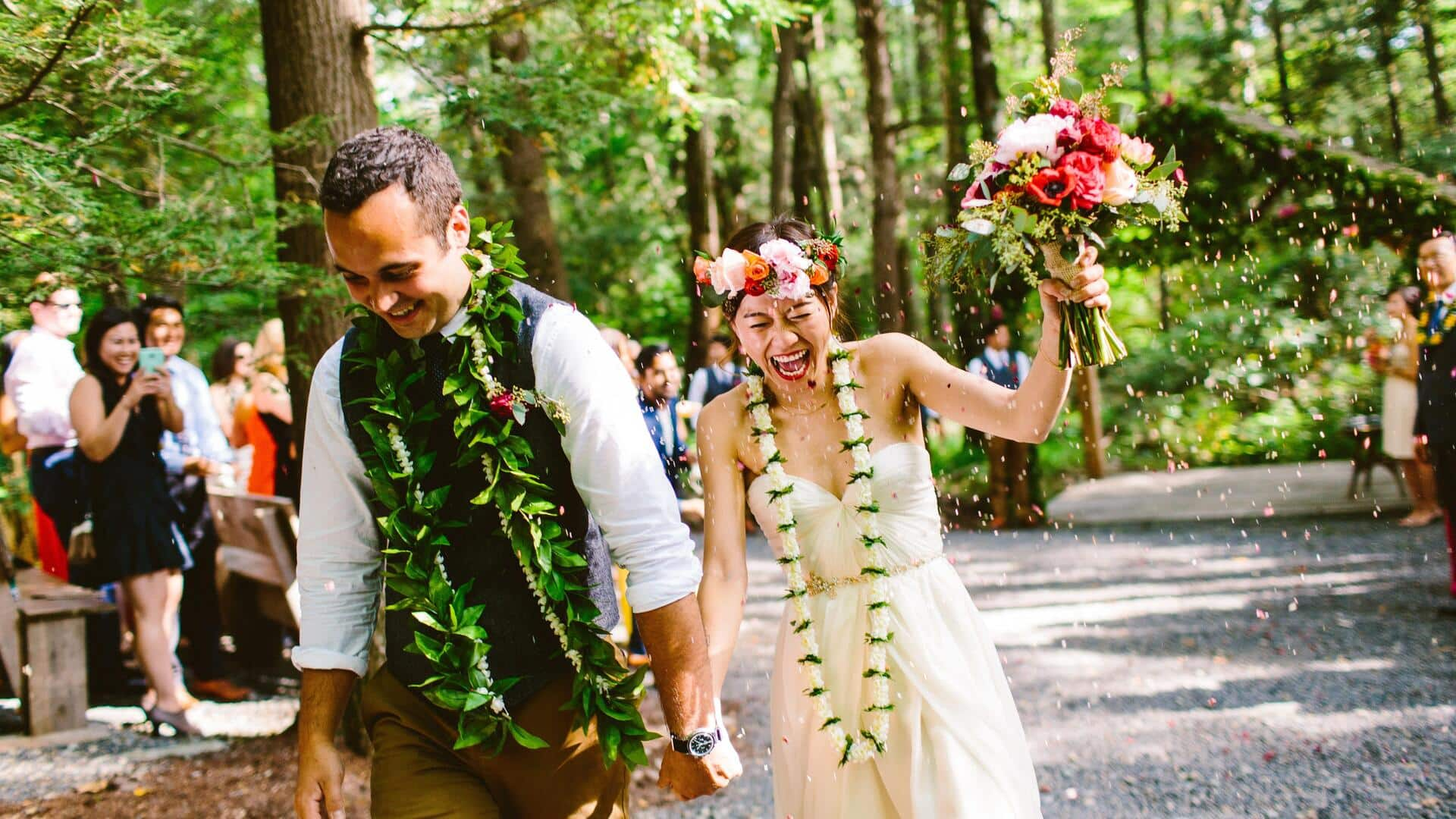
Why are garlands so important at weddings across cultures?
What's the story
Garlands have been an integral part of wedding ceremonies across cultures for centuries. They symbolize love, unity, and the joining of two families. Each culture has its own unique style and significance attached to these floral arrangements. From vibrant colors to intricate designs, garlands play a crucial role in enhancing the beauty and sanctity of wedding rituals. Here are five culturally significant garlands that add charm and tradition to weddings worldwide.
Indian tradition
The traditional Indian mala
In India, the mala is an integral part of wedding ceremonies. Made from flowers like jasmine or marigold, these garlands are exchanged by the bride and groom as a symbol of acceptance and respect. The act of exchanging malas is known as mala bandhan, signifying their commitment to each other. The choice of flowers often has cultural or regional significance, making each mala unique to the couple's heritage.
Thai custom
Thai Phuang Malai
The Phuang Malai is a traditional Thai garland made from flowers like jasmine and roses threaded together in a circular form. It is usually offered to deities or elders as a mark of respect before being worn by the bride on her wedding day. This garland symbolizes purity and devotion in Thai culture, making it an integral part of their matrimonial customs.
Hawaiian practice
Hawaiian lei tradition
In Hawaii, leis are synonymous with love and affection. Made from fresh flowers or leaves woven together, these garlands are draped around the necks of brides and grooms during ceremonies. The lei tradition symbolizes new beginnings and the beauty of nature's bounty. While leis can be made from various materials, plumeria or orchid leis are the most popular choices for weddings due to their fragrance and beauty.
Mexican custom
Mexican lazo ritual
The lazo is a Mexican wedding tradition where a rosary-like garland is draped around the shoulders of the bride and groom after they exchange vows. Usually made from beads or flowers, this lazo symbolizes unity under divine protection. It is often blessed by officiants before being placed around the couple's shoulders, signifying their bond strengthened by faith.
Japanese tradition
Japanese hanakotoba significance
In Japan, hanakotoba refers to the language of flowers used in various ceremonies, including weddings. Specific blooms are chosen for their meanings, such as cherry blossoms representing fleeting beauty or chrysanthemums symbolizing longevity. These floral arrangements are incorporated into bridal bouquets or headpieces, reflecting the couple's wishes while honoring traditional values associated with each flower's symbolism.