Braid it right! Stand out with these Dutch hairstyles
What's the story
Loose Dutch braids are the perfect mix of elegance and comfort, which is why they are a favorite among those with long hair. The technique, which involves weaving sections of hair under each other, gives a fuller look than traditional braiding. This style can be worn casually or dressed up for special occasions, making it versatile and practical for everyday wear.
#1
Classic loose Dutch braid
The classic loose Dutch braid is the most popular choice for its simplicity and elegance.
To achieve this look, start by sectioning the hair into three equal parts at the crown of the head.
Begin braiding by crossing the outer sections under the middle one, adding more hair from each side as you go down.
Keep the braid loose by gently pulling on the edges once finished, giving it a fuller appearance.
#2
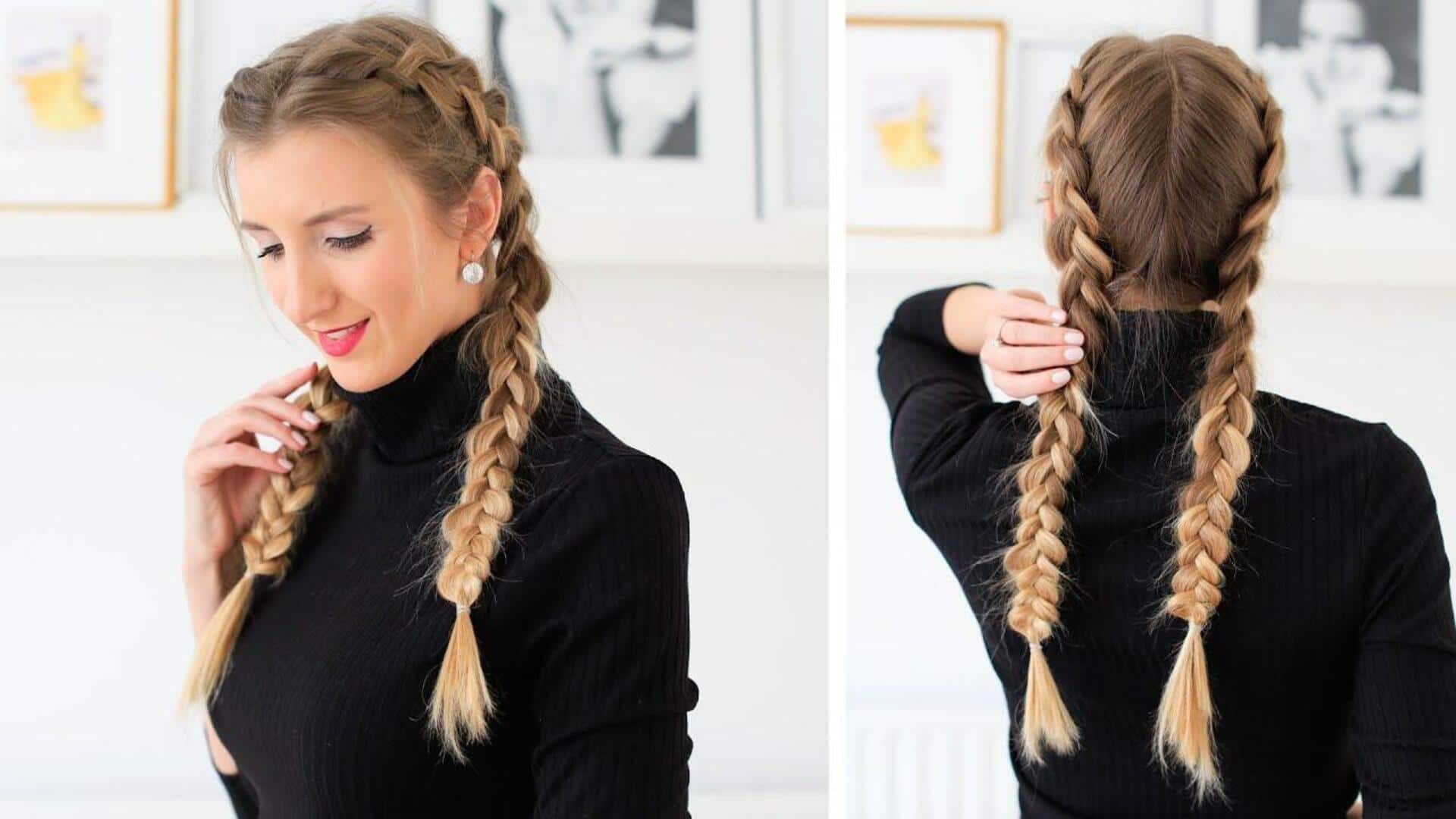
Double loose Dutch braids
Double loose Dutch braids add an extra touch of charm and are perfect for those who love symmetry.
Part your hair down the middle and create two separate braids on either side using the same technique as the classic braid.
This style not only keeps your hair neatly tied but also adds volume and texture, making it ideal for casual outings or sporty activities.
#3
Loose Dutch fishtail braid
For a more intricate look, try combining the Dutch braid technique with a fishtail braid.
Start by creating a loose Dutch braid from one side of your head until you reach just below your ear.
Then, transition into a fishtail braid by dividing the remaining hair into two sections and crossing small pieces from each side over each other alternately.
This hybrid style offers both elegance and uniqueness.
#4
Half-up loose Dutch braid
The half-up loose Dutch braid gives you the best of both worlds: a chic look with half your hair down and the other half tied up.
Take two small sections from either side of your head above the ears and braid them separately using the loose Dutch technique towards the back center where they meet at nape level.
Secure them together with pins or an elastic band if preferred.