How India celebrates the harvest season
What's the story
India is a land of diverse cultures and traditions, and its harvest festivals are a testament to that. These festivals celebrate the bounty of nature and the hard work of farmers. Each region has its unique way of honoring the harvest, with vibrant rituals and joyous celebrations. From colorful processions to elaborate feasts, these festivals offer a glimpse into India's rich agricultural heritage.
#1
Pongal: A Tamil Nadu celebration
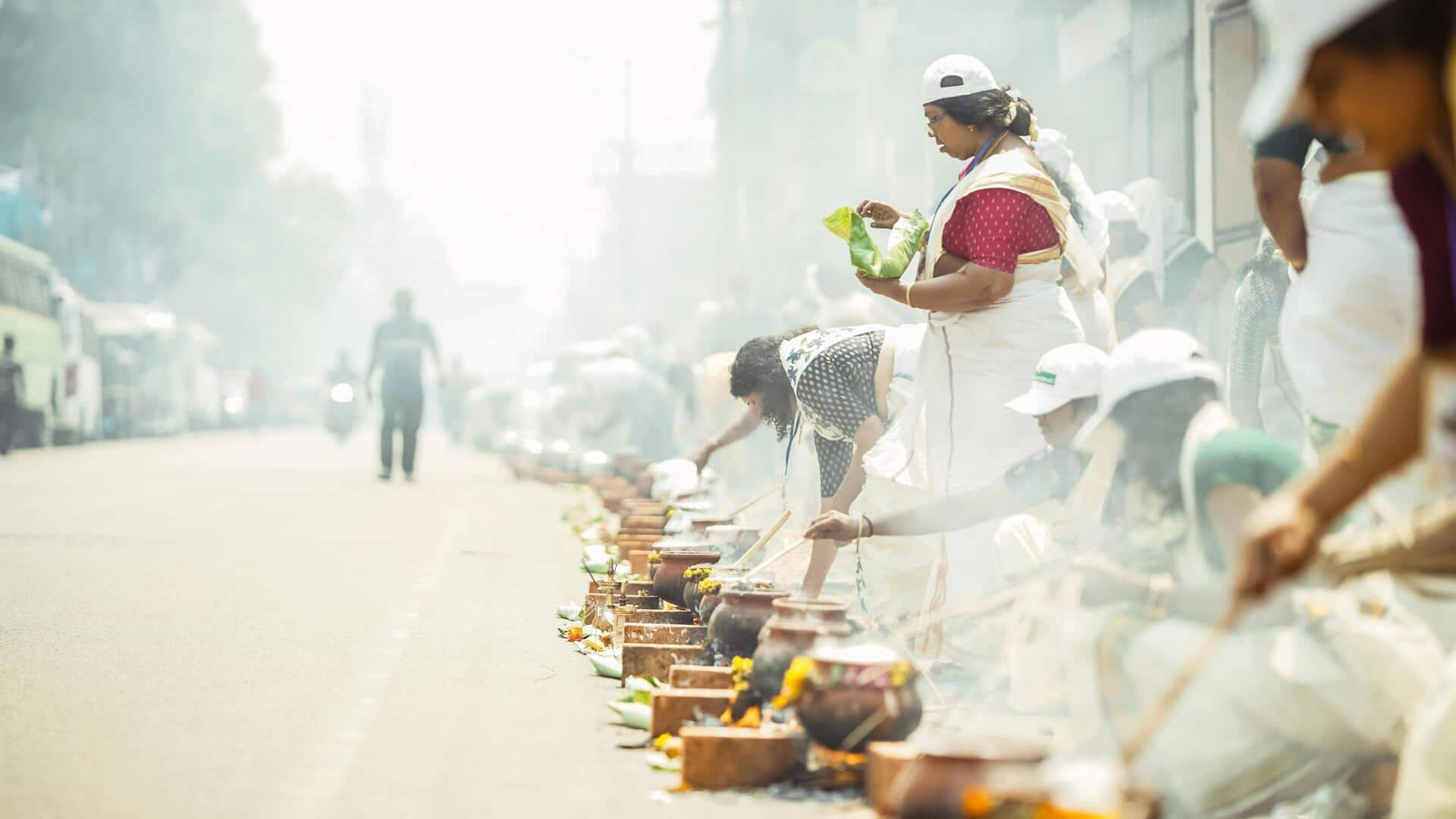
Pongal is celebrated in Tamil Nadu to mark the end of the harvest season. The festival lasts for four days, with each day having its own significance.
People prepare a special dish called pongal by boiling rice with milk and jaggery.
Homes are decorated with kolams (rangoli), and families come together to thank the sun god for a good harvest.
#2
Baisakhi: Punjab's new year festival
Baisakhi is celebrated in Punjab as both a new year and a harvest festival. It marks the time when crops like wheat are ready to be harvested.
People dress in traditional attire, dance bhangra, and gather for prayers.
The festival symbolizes prosperity and joy among farming communities.
#3
Onam: Kerala's grand harvest festival
Onam is Kerala's most famous festival, celebrating the annual rice harvest.
It lasts for 10 days, featuring boat races, flower arrangements, and traditional dances called kathakali.
Families prepare elaborate feasts known as Onam sadya, served on banana leaves, showcasing the region's culinary diversity.
#4
Makar Sankranti: A festival across India
Celebrated across India under different names like Lohri in Punjab or Uttarayan in Gujarat, Makar Sankranti marks the sun's transition into the Capricorn zodiac sign.
It signals longer days ahead and is considered a sign of good times for farmers.
People fly kites during this time as part of their joyous celebrations, symbolizing freedom and hope for future abundance.
#5
Nabanna: West Bengal's rice harvest festival
Nabanna translates to "new rice" in Bengali, and it marks the first day when freshly harvested paddy is consumed after the monsoon season ends.
This festival, celebrated mainly in rural Bengal, involves rituals like the worship of goddess Lakshmi, who represents wealth and prosperity.
It is a time when families come together to share meals made with new grains, symbolizing unity and gratitude for nature's gifts.