Inverted row: A must-do for upper back strength
What's the story
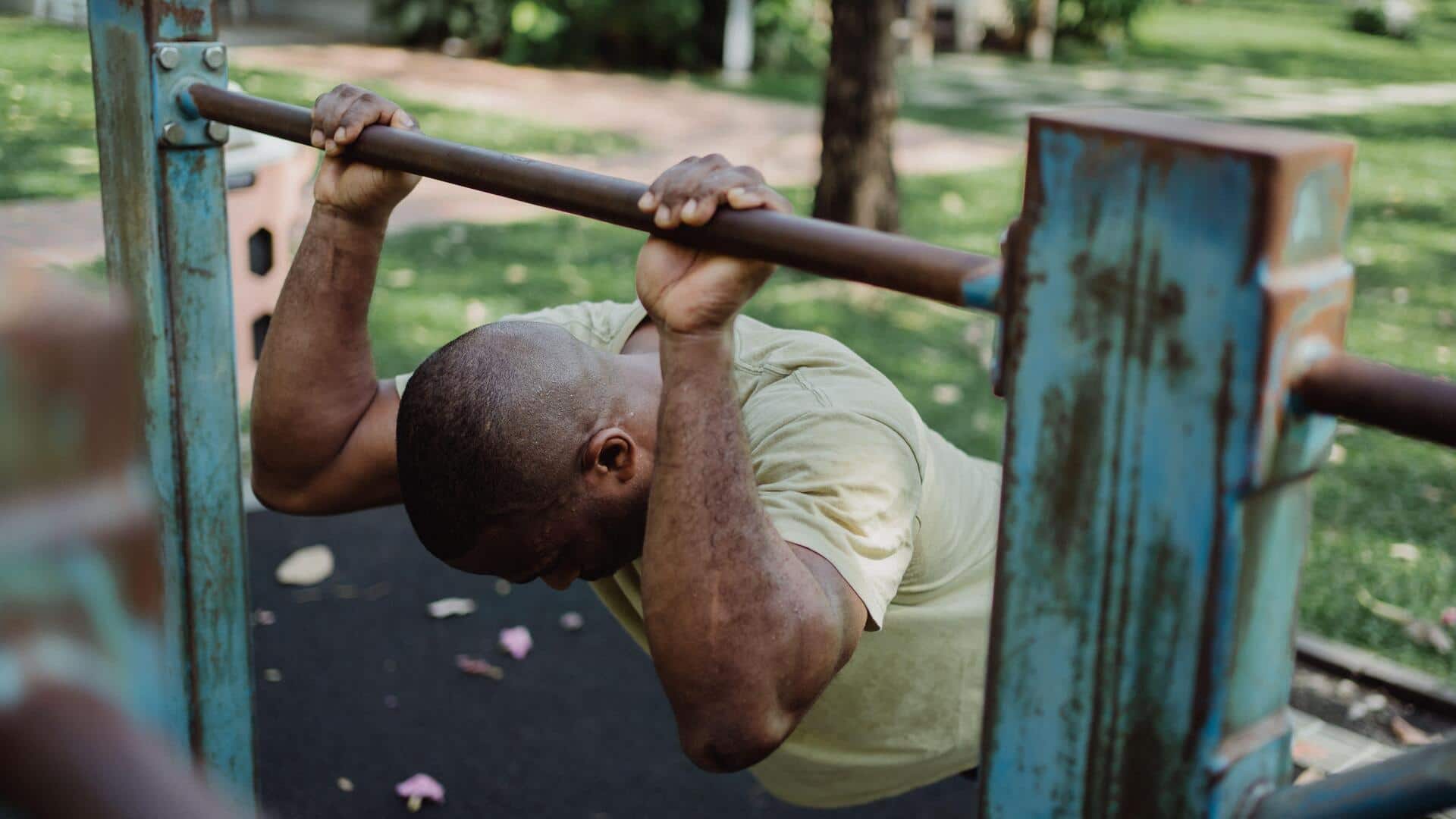
The inverted row is a powerful exercise to build upper back strength, targeting the rhomboids, trapezius, and latissimus dorsi. It is a bodyweight exercise that can be performed using a bar or suspension trainer at waist height. By pulling your body towards the bar, you can improve posture and upper body endurance. Here's how to perform inverted rows effectively and safely.
Technique
Proper form and technique
Maintaining proper form during inverted rows is crucial to avoid injury and maximize benefits.
Start by lying underneath a bar with your hands slightly wider than shoulder-width apart.
Keep your body straight from head to heels, engaging your core muscles.
Pull yourself up until your chest touches the bar, and then lower yourself slowly back to the starting position.
Avoid arching your back or using momentum.
Variations
Variations for increased challenge
To keep your workouts interesting and challenging, try different variations of the inverted row.
One way is to change the grip; use an underhand grip for more bicep engagement, or a wide grip for greater lat activation.
Elevating your feet on a bench or using one arm can also increase difficulty.
These variations help target different muscle groups while keeping the core engaged.
Integration
Incorporating into workout routines
Incorporating inverted rows into your workout routine can enhance upper body strength without equipment-heavy exercises.
Include them in circuit training with push-ups and planks for a comprehensive upper body workout.
Aim for three sets of 10-15 repetitions, adjusting as needed based on fitness level and goals.
Pitfalls
Common mistakes to avoid
Avoiding common mistakes during inverted rows is key to getting the most out of this exercise and avoiding injuries.
First, do not let your hips sag or rise too high; they should remain in line with your shoulders and heels.
Second, do not rush through repetitions; slow, controlled movements are essential for muscle engagement and injury prevention.
Lastly, do not neglect warm-up and cool-down routines to prepare your muscles and aid recovery.