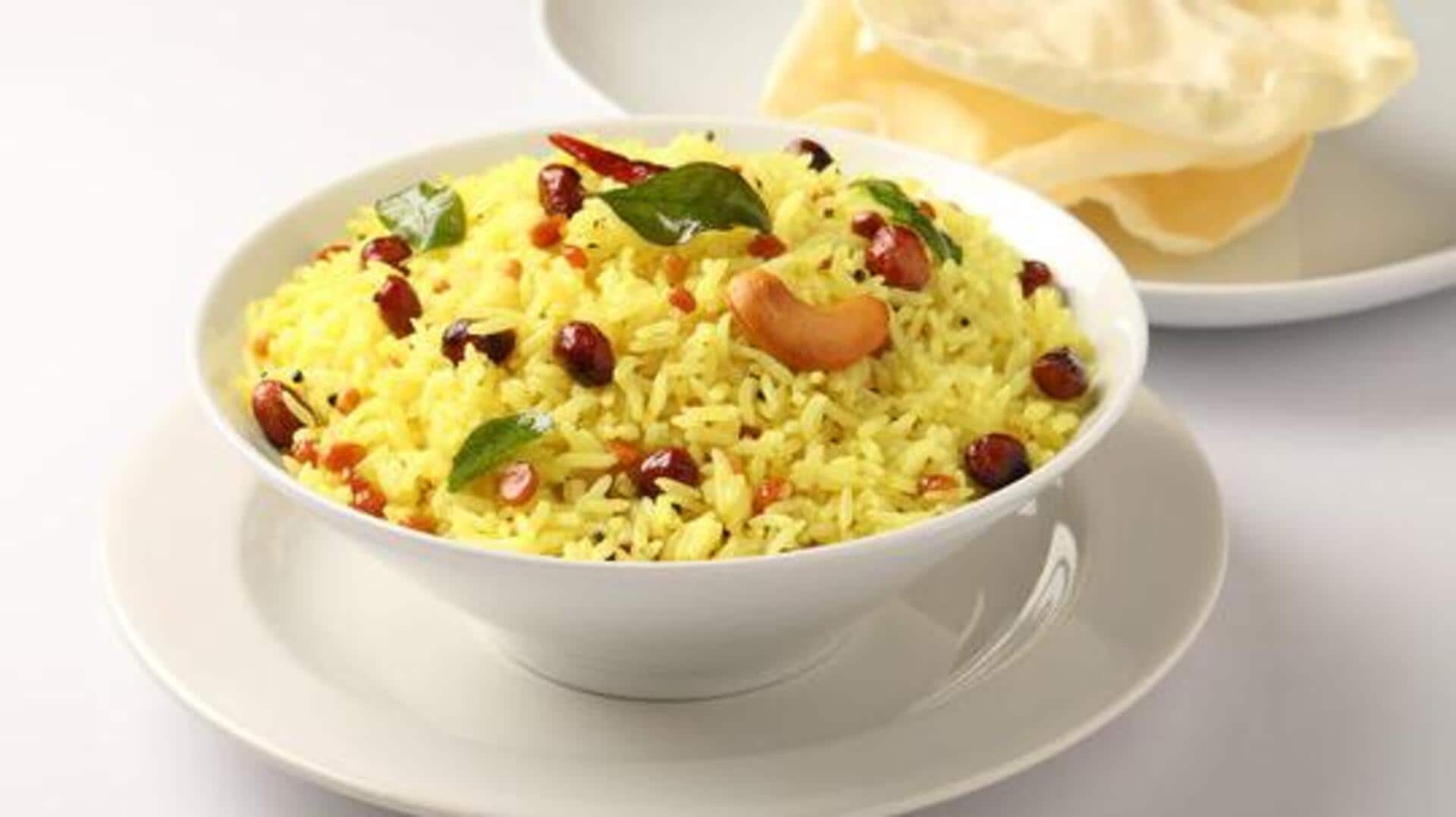
5 lemon rice variations you'll love!
What's the story
Lemon rice is a popular dish in many parts of India, famous for its tangy flavor and easy preparation. The dish is usually made with cooked rice, lemon juice, turmeric, and spices. But there are several regional variations of lemon rice that give unique flavors and ingredients to the classic recipe. Here are five variations of lemon rice that are loved across India.
#1
South Indian lemon rice
In South India, lemon rice is a staple breakfast or lunch option.
It is prepared by mixing cooked rice with lemon juice, turmeric, mustard seeds, and peanuts.
The dish is usually garnished with curry leaves and green chilies for an extra kick.
This version of lemon rice is known for its simplicity and the balance of tangy and spicy flavors.
#2
Bengali nimbu bhaja rice
Bengali cuisine has its own take on lemon rice called nimbu bhaja rice.
This variation has a unique twist with the addition of fried onions and a hint of sugar to balance the acidity of the lemon.
The use of nigella seeds adds an aromatic touch that makes this version distinct from others across India.
#3
Maharashtrian chitranna
Chitranna, a Maharashtrian variation of lemon rice, is characterized by the addition of grated coconut, along with the usual ingredients like turmeric and mustard seeds.
The coconut adds a rich texture to the dish while enhancing its flavor profile.
Chitranna is often served as an accompaniment to other dishes or relished on its own.
#4
Gujarati nimbu khichdi
In Gujarat, nimbu khichdi combines elements of both khichdi and traditional lemon rice.
This version includes lentils along with the rice, making it more nutritious, while retaining the tangy essence from fresh lemons.
Spices, such as cumin seeds, enhance its aroma, making it a delightful meal option.
#5
Punjabi nimbu chawal
Punjabi cuisine has its own version called nimbu chawal, which is characterized by the use of basmati rice for a fragrant base.
It is mixed with freshly squeezed lemon juice, along with spices, including coriander powder and garam masala, for an added depth of flavor.
This version is usually served during festive occasions, owing to its rich taste and inviting aroma.