
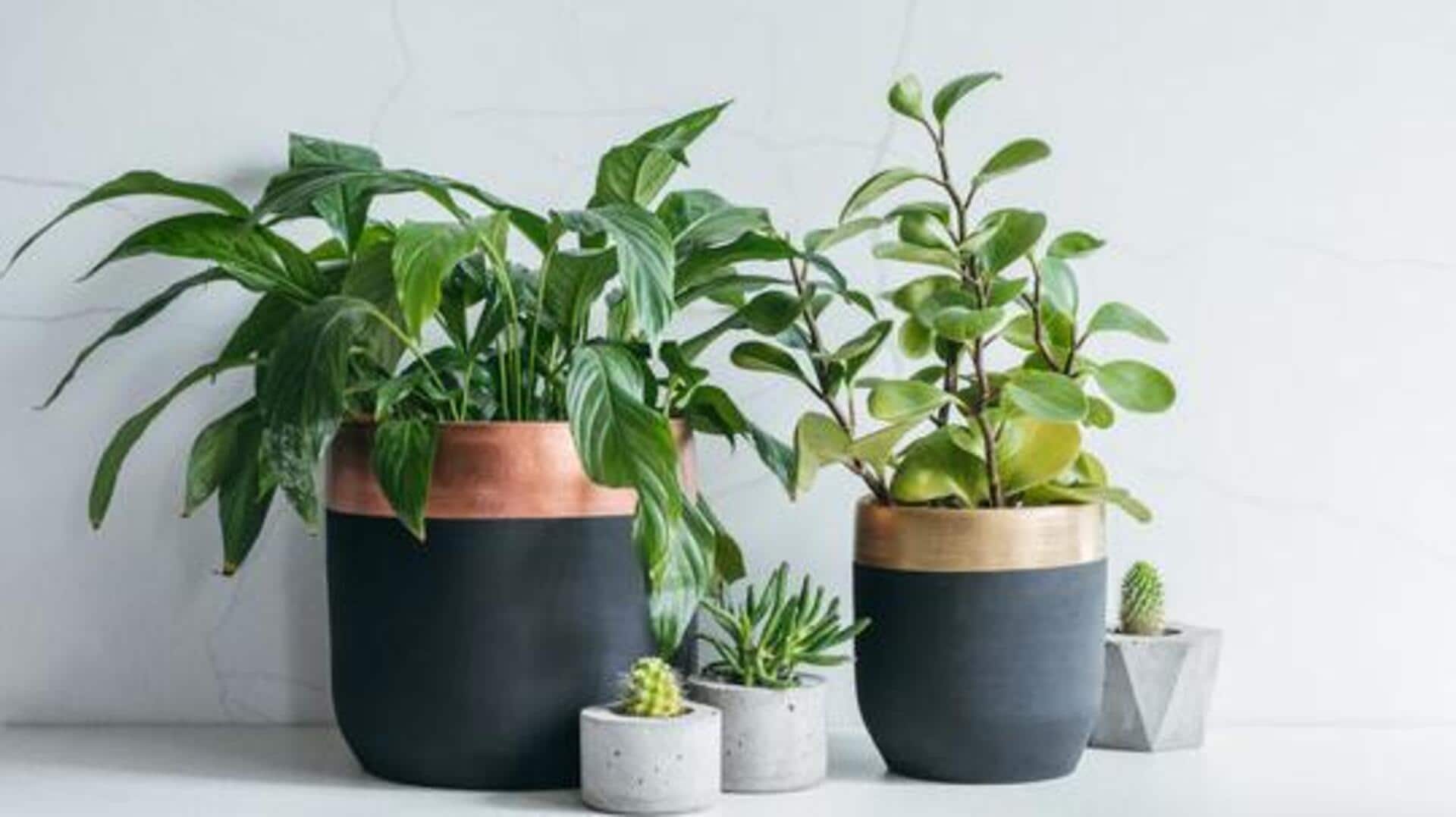
5 organic mulches for container plants
What's the story
Container gardening is a great way to grow plants, but it comes with its own set of challenges, especially when it comes to retaining moisture and suppressing weeds. Organic mulches can be a gardener's best friend in this regard. They not only help keep the soil moist but also enrich it as they decompose. Here are five organic mulches that can help your container plants thrive.
Tip 1
Straw: A lightweight option
Straw makes for an excellent mulch as it is lightweight and easy to handle. It forms a loose covering over the soil, allowing water to penetrate while preventing evaporation. Straw also breaks down slowly, adding organic matter to the soil over time. This mulch is particularly useful for vegetable containers, as it keeps weeds at bay without disturbing the roots of your plants.
Tip 2
Wood chips: Durable and effective
Wood chips make for a durable mulch option that works well in larger containers. They break down slowly, providing long-lasting benefits to the soil structure and nutrient content. Wood chips also help regulate soil temperature by insulating it against extreme weather conditions. However, make sure to use untreated wood chips to avoid introducing harmful chemicals into your garden.
Tip 3
Coconut coir: Moisture-retaining powerhouse
Coconut coir is an amazing mulch option for its moisture-retaining properties. This biodegradable material comes from coconut husks and does a great job of keeping the soil moist between waterings. It also improves drainage and aeration in container gardens, making it an ideal choice for tropical or moisture-loving plants.
Tip 4
Pine needles: Acidic benefits
Pine needles make for an excellent organic mulch for acid-loving plants such as blueberries or azaleas. They decompose slowly, providing a steady supply of nutrients while lowering the pH of the soil over time. Pine needles also stay in place well during windy conditions, making them an ideal choice for outdoor containers.
Tip 5
Grass clippings: Nutrient-rich layer
Grass clippings are a readily available resource that provides a nutrient-rich layer when used as mulch around container plants. They decompose quickly, releasing nitrogen back into the soil, which is essential for plant growth. However, it's important to let grass clippings dry out before applying them as mulch to avoid clumping and matting, which can hinder water penetration.