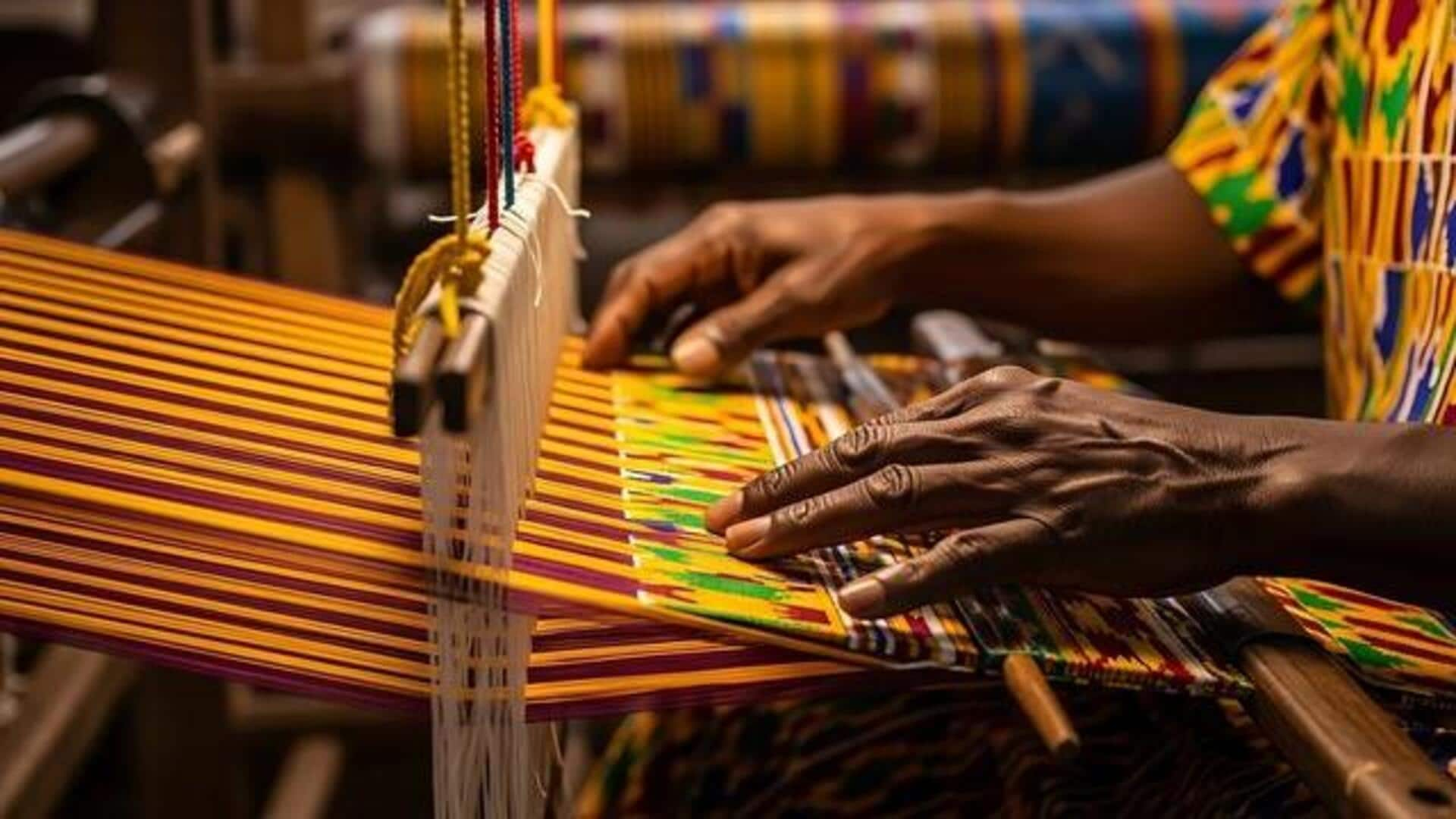
All about Kente weaving
What's the story
African Kente weaving is a traditional craft that hails from Ghana and is famous for its vibrant colors and intricate patterns. The art is not just a cultural heritage but also a way to express stories and values through textile. Learning the basics of Kente weaving can be an enriching experience, connecting you with the rich history and craftsmanship of Africa. Here are some tips to get you started on this colorful journey.
Patterns
Understanding Kente patterns
Kente cloth is characterized by its unique patterns, each of which has a meaning.
Familiarize yourself with common designs such as stripes, checks, and geometric shapes.
Each pattern tells a story or represents an idea, so knowing these meanings will help you create meaningful pieces.
Research different designs and their significance before starting your weaving project.
Materials
Choosing the right materials
Selecting appropriate materials is key to successful Kente weaving.
Traditionally, Kente is made from silk or cotton threads. Choose high-quality yarns that are durable yet flexible enough to weave intricate designs.
The choice of colors also plays a crucial role; vibrant hues are typical in Kente cloths as they symbolize various aspects of life.
Techniques
Mastering basic weaving techniques
Start by learning basic weaving techniques like plain weave and twill weave. These form the foundation for more complex patterns later on.
Practice these techniques on smaller projects before attempting larger pieces. Consistent practice will improve your skills over time, allowing you to tackle more challenging designs with confidence.
Culture
Incorporating cultural significance
Kente weaving is steeped in cultural significance, with each piece narrating a story or representing a value.
While making your own cloth, incorporate elements that speak to you or pay homage to your heritage.
This not only makes the piece special but also honors the tradition's deep-rooted connection to storytelling and cultural identity.