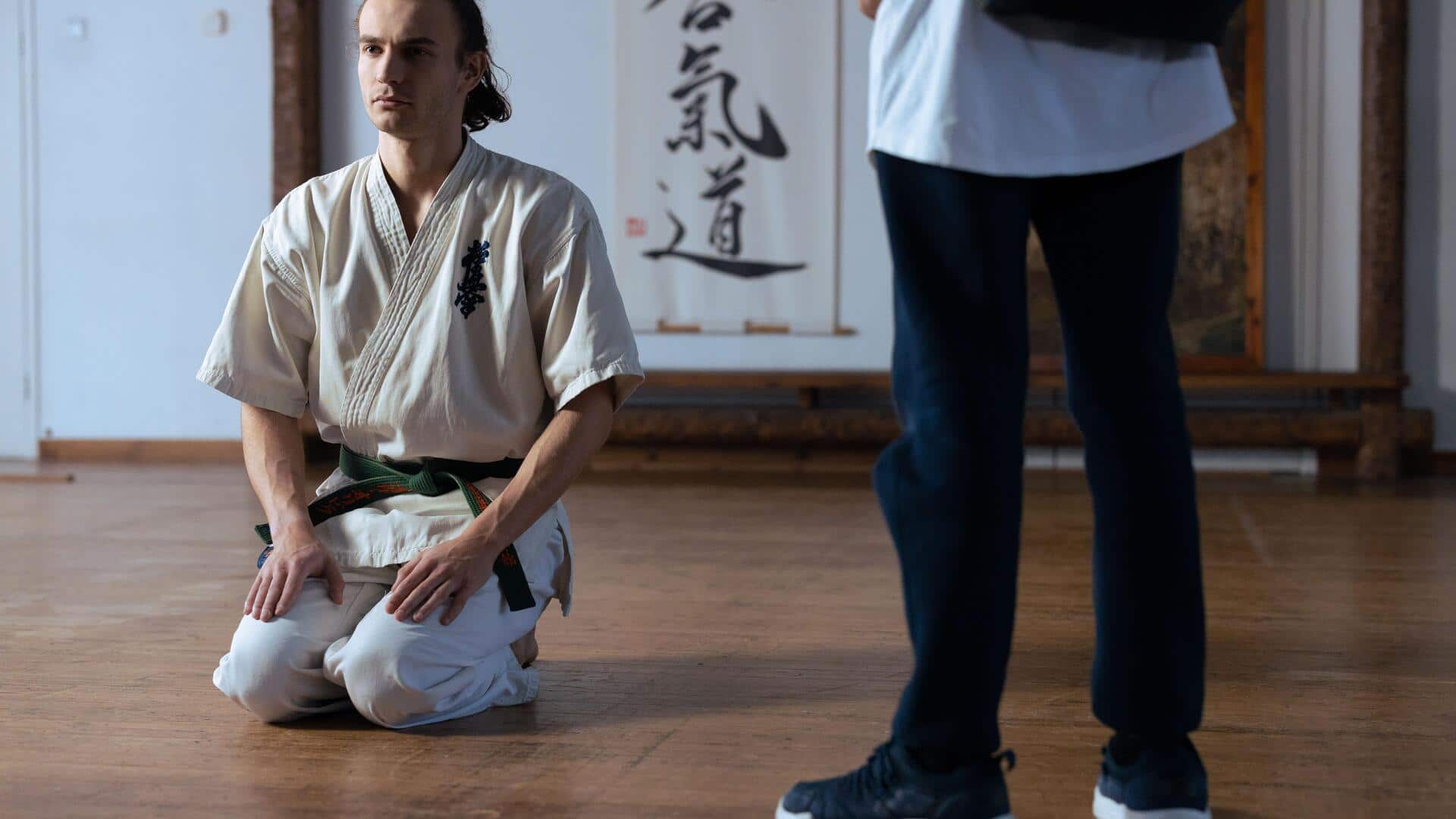
Aikido: The martial art for balance
What's the story
Aikido, a Japanese martial art, is famous for its focus on harmony and self-defense. Unlike other martial arts, it does not emphasize aggression but rather the redirecting of energy. Practicing aikido can do wonders for your physical and mental well-being. Here are five surprising benefits of aikido training that go beyond the dojo.
#1
Enhanced flexibility and balance
Aikido requires a lot of dynamic movements that improve flexibility and balance. The techniques involve a lot of joint rotations, body turns, and footwork that stretch the muscles and improve coordination. With regular practice, one can expect improved posture and reduced risk of injuries due to better balance.
#2
Increased mental focus
Aikido is all about mental discipline and concentration. Practitioners have to be mindful of their surroundings and stay calm under pressure. This mental training translates into improved focus in daily life activities, making it easier to handle stressors efficiently.
#3
Boosted cardiovascular health
While aikido may not seem like a cardio workout at first, it involves a lot of movement that gets your heart pumping. The continuous practice of techniques can boost cardiovascular health by improving circulation and increasing endurance levels over time.
#4
Improved self-confidence
Mastering aikido techniques takes time, patience, and dedication. As practitioners progress through the ranks, they develop a sense of accomplishment that boosts self-confidence. This newfound confidence often spills over into other areas of life, helping individuals tackle challenges with a more positive mindset.
#5
Enhanced social connections
Joining an aikido class means becoming part of a community with similar interests in personal growth through martial arts training. The shared experiences create strong bonds between members, who support each other both inside the dojo and outside it, too, fostering friendships beyond just physical practice sessions alone.