Aquatic aerobics v/s yoga: What is best for flexible muscles?
What's the story
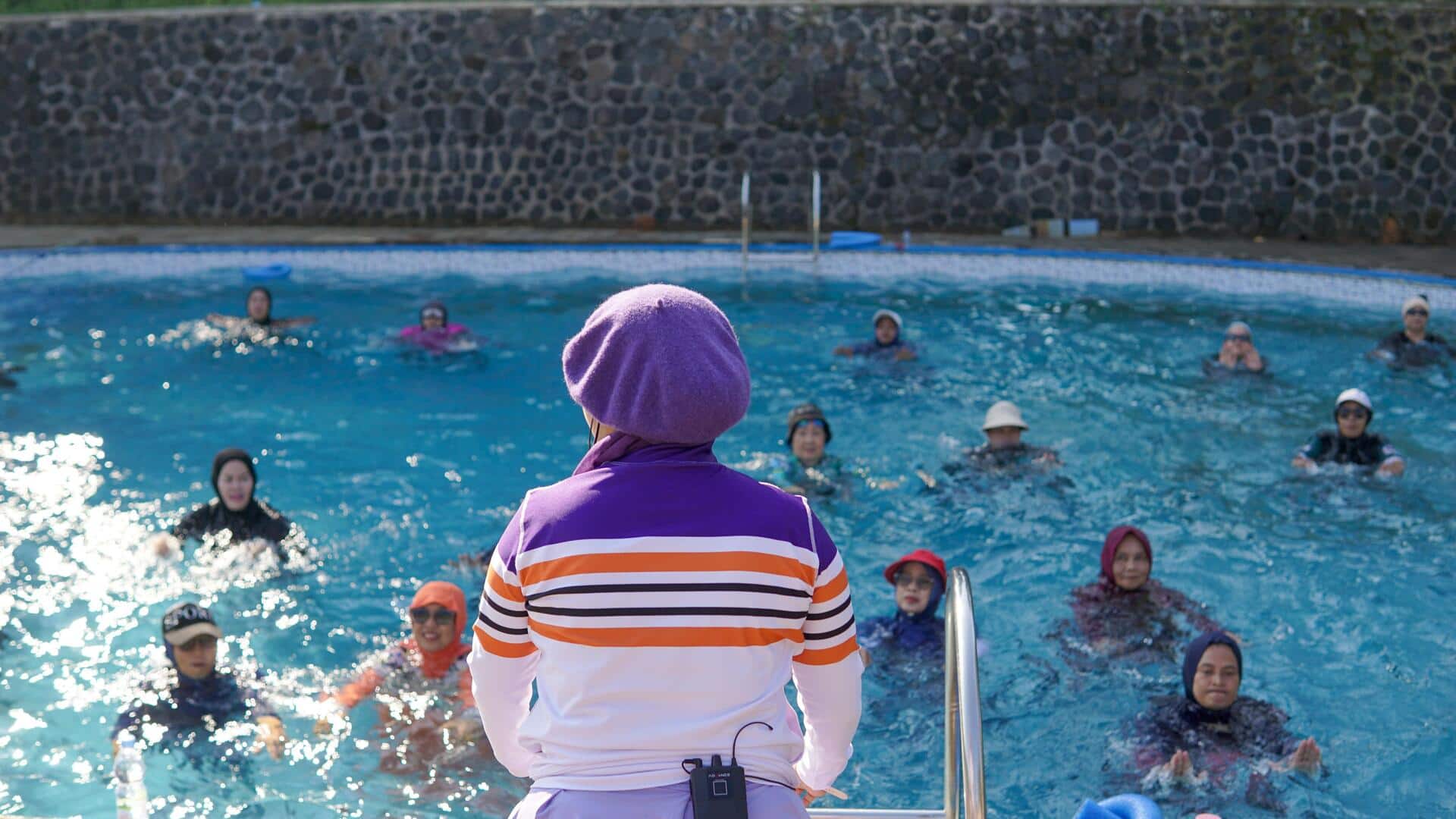
Aquatic aerobics and yoga are two popular forms of exercise that promise to improve flexibility. While both have their own unique benefits, they target the body differently. Aquatic aerobics, performed in water, provides resistance and buoyancy, making movements easier on joints. Yoga, on the other hand, focuses on stretching and holding postures to improve flexibility and balance. Here is how these exercises improve flexibility.
Water resistance
Benefits of aquatic aerobics
Aquatic aerobics use water's natural resistance to improve muscle strength and flexibility.
The resistance of water is 12 times more than air, which means your muscles work harder, without putting too much stress on joints.
This is especially useful for people with arthritis or recovering from injuries.
Stretching techniques
Yoga's impact on flexibility
Yoga is famous for its stretching techniques that target different muscle groups.
The postures are designed to lengthen muscles and improve range of motion in joints.
Regular practice can lead to noticeable improvements in flexibility over time, as the body becomes more accustomed to the stretches.
Low-impact exercise
Comparing joint impact
Both aquatic aerobics and yoga are low-impact exercises, making them suitable for people of all ages and fitness levels.
The buoyancy of water in aquatic aerobics reduces the impact on joints, while yoga's focus on controlled movements minimizes the risk of injury.
This makes both forms of exercise ideal for those looking to improve flexibility without straining their joints.
Availability options
Accessibility considerations
Aquatic aerobics usually requires access to a pool or a facility with water-based equipment, which may not be easily available everywhere.
Yoga, on the other hand, can be practiced almost anywhere with minimal equipment, making it more accessible for people living in areas without swimming pools or aquatic centers.