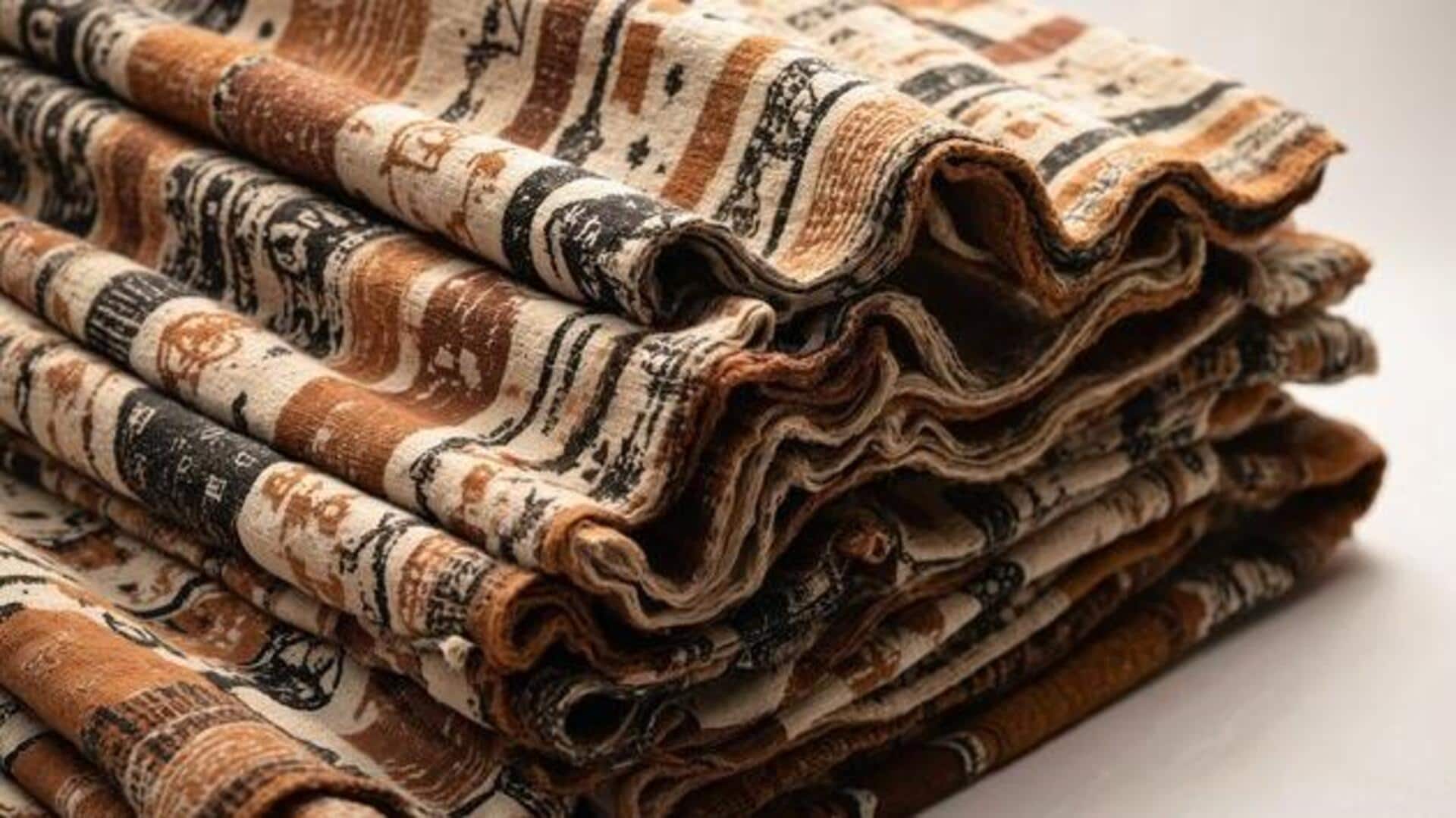
What are bogolan fabrics?
What's the story
Bogolan fabrics, also known as mud cloths, are traditional textiles from Mali. The sustainable fashion choice has gained global popularity for its unique patterns and eco-friendly production process. Made from cotton and dyed with natural materials, these fabrics are not only stylish but also environmentally conscious. As the world shifts toward sustainable fashion, bogolan fabrics offer a viable option that supports local artisans and promotes cultural heritage.
#1
The art of bogolan production
Bogolan production is a meticulous process that involves weaving cotton into cloth and dyeing it with natural pigments from plants and mud.
The artisans use traditional techniques passed down through generations to create intricate designs on the fabric.
The use of natural dyes makes bogolan environmentally friendly, as it avoids harmful chemicals common in other textile production methods.
#2
Supporting local artisans
The production of bogolan fabrics is largely carried out by local artisans in Mali.
By opting for these textiles, consumers contribute to the preservation of traditional craftsmanship and the livelihoods of these skilled individuals.
This not only helps sustain local economies, but also ensures that cultural practices are kept alive for future generations.
#3
Versatility in fashion design
Bogolan fabrics are versatile enough to be used in a variety of fashion designs, be it clothing or accessories.
Their unique patterns lend an element of flair to any outfit, while their earthy tones go well with a variety of color palettes.
Designers across the globe are embracing bogolan for its ability to lend authenticity and style to modern fashion collections.
#4
Economic impact on communities
The production and sale of bogolan fabrics have a major economic impact on communities in Mali.
The textile industry provides jobs to hundreds of artisans and their families, ensuring a steady source of income.
Further, the rising demand for bogolan on international markets is helping boost economic development in the region, while promoting sustainable practices.