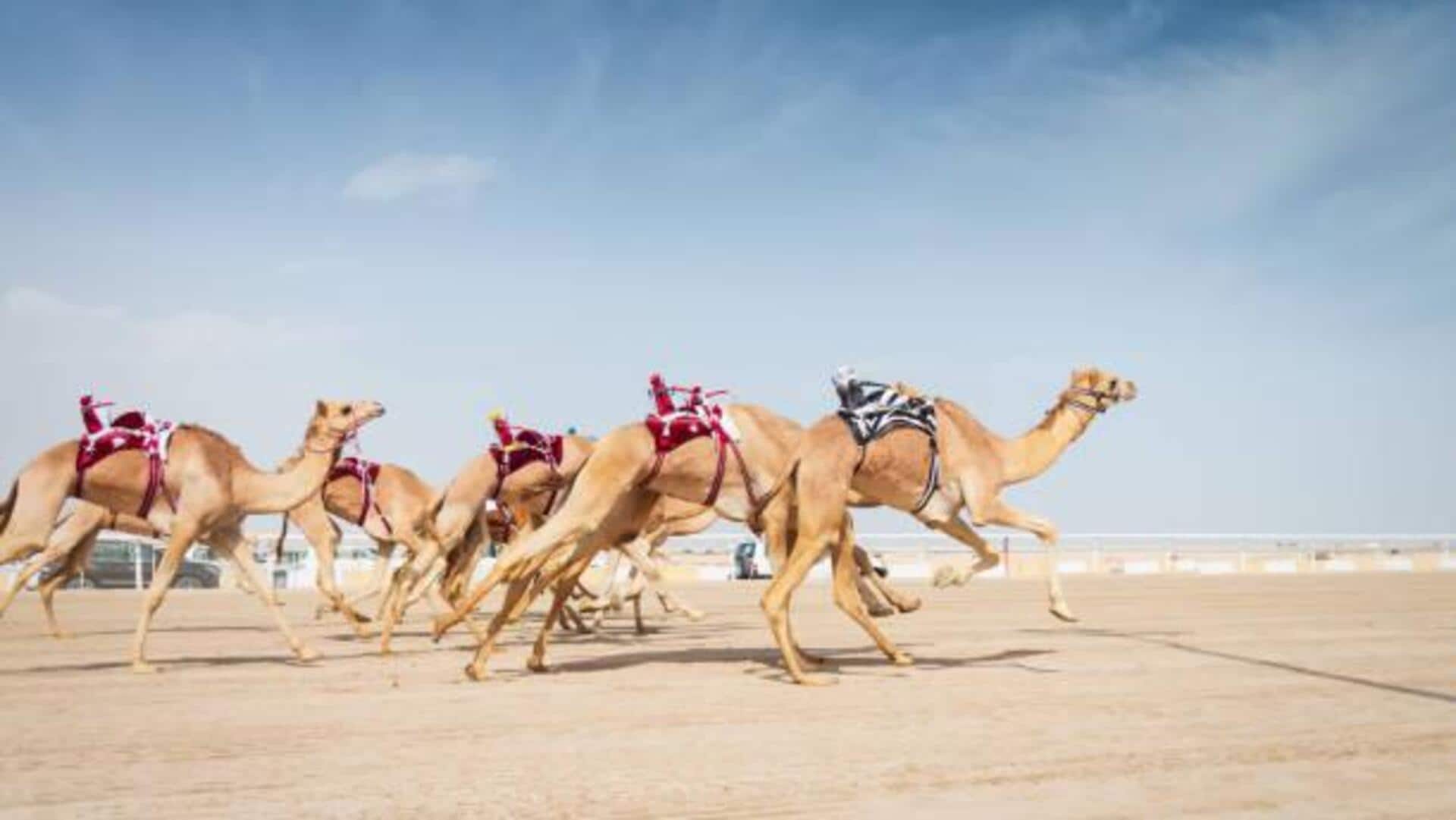
What makes camel racing a fascinating desert sport
What's the story
Camel racing in Morocco's Sahara Desert is a thrilling sport that attracts both locals and tourists. The event is a cultural staple, showcasing the agility and endurance of camels. Unlike traditional horse racing, this sport is unique to the region, giving a glimpse of Morocco's rich heritage. The races are not just about speed but also about strategy and training, making them an exciting spectacle for all.
#1
The significance of camels in Moroccan culture
Camels are an integral part of Moroccan culture, serving as modes of transport and companions in the harsh desert.
They symbolize resilience and adaptability, traits highly valued in the Sahara.
In addition to being essential for survival, camels are also revered for their role in traditional sports like racing.
The bond between Moroccans and camels goes beyond utility; it is deeply rooted in history and tradition.
#2
Training techniques for racing camels
Training a racing camel involves rigorous routines that focus on building stamina and speed.
Handlers ensure that the animals are well-fed with a balanced diet to maintain their energy levels during races.
Regular exercise sessions help improve their agility, while mental stimulation keeps them focused on the track.
These techniques ensure that each camel is prepared to compete at its best.
#3
The role of technology in modern races
Technology has made its way into camel racing, enhancing the experience for spectators and participants alike.
GPS trackers monitor the speed and distance covered by each animal during a race.
Drones provide aerial views of the event, giving fans an unprecedented perspective from above.
These advancements have made it easier to manage races efficiently without losing the traditional essence of this age-old sport.
#4
Economic impact on local communities
Camel racing also contributes significantly to local economies by attracting tourism during events.
The influx of visitors boosts businesses such as hotels, restaurants, and shops in nearby areas.
Additionally, prize money from these races incentivizes breeders to invest more into improving their stock quality over time.
This creates a positive feedback loop benefiting everyone involved economically.