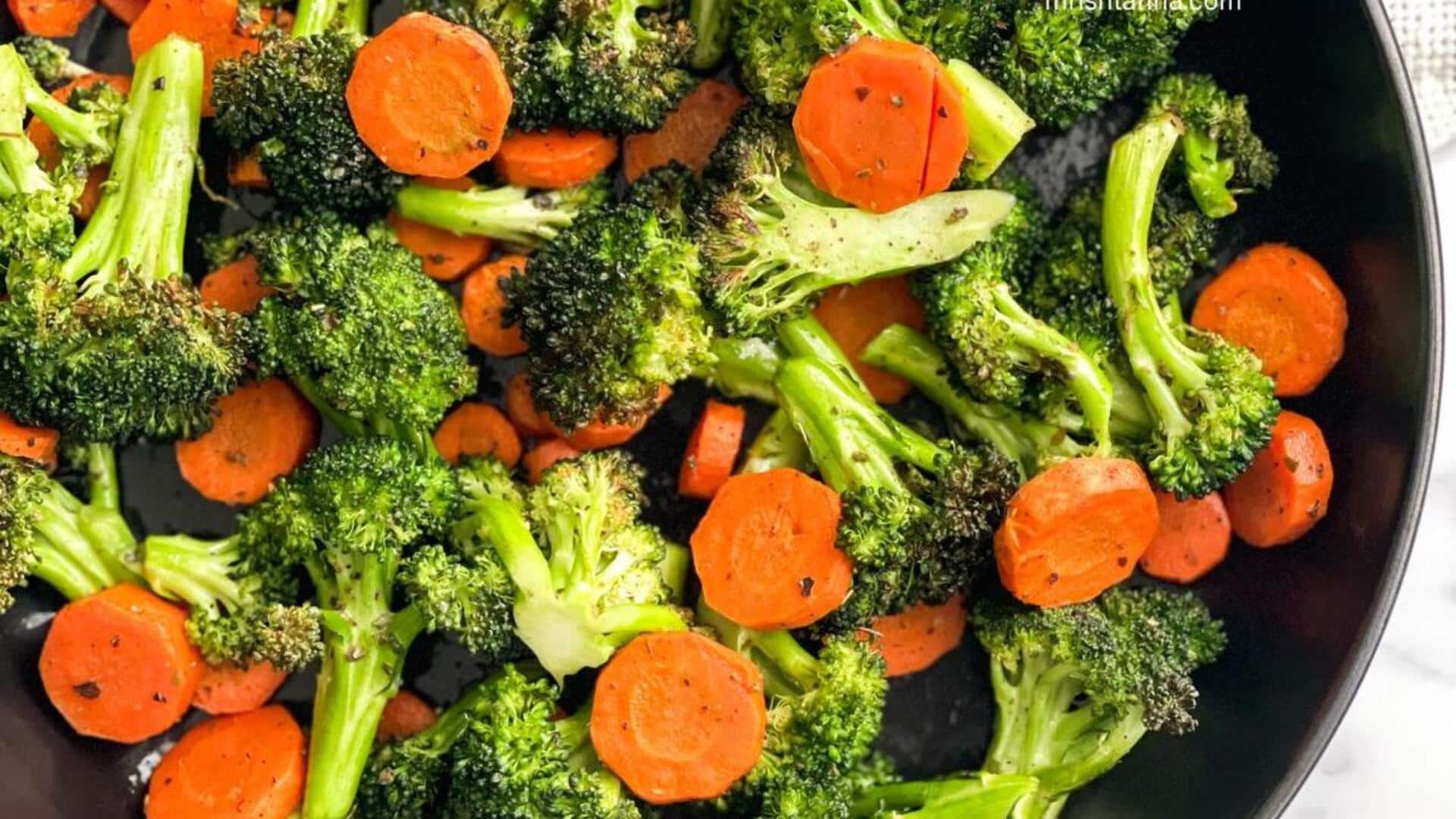
Carrot v/s broccoli: Which is better for your bones?
What's the story
Carrots and broccoli are two of the most popular vegetables known for their health benefits. Both are packed with essential nutrients, but they differ in what they have to offer. While carrots are famous for their vitamin A content, broccoli is known for its high levels of vitamin C and K. Knowing the nutritional profiles of these vegetables can help you make informed dietary choices.
#1
Vitamin A powerhouse: Carrots
Carrots are famously rich in beta-carotene, which the body converts into vitamin A.
This nutrient is important for healthy vision, immune function, and skin health.
A single serving of carrots can give you more than 200% of the recommended daily intake of vitamin A.
This makes them a great choice for anyone looking to boost their eye health and immunity.
#2
Broccoli's vitamin C boost
Broccoli is an excellent source of vitamin C, offering more than 100% of the daily recommended intake per serving.
Vitamin C is essential for collagen production, which keeps your skin healthy and wounds healing.
It also acts as an antioxidant that protects cells from damage by free radicals.
Eating broccoli regularly can help keep your skin youthful and your immune system strong.
#3
Vitamin K content in broccoli
In addition to being high in vitamin C, broccoli is also an excellent source of vitamin K, providing over 100% of the daily recommended intake per serving.
Vitamin K is essential for blood clotting and bone health.
Adding broccoli to your diet can help keep your bones healthy and prevent excessive bleeding in case of an injury.
Tip 1
Fiber content in both vegetables
Both carrots and broccoli provide a good amount of dietary fiber, which is important for digestive health.
Fiber helps keep regular bowel movements and prevents constipation by adding bulk to stool.
A serving of either vegetable can contribute to the daily fiber requirement, which is important for maintaining a healthy weight by promoting fullness after meals without adding calories.