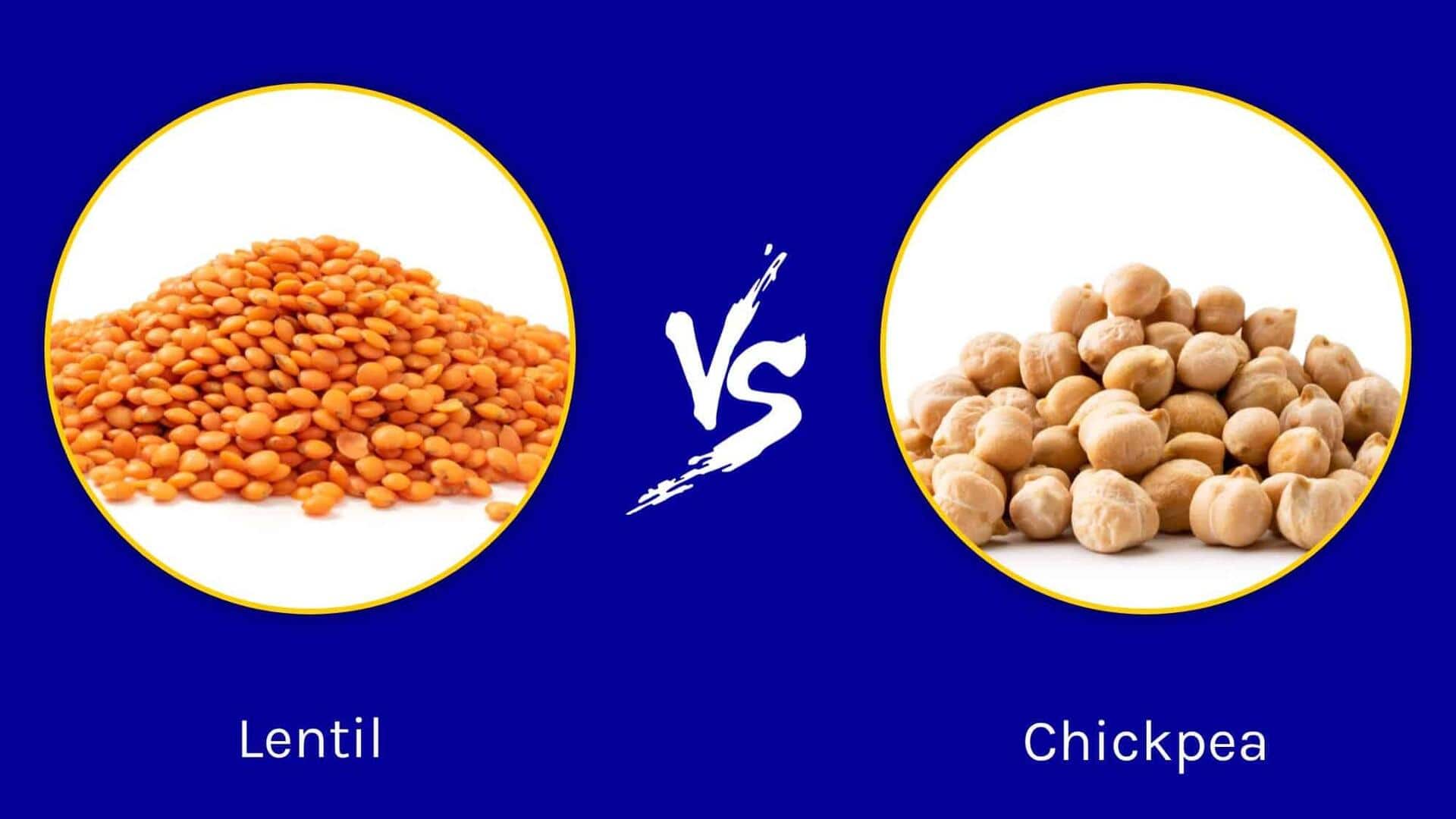
Chickpeas v/s lentils: Which has more fiber?
What's the story
Chickpeas and lentils are two of the most popular plant-based protein sources. Both legumes are nutritious, versatile, and staples in many diets. While they both offer protein, their nutritional profiles differ in a few ways. Knowing these differences can help you make informed dietary choices. This article explores the protein content of chickpeas and lentils, their amino acid profiles, cooking methods, and health benefits.
#1
Protein content comparison
Chickpeas provide about 19 grams of protein per cooked cup, while lentils provide about 18 grams per cooked cup.
Both legumes provide a good amount of protein for those looking to up their plant-based intake.
The slight difference in protein content does not make either legume superior; both are excellent sources of protein for vegetarians and vegans.
#2
Amino acid profiles
While chickpeas and lentils are both rich in essential amino acids, they differ slightly in their composition.
Chickpeas have a higher methionine content, while lentils are richer in lysine.
Both are essential amino acids that the body needs to function properly.
Eating a variety of legumes can ensure you get a balanced intake of all essential amino acids.
#3
Cooking methods impact on nutrition
The way you cook chickpeas and lentils can also affect their nutritional value.
Soaking chickpeas before cooking helps reduce cooking time and may improve digestibility.
Lentils usually do not require soaking, but cook faster than chickpeas.
Both methods preserve most nutrients when cooked properly.
Tip 1
Health benefits beyond protein
Apart from being rich in protein, chickpeas and lentils are packed with fiber, which promotes digestion and keeps cholesterol levels in check.
However, lentils usually offer slightly more fiber. For context, cooked lentils provide roughly 7.6-12g of fiber per 100g, while chickpeas, in the same state, provide roughly 7-7.6g per 100g.
Moreover, lentils, especially red lentils, often beat chickpeas in fiber and iron, whereas chickpeas offer more manganese.