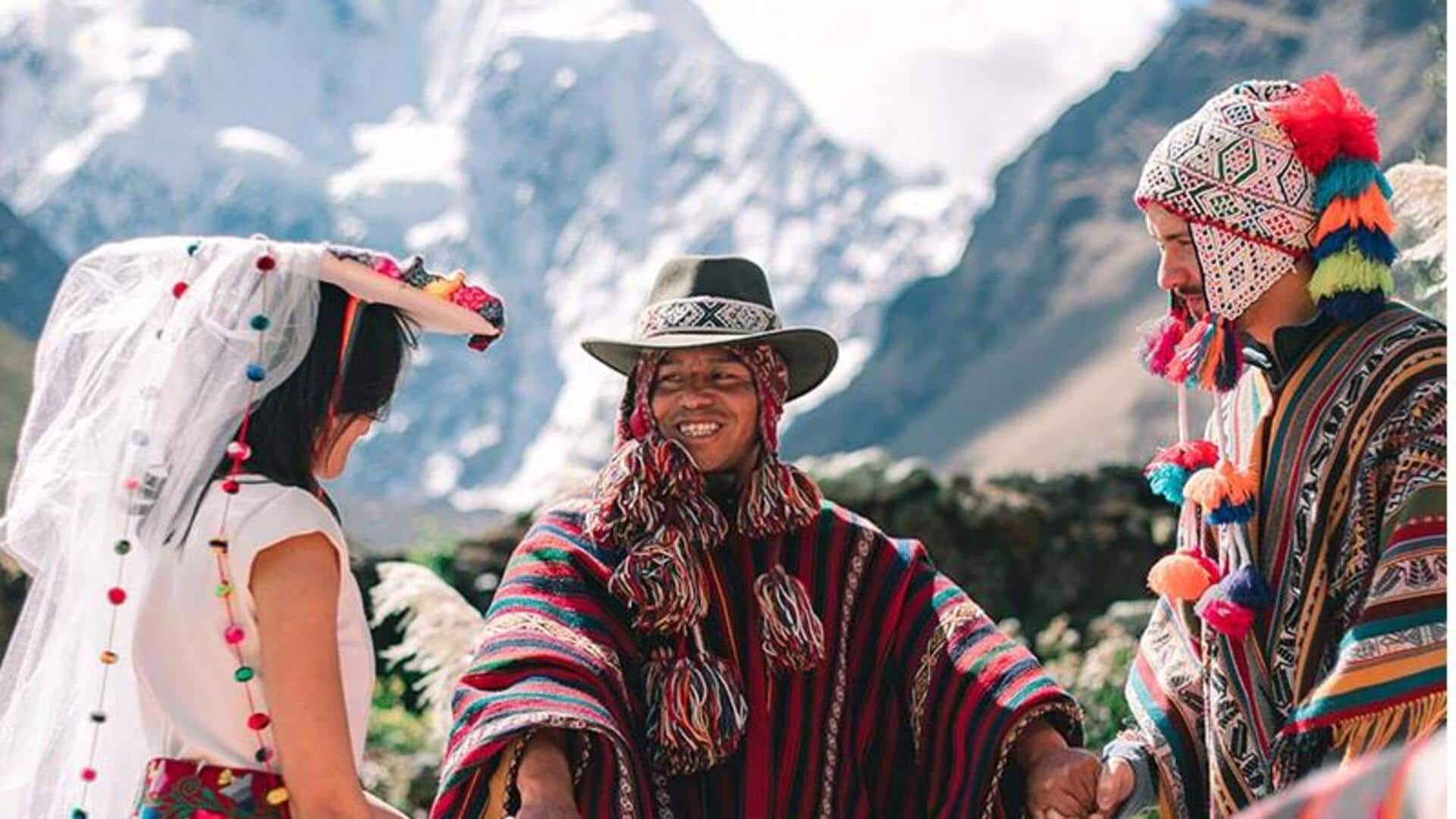
Chullo exchange: All about this unique Peruvian wedding custom
What's the story
In the heart of Peru's Andes, a unique wedding tradition thrives, where couples exchange chullos (traditional Andean hats) instead of rings. This practice, which symbolizes unity and cultural identity, has been passed down through generations. The chullo is more than a fashion statement; it is a representation of love, commitment, and connection to one's roots. As modernity creeps in, this tradition continues to be a testament to the enduring power of cultural heritage in relationships.
#1
Symbolism of the chullo
The chullo also represents warmth and protection, much like the love shared between partners.
Traditionally knitted from alpaca wool, these hats are designed to withstand harsh Andean climates.
By exchanging chullos during their wedding ceremony, couples affirm their dedication to shielding each other from life's adversities.
The vibrant patterns on each chullo often carry familial or regional significance, further strengthening the bond between spouses.
#2
Craftsmanship behind each chullo
Creating a chullo is no easy task, requiring skill and patience.
Artisans spend hours crafting each piece, paying attention to intricate details and patterns that tell a story.
The process involves spinning wool into yarn, dyeing it with natural colors, and knitting it by hand.
This craftsmanship is passed down through families, ensuring that every chullo is unique yet rooted in tradition.
#3
Economic impact on local communities
The demand for chullos has also contributed to the economic stability of many Andean communities.
As couples worldwide embrace this custom as part of their wedding ceremonies or even as fashion statements, local artisans benefit from increased sales opportunities.
This economic boost helps preserve traditional crafting techniques while supporting community development initiatives.
#4
Modern adaptations of traditional practices
While some couples stick to traditional chullo exchanges at their weddings, others have also found ways to incorporate these hats into modern ceremonies.
Some opt for custom designs that reflect personal styles or blend contemporary elements with classic ones.
This way, they honor tradition without compromising on individuality.