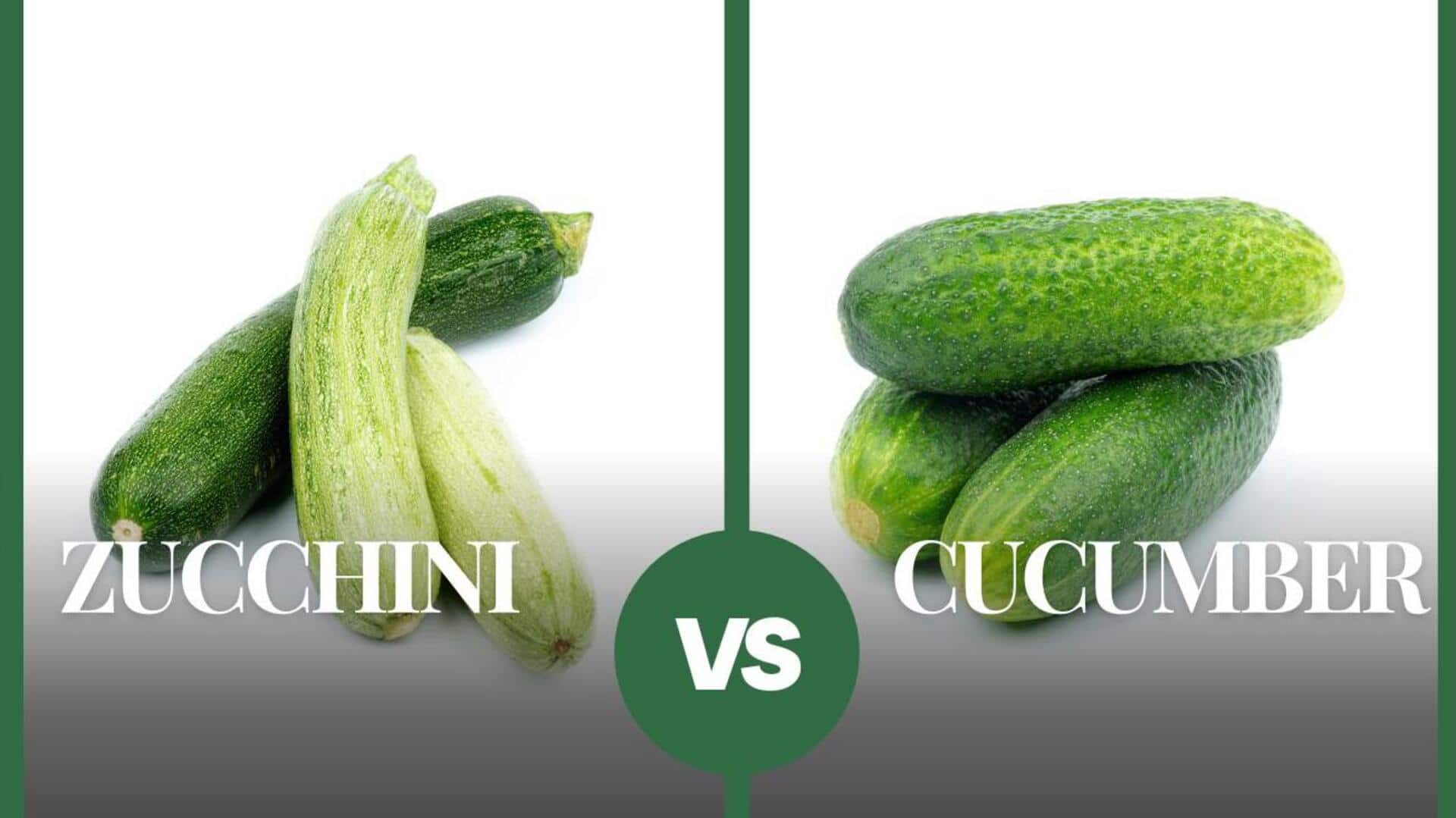
Which has more calories: cucumber or zucchini?
What's the story
Cucumbers and zucchinis are two of the most popular vegetables that are often confused with each other. Although they look similar, both have unique nutritional profiles and health benefits. Knowing these differences can help you make better dietary choices. In this article, we will compare the nutritional value of cucumbers and zucchinis, their health benefits, and how they can be included in your diet.
#1
Nutritional profile of cucumbers
Cucumbers are mostly made of water, which makes them a great hydrating vegetable.
They are low in calories, with only about 16 calories per 100 grams.
Cucumbers provide vitamin K, vitamin C, potassium, and magnesium.
They also have antioxidants like beta-carotene that help fight free radicals in the body.
#2
Nutritional profile of zucchinis
Zucchinis are a bit more calorie-dense than cucumbers, but remain low-calorie at about 17 calories per 100 grams.
They are a great source of vitamin A, vitamin C, manganese, and folate.
Zucchinis also provide fiber that promotes digestion and keeps you full.
#3
Health benefits of cucumbers
The high water content in cucumbers keeps you hydrated and helps with weight management by keeping you full without adding too many calories to your diet.
The antioxidants in cucumbers also promote skin health by reducing inflammation and oxidative stress.
#4
Health benefits of zucchinis
Zucchini's fiber content is great for digestion as it helps in regular bowel movements and prevents constipation.
The vitamins A and C present in zucchini promote immune function and eye health.
Adding zucchini to your diet can also help you maintain healthy skin due to its antioxidant properties.