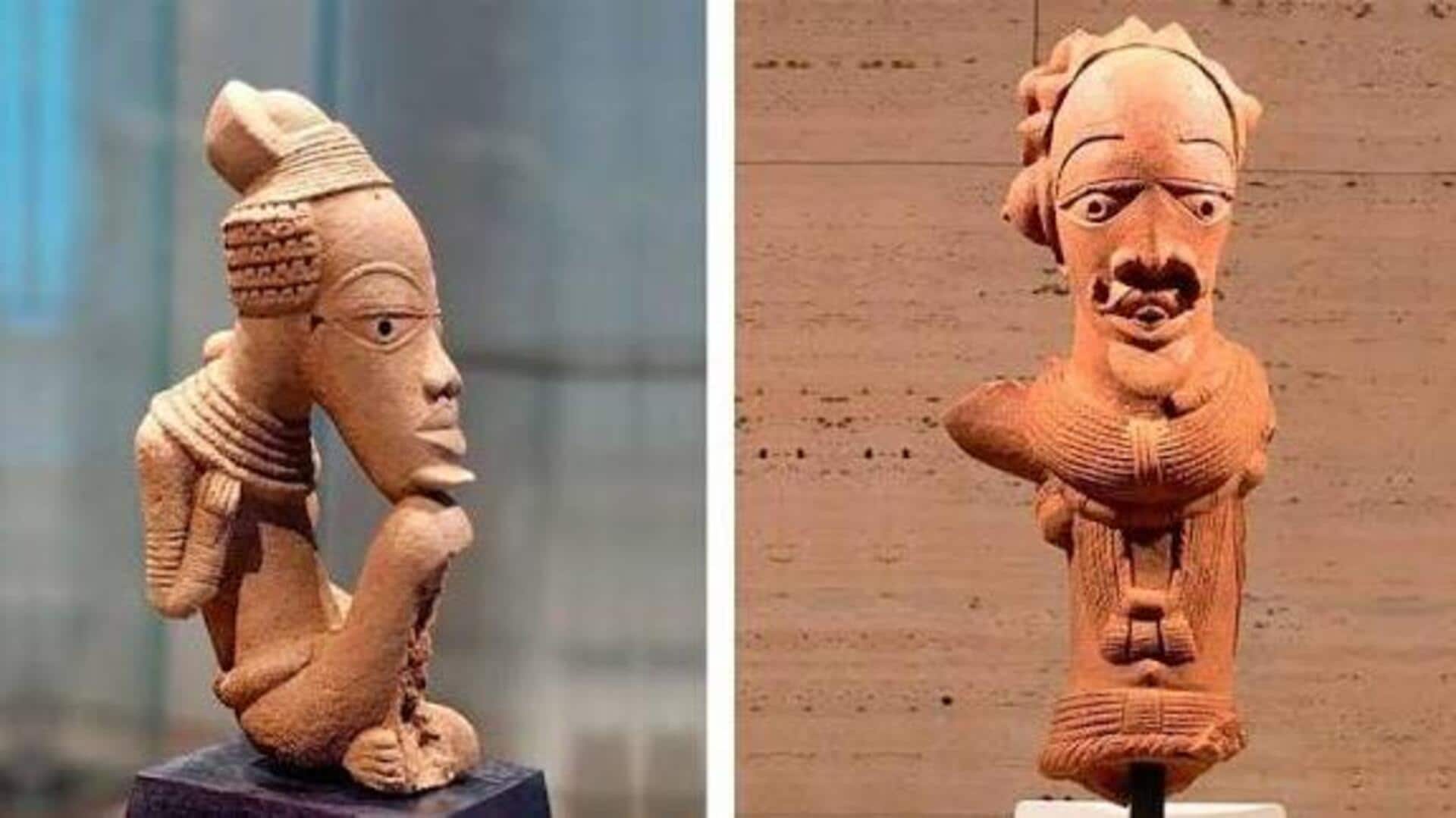
All about Nok terracotta sculptures
What's the story
African Nok terracotta sculptures have been inspiring contemporary ceramic artists around the world. These ancient artifacts, dating back to 1000 BC, are known for their distinct style and intricate details. Artists are now exploring the possibilities of these historical pieces, creating new works that pay homage to their roots, while pushing the boundaries of modern art. Here is how Nok terracotta is influencing contemporary ceramics.
#1
Exploring texture and form
Nok terracotta sculptures are famous for their unique textures and forms.
Contemporary ceramic artists are taking cues from these characteristics to add depth and interest to their work.
The rough surfaces and exaggerated features of Nok pieces inspire modern creators to experiment with texture, leading to dynamic visual experiences.
This exploration not only honors traditional techniques but also encourages innovation in the field of ceramics.
#2
Cultural narratives in clay
The storytelling aspect of Nok terracotta is being embraced by contemporary artists who use clay as a medium for cultural narratives.
By incorporating elements from these ancient sculptures, artists weave stories that resonate with current social issues or personal experiences.
This practice not only preserves the historical significance of Nok art but also enriches contemporary discourse through meaningful artistic expression.
#3
Fusion of traditional and modern techniques
Many contemporary ceramicists are fusing traditional African techniques with modern practices, inspired by Nok terracotta.
This fusion results in unique pieces that reflect both heritage and innovation.
Techniques such as hand-building and coiling, which are common in traditional African pottery, are combined with contemporary glazing methods or sculptural approaches to create visually striking works.
#4
Reviving interest in African art heritage
The influence of Nok terracotta on contemporary ceramics has also played a role in reviving interest in African art heritage.
Exhibitions showcasing this fusion attract diverse audiences who appreciate its cultural significance and artistic value.
By highlighting these connections through exhibitions or public installations, artists contribute to a greater understanding and appreciation of Africa's rich artistic traditions within global contexts.