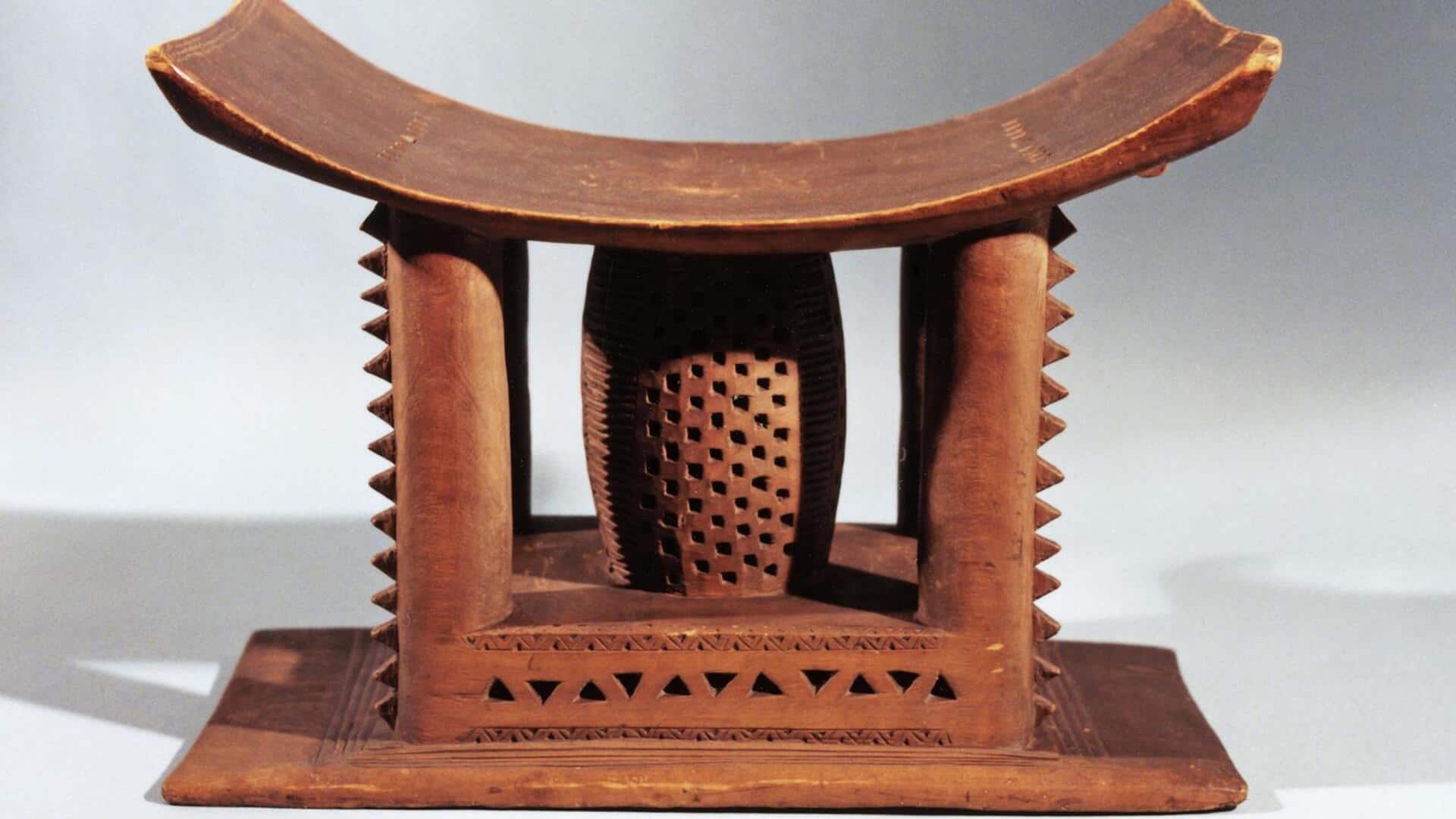
Ashanti stool: How to create this artwork at home
What's the story
Creating an African Ashanti stool is a rewarding project that connects you with rich cultural heritage. These stools are known for their unique design and historical significance. By following a few simple steps, you can craft your own version of this iconic piece of furniture. This guide will take you through the essential materials, tools, and techniques needed to create an authentic-looking Ashanti stool.
Materials
Gather essential materials
To start making your Ashanti stool, you will need some high-quality wood.
Go for hardwoods such as mahogany or teak, as they are durable and lend themselves well to carving.
You will also need wood glue to hold the parts together, sandpaper for smoothing surfaces, and wood finish or oil to protect the final product.
Make sure all materials are readily available before starting your project.
Tools
Tools required for carving
Essential tools for carving an Ashanti stool include a chisel set, mallet, saw, and drill.
A sharp chisel set is essential for detailed work on the stool's legs and seat.
A mallet helps apply force while carving, without damaging the wood.
A saw is used to cut the wood pieces to size, and a drill makes holes for joining parts together with dowels or screws.
Construction
Step-by-step construction process
Start by cutting the wood into the required pieces according to your design plan.
Use a saw for accurate cuts, then smooth edges with sandpaper.
Carve out intricate patterns on legs and seat using chisels, guided by traditional designs as reference points.
Assemble parts using glue or dowels, ensuring stability before applying finish.
Finishing
Finishing touches for authenticity
Once assembled, apply wood finish or oil evenly across all surfaces, ensuring protection against wear over time.
Pay attention to details, like polishing edges, if required, to enhance the overall appearance.
This step is crucial to achieving the desired look and feel of the final product.
It ensures the piece is both functional and aesthetically pleasing, reflecting the traditional craftsmanship of the Ashanti stool.